Written By |
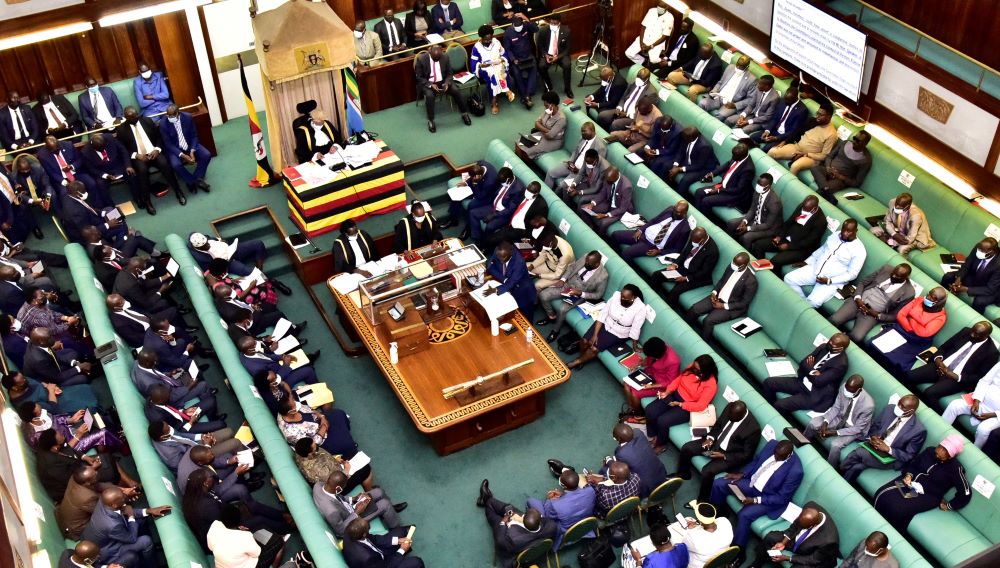
Parliament of the Republic of Uganda.
Parliament has approved the Excise Duty Amendment Bill 2024, rejecting a tax increase on kerosene of sh300, and lowering the tax on opaque beer made from local materials.
However, the MPs yesterday approved an increase in taxes on petrol and diesel of sh100 despite a stiff resistance led by opposition MPs. The chairperson of Parliament’s committee on finance, Amos Kankunda, presented the report of the committee on the Bill which approved the increment of the taxes to raise more revenue for the government.
The committee agreed to the Government's proposal to increase the excise duty imposed on petrol from sh1,450, to sh1,550 per liter.
They agreed to increase the excise duty imposed on diesel from sh1130, to sh1,230 per liter.
They rejected the plan to increase excise duty on illuminating kerosene from sh200, to sh500 per liter.
Implication
The taxes on petrol were last increased in the financial year 2021/22. If the fuel dealers do not absorb the planned tax increment, analysts argue that the increments will lead to an increase in fuel pump prices.
Ibrahim Ssemujju (Kira Municipality, FDC) presented a minority report rejecting the increments arguing that tax on petrol and diesel is the key driver of fuel pump prices.
“If we impose a tax on petrol and diesel, it will cause damage to the economy, increase the cost of transport,” Ssemujju argued.
Ssemujju, who is also the shadow finance minister, said there are many wastages in the budget, such as special drinks and eats for public officials, that could be removed instead of increasing taxes.
However, the Speaker of Parliament Anita Among, who chaired the House, explained that some of the taxes are intended to raise money to fund public expenditures. “We have removed the tax on kerosene because people in villages do not have access to electricity and need to use kerosene at affordable prices,” Among said.
Enos Asiimwe (Kabula County) said increases in taxes are intended to meet certain expenditures. “When the taxes are removed, alternative revenue sources should be identified,” Asiimwe said.
Mohammed Nsereko (Kampala Central Division, Independent) said that last year the increment of taxes on fuel was rejected because it could have led to inflation. Nsereko noted that if the tax increment is approved on petrol it should be ring-fenced for infrastructure development otherwise it will be spent on donations and other items.
Nsereko said people are waiting for the price of fuel to come down but now slapping taxes on fuel will increase their prices. He wondered how the government has made Uganda National Oil Company the sole importer of fuel to keep prices low but turns around and increase taxes on it.
Theodore Ssekikuubo (Lwemiyaga County, NRM) said that increasing taxes on fuel will lead to an increase in transport costs and other prices will go up such as food, beef.
Bosco Okiror said the tax revenues on petrol and diesel should be ring-fenced for road construction.
Mobile money
Currently, there is a 0.5% tax on mobile money withdrawals effected by telecommunications companies.
Government through this Bill is expanding the net to include other platforms such as Mcash, Micropay, and Wave to provide a similar tax for agency banking. Consequently, Parliament introduced the 0.5% tax on agency banking.
The tax will be charged on the value of the transaction on electronic payment services.
Kiryowa Kiwanuka, the Attorney General, said the tax is intended to level charges with agency banking.
However, the tax excludes withdrawal services provided by banks and other microfinance and deposit-taking institutions.
Nandala Mafabi (Budadiri County West - FDC) said that agent bankers are agents of bank and should not be taxed. He said mobile movement of money should not be confused and taxed.
Opaque beer tax
Parliament also approved Clause 3 (a) which seeks to lower the excise duty imposed on opaque beer from 20% or sh230 per liter, whichever is higher to 10% or sh150 per liter, whichever is higher.
Opaque beer is a weak alcoholic beverage produced by the process of alcoholic fermentation from a starch source (sometimes malt), water and yeast.
The committee observed that since opaque beer is made primarily from locally sourced raw materials, the amendment will promote the use of local raw materials and a reduction on the excise duty levied on other alcoholic beverages (kombuchas) will provide an incentive to produce and sell the product competitively.
The House recommended that the rate applicable to other alcoholic beverages (kombuchas) should be lowered to the same rate as opaque beers which use similar locally-sourced raw materials.
The House approved the introduction of a new excisable good of ‘powder for reconstitution’ into beer at a fixed rate of sh2500 per kg.
This means a powder, crystal or any other dry substance which, after being mixed with water or any other non-alcoholic beverage, ferments to or otherwise becomes an alcoholic beverage.
Cement
Parliament also agreed to expound the categorization of cement to include adhesives, grout, white cement and lime, and maintain the excise duty rate of cement at sh500 per 50kgs. This means there is no new tax on the ordinary cement but other materials like adhesive, grout, white cement and lime will now attract a similar tax of sh500 per 50kgs.
The report of the Parliament’s committee on finance, planning and economic development observed that under the current law, "cement", does not cover other existing products on the market with cements in them; including, adhesives, grout, white cement and lime.
The committee further observed that the proposed amendment seeks to give clarity on the "cement" excise duty category by taking into account the cementitious products to include cement, adhesives, grout, white cement and lime.
60% tax on spirits
Also approved was the introduction of excise duty at a rate of 60% or sh5000 per liter, whichever is higher, on un-denatured spirits of alcoholic strength by volume of 80% or more made from locally produced raw materials.
Un-denatured spirits mean spirits that are not mixed with any substance and are unfit for human consumption. These spirits are commonly used in the production of disinfectants and sanitizers for the prevention of the spread of COVID- 19 and other diseases.
Un-denatured spirits of alcoholic strength by volume of 80% or more made from imported raw materials will be charged an excise duty rate of 100% or sh2,500 per liter, down from sh5,000 per liter.
The House also approved the introduction of an excise duty at a rate of 80% or sh1,500 per liter, down from from sh1,700 per liter, whichever is higher, on any other un-denatured spirit that is locally produced of alcoholic strength by volume of less than 80% or excise duty at a rate of 100% or sh5,000 per liter, whichever is higher, on any other un-denatured spirits that is imported of alcoholic strength by volume of less than 80%.
Wines, juices
The House agreed to an increased excise duty on "other wines" from 80% or sh8,000 per liter, whichever is higher, to 100% or sh10,000 per liter, whichever is higher.
The legislators however, agreed to reducing the tax on fruit juice and vegetable juice, except juice made from at least 30% pulp or at least 30% juice by weight or volume of the total composition of the drink from fruits and vegetables locally grown. The reduction is from 13% or sh250, whichever is higher, to 10% or sh.250 per liter, whichever is higher.
Mineral water
Parliament also okayed reduction of excise duty on mineral water from sh75 per liter to sh50.
The committee observed that the mineral water industry has grown. They argued that the proposed tax reduction for a fixed rate is to level the ground between the compliant and non-compliant producers of mineral water by providing for both a fixed rate and the ad valorem rate.
Ad valorem rates are a fixed percentage based on the value of the goods, as determined by the invoice cost. The committee however, noted that the proposed rate of sh75 per litre was too high and should be reduced to sh50 per litre to encourage more investments in the industry.



