Written By | Fashion and Design Desk
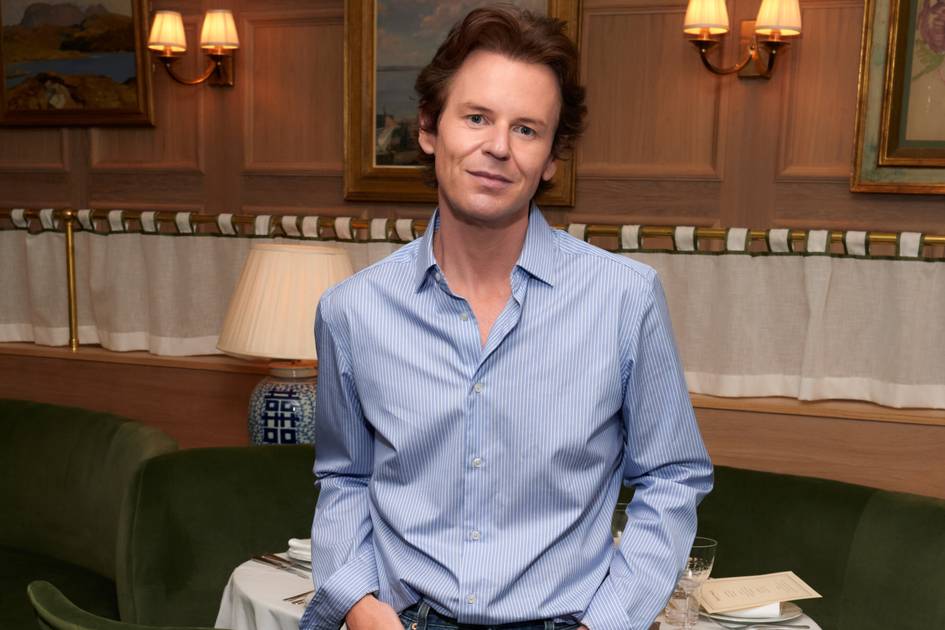
On Sunday, Mulberry returns to the London Fashion Week schedule for the first time since 2020 — with a ready-to-wear collection designed by a man whose own label collapsed three years ago
LONDON
London Fashion Week opened yesterday and runs through Monday, and by the standards of recent seasons it is behaving like a city that has remembered what it is for. The week's most consequential twenty minutes, however, arrive on Sunday, when a British heritage house that has not staged a runway show since before the pandemic hands its return to a designer the industry had quietly written off.
The show is titled, plainly, "Mulberry by Christopher Kane." It is the brand's first womenswear collection under Kane, who was appointed creative director of women's ready-to-wear in March. The clothes reach stores and the website in January 2027.
How a house loses its runway
Mulberry's absence from the schedule is not the result of a creative crisis so much as an accounting one. In 2020, deep in pandemic cost-cutting, the company ended its clothing and footwear licence with Onward Luxury Group. The last ready-to-wear range, designed by then-creative director Johnny Coca, was for autumn/winter 2020. After that, Mulberry was what most people already thought it was: a bag company.
That is not an insult. Mulberry's accessories business — the Bayswater, the Alexa, the Lily, made in its own Somerset factories — is one of the few genuinely durable pieces of British luxury manufacturing left. But an accessories-only brand has a ceiling, and it has almost no ability to set a cultural conversation. Handbags follow clothes. They rarely lead them.
Reversing that is the explicit aim of "Back to the Mulberry Spirit," the strategy run by chief executive Andrea Baldo, who arrived from Ganni in 2024. The plan is to rebuild momentum in categories beyond the accessories core — and the early numbers give him something to point at. Mulberry posted a 5.7% increase in total sales in the 52 weeks to March 28, 2026, with growth across every market in the second half and a 13.7% rise in UK like-for-like sales.
"London has long been a global platform for creativity and culture, making it the ideal stage to debut the Mulberry by Christopher Kane collection," Baldo said, framing the show as evidence of the company's "absolute commitment in supporting and championing British talents, creativity and craftsmanship."
The designer who lost everything
The more interesting half of this story is Kane.
He arrived out of Central Saint Martins in the mid-2000s as the most hyped graduate of his generation and spent the following fifteen years mostly justifying it. He holds four British Fashion Awards, including Womenswear Designer of the Year. His label sat inside the Kering group between 2013 and 2018, which is as close to industry validation as the system offers. His clothes — neon lace, fetish hardware, printed galaxies, a recurring willingness to be vulgar on purpose — were the sharpest argument anyone made in that period that London design could be commercial without being polite.
Then, in 2023, the label entered administration and closed.
Fashion is not sentimental about this. Designers who lose their names usually do not get them back, and they rarely get handed a heritage house afterwards. That Kane is walking back onto the London schedule three years later, with a hundred-and-fifty-year-old British brand behind him, is the single most improbable comeback of the season.
He has been characteristically undramatic about it. "It is an honour to return to London Fashion Week with Mulberry," Kane said. "I am so grateful to the BFC and fashion community for their support since the announcement. It's an exciting time and I look forward to sharing SS27 with everyone."
Why London cares more than usual
The timing is not incidental. London Fashion Week spent most of the last decade watching its biggest names leave for Paris and Milan, and the British Fashion Council has spent the last year trying to get them back. Mulberry's return follows Alexander McQueen's, which is showing in London this season after years on the Paris calendar.
BFC chief executive Laura Weir has made no secret of treating this as the scoreboard. "One of my earliest ambitions as CEO of the British Fashion Council has been to have iconic British brands return to the London Fashion Week schedule, so it is a real pleasure to welcome Mulberry back," she said. "As one of Britain's most iconic luxury houses, its return strengthens London Fashion Week creatively, culturally and commercially."
That word — commercially — is doing a lot of work. A fashion week is a trade event dressed as a party. Buyers and press allocate their travel budgets to cities with enough marquee names to justify the airfare. Every house that leaves makes the next departure easier. Every house that returns does the reverse.
Mulberry lands in the middle of a genuinely busy weekend: Simone Rocha opens Sunday, Erdem shows the same day, and Burberry closes the week on Monday evening.
What this means for shoppers
Practically, Sunday's collection will not be purchasable for four months; it lands in January 2027. What it will do immediately is tell you where Mulberry is pricing itself and who it thinks its customer is now.
Watch two things. First, whether the clothes feel like Kane or like a house style — a designer of his temperament handed a heritage brief can either be productively constrained or neutered by it. Second, whether the bags change. Ready-to-wear on a runway exists partly to give accessories a story, and the first Kane-era handbag silhouettes will tell you more about Mulberry's next three years than any jacket will.
For British shoppers specifically, there is a supply-chain dimension worth noting: Mulberry still makes a substantial share of its leather goods domestically, which is increasingly unusual at this price point and increasingly a selling proposition.
Six years is a long time to be off a runway. Three years is a long time to be out of fashion altogether. On Sunday afternoon in London, a brand that stopped making clothes and a designer who stopped making anything walk back out together.
It is either the neatest redemption story the industry has produced this decade, or a very public reminder of why both of them stopped. There is no third option, which is exactly why every seat will be full.



