HEALTH
For three weeks this winter, a flu vaccine that had already passed a 41,000-person clinical trial sat on the FDA's desk, unopened. Not rejected for safety reasons. Not flagged for bad science. Just — refused. Sent back, unread, in a rare "Refusal-to-File" letter that stunned even seasoned regulatory watchers.
Then, in a plot twist nobody saw coming, the agency reversed itself two weeks later and agreed to actually look at the thing.
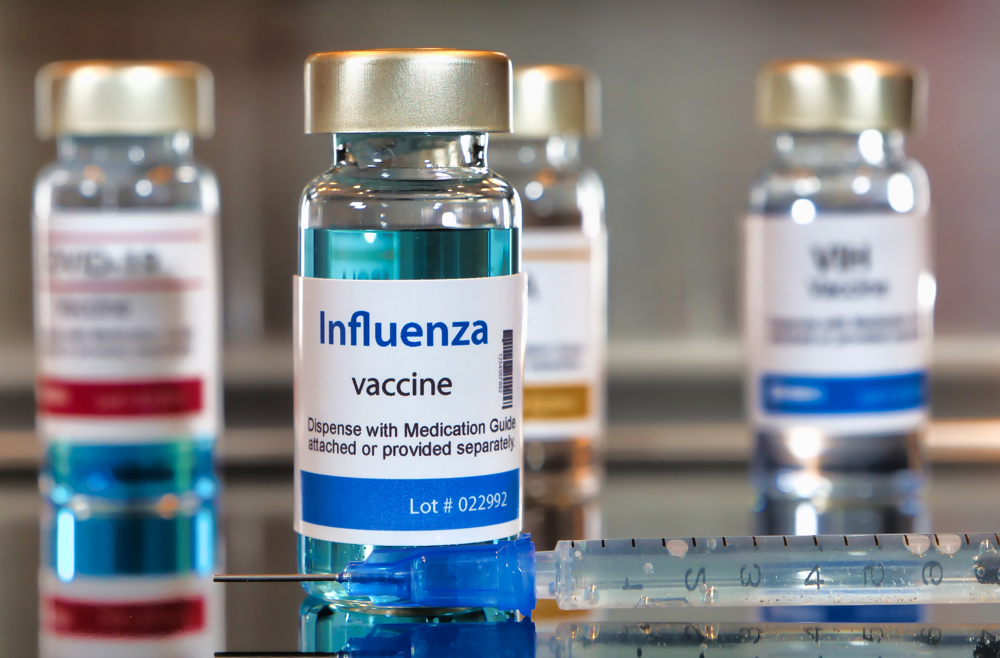
Now, five days from now, the Food and Drug Administration is set to deliver its final verdict on mRNA-1010 — Moderna's messenger-RNA seasonal flu vaccine, provisionally branded mFLUSIVA — with a Prescription Drug User Fee Act target action date of August 5, 2026. If cleared, it would become the first mRNA-based flu shot ever approved for the U.S. market, arriving just in time for the 2026-2027 flu season and potentially reshaping how tens of millions of older Americans are protected against a virus that kills up to 650,000 people worldwide every year.
It is, by any measure, one of the strangest and most closely watched drug approval sagas of the year — a story that tangles cutting-edge biotechnology with Washington politics, a skeptical health secretary, and a data set that, underneath all the noise, actually looks pretty good.
The Refusal Heard Round The Vaccine World
To understand why this Wednesday's decision matters so much, you have to rewind to February.
Moderna had spent years and hundreds of millions of dollars running a massive Phase 3 trial of mRNA-1010, enrolling nearly 41,000 adults aged 50 and older across 301 sites in 11 countries. The company designed the study in direct consultation with the FDA's Center for Biologics Evaluation and Research (CBER), which — in writing, back in April 2024 — told Moderna it would be "acceptable to use a licensed standard-dose influenza vaccine as the comparator" in the pivotal trial.
Moderna built its entire regulatory strategy around that guidance. Then, on February 3, 2026, CBER did an about-face and issued a Refusal-to-File letter, effectively telling Moderna its application wouldn't even be reviewed — because, the agency now claimed, the comparator vaccine wasn't good enough.
The letter didn't cite a single safety or efficacy concern. It hinged entirely on trial design — a technicality that directly contradicted the agency's own prior written advice.
The timing raised eyebrows across the public health world. The refusal landed under the watch of Health and Human Services Secretary Robert F. Kennedy Jr., a longtime and vocal critic of mRNA vaccine technology who has spent much of his tenure reshaping vaccine policy at HHS. Infectious disease experts and industry watchdogs, including the University of Minnesota's Center for Infectious Disease Research and Policy (CIDRAP), publicly blasted the move as inconsistent with the science and with the agency's own past commitments.
The backlash worked. One week after the refusal letter went out, the FDA reversed course again and agreed to formally review Moderna's application after all — restarting the clock toward this Wednesday's decision.
"The FDA refused to review a flu vaccine, contrary to evidence. Now the agency reversed itself," CIDRAP noted pointedly in its own analysis of the episode, capturing the whiplash the entire saga has inflicted on vaccine makers, doctors, and patients alike.
What The Data Actually Shows
Strip away the politics, and the underlying science tells a fairly compelling story — one that was laid out in full late last month in a landmark paper published in the New England Journal of Medicine.
In the pivotal trial, led by researchers from Ghent University and Moderna, roughly 40,700 adults 50 and older were randomly assigned to receive either a 50-microgram dose of mRNA-1010 or a standard-dose licensed flu vaccine, then followed for a median of about six months through the 2024-2025 Northern Hemisphere flu season.
The results: 2.0% of the mRNA-1010 group came down with lab-confirmed influenza, compared with 2.8% of those who got the standard shot. That gap translates to a relative vaccine efficacy of 26.6% — meaning mRNA-1010 prevented more than a quarter of the flu cases that the standard vaccine didn't catch. Crucially, the trial's statisticians say the results met the criteria not just for "noninferiority" but for outright "superiority" and even "higher-level superiority" over the standard shot.
The protection held up across the board. Efficacy against the A/H1N1 strain came in at 29.6%; against A/H3N2, 22.2%; and against B/Victoria, 29.1%. Among the roughly 19,260 participants aged 65 and older — the group at the highest risk of severe flu complications and death — relative efficacy landed at 27.4%, essentially matching the overall trial population.
Perhaps most tellingly for real-world impact: mRNA-1010 recipients needed far fewer doctor's visits for flu symptoms. Only 80 vaccinated participants sought medical care for flu-like illness, compared with 120 in the standard-dose group — a 33.7% reduction in flu-related healthcare visits.
Because mRNA-1010 is built using messenger RNA technology rather than the decades-old egg-based manufacturing process most flu vaccines still rely on, Moderna and outside scientists argue it could be updated far more quickly each year to match whatever flu strains are actually circulating — sidestepping the strain-mismatch problem and the egg-adaptation mutations that have long dogged traditional flu shots' effectiveness.
An FDA vaccine advisory panel — the Vaccines and Related Biological Products Advisory Committee, known as VRBPAC — reviewed all of this data on June 18 and voted unanimously, 9-0, that the vaccine's benefits outweigh its risks for adults 50 to 64. In a separate 9-0 vote, the panel reached the identical conclusion for adults 65 and older, clearing the path toward Wednesday's decision. Moderna is seeking full standard approval for the younger age bracket and accelerated approval for the 65-plus group, with a required postmarketing trial to confirm the benefit in seniors.

The Trade-Off: Better Protection, Rougher Side Effects
No vaccine story is complete without the fine print, and mRNA-1010's fine print is real: it comes with noticeably more short-term discomfort than a standard flu shot.
In the NEJM trial, 65.8% of mRNA-1010 recipients reported injection-site pain, compared with 29.8% of those who got the standard vaccine. Fatigue showed up in 45.1% of the mRNA group versus 20.3% of the comparator group; headache in 37.8% versus 18.0%; and muscle aches in 35.4% versus 11.6%. Chills and fever were also more common.
The overwhelming majority of these reactions were mild-to-moderate and resolved within a day or two — the same kind of achy-arm, tired-for-a-day experience many people associate with COVID-19 mRNA boosters. Crucially, serious adverse events occurred at nearly identical rates in both groups — 2.2% with mRNA-1010 versus 1.9% with the standard vaccine — and no vaccine-related deaths or serious safety signals emerged across the Phase 1, 2, or 3 program.
Still, expect the reactogenicity data to fuel plenty of debate. Critics of mRNA vaccine technology have already seized on the numbers, framing a vaccine that causes more sore arms and one-day fevers in exchange for meaningfully better protection as a bad trade — a framing infectious disease specialists reject, noting that a day of fatigue is a vastly better outcome than a week in bed with the flu, or a hospital stay.
Why This Fight Is Bigger Than One Vaccine
Flu might feel routine, almost background noise, compared to headline-grabbing outbreaks. It isn't. The World Health Organization estimates seasonal influenza causes up to 5 million cases of severe illness and as many as 650,000 deaths worldwide every single year, with older adults bearing a disproportionate share of hospitalizations and deaths.
Standard-dose flu vaccines have long underperformed in people over 65, whose aging immune systems mount weaker responses to vaccination generally — a phenomenon researchers call immunosenescence. Enhanced options like high-dose and adjuvanted flu vaccines already exist for seniors and generally outperform standard shots, but their effectiveness swings year to year depending on how well manufacturers guess the season's dominant strains months in advance, using slow, egg-based production methods.
"Improved vaccine efficacy in adults 50 years of age or older is needed, given the increased morbidity and mortality in this population," the NEJM study authors wrote bluntly, arguing that the trial's findings "support the role of mRNA-1010 in improving influenza prevention."
Expert Perspective
Public health researchers and vaccine policy watchers describe the mRNA-1010 saga as a bellwether for a much bigger fight — over whether regulatory decisions in Washington are increasingly shaped by ideology rather than data. CIDRAP's editorial team, which has tracked the episode closely since the initial refusal letter, characterized the FDA's original decision to refuse the filing as "contrary to evidence," and noted that the eventual reversal came only after sustained public and scientific pressure.
Vaccine scientists outside Moderna have pointed to the unanimous, bipartisan-feeling 9-0 votes from the FDA's own independent advisory panel — not once, but twice, for two separate age groups — as a strong signal that the underlying data holds up to outside scrutiny, regardless of the political noise surrounding the filing process itself.
What This Means For You
If you're 50 or older, this is a vaccine worth watching closely over the next few days. Should the FDA grant approval by its August 5 target date — as the unanimous advisory committee vote strongly suggests it will — mRNA-1010 could be available in time for the 2026-2027 flu season, joining high-dose and adjuvanted vaccines as another option for people at elevated risk.
Expect your doctor or pharmacist to start discussing it as a choice this fall, particularly if you or a family member is 65 or older, has struggled with flu complications in the past, or simply hasn't felt well-protected by standard flu shots in recent years. Given the higher rate of short-term side effects, people with major events, travel, or work commitments in the 24 to 48 hours after vaccination may want to time their shot accordingly — a strategy many people already use with COVID-19 boosters.
It's also worth understanding what accelerated approval means if it's granted specifically for the 65-and-older group: the vaccine would reach the market based on strong early evidence, while Moderna is required to complete additional confirmatory studies afterward. That's a well-established regulatory pathway, not a shortcut around safety.
The Bottom Line
Beneath the regulatory drama — the refusal letter, the reversal, the political undertones of an HHS secretary who has made no secret of his skepticism toward mRNA technology — sits a fairly unambiguous result: in the largest and most rigorous trial ever run head-to-head against a standard flu vaccine in older adults, the mRNA shot won, and won by a statistically significant, clinically meaningful margin.
Wednesday's decision won't just determine the fate of one product. It will send a signal about whether the world's newest vaccine platform gets a fair hearing in the country that helped invent it — or whether flu season 2026 becomes another battlefield in the broader war over mRNA technology itself.
Either way, tens of millions of Americans who roll up their sleeves this fall are about to become the next chapter in that story.
Published By | Features Editor