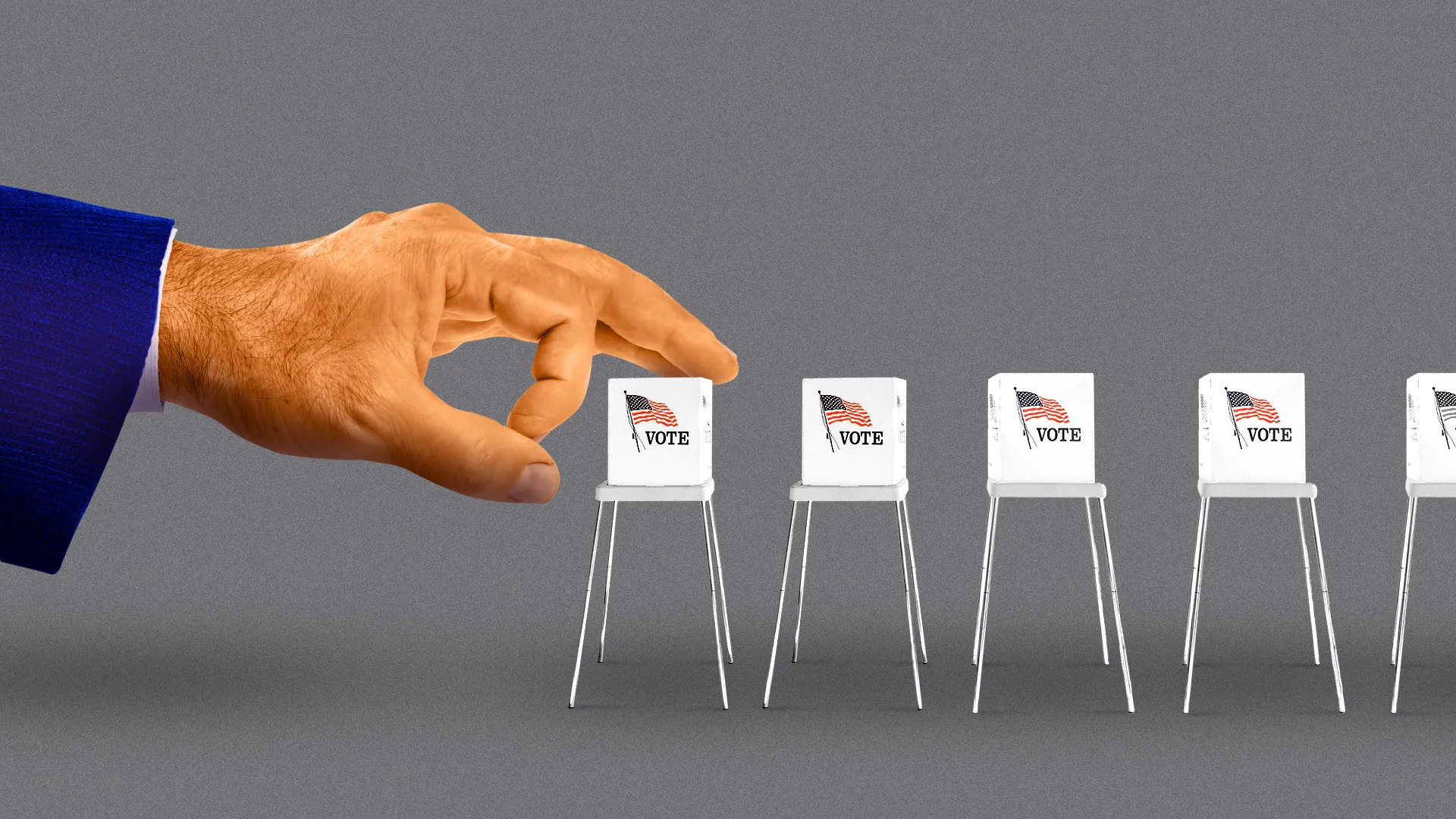
With a record advertising spend, a deeply unpopular president and forecasters giving Democrats a commanding edge in the House, Tuesday's election will decide whether Washington's one-party control survives the second half of Donald Trump's term.
World Politics
Overview
Americans go to the polls on Tuesday, November 3, in midterm elections that will determine the balance of power in Washington for the final two years of Donald Trump's second term. All 435 seats in the House of Representatives are on the ballot, along with a third of the Senate, governorships in dozens of states and 145 statewide ballot measures. Early voting has been under way for weeks, and the final days of the campaign have been marked by a record flood of money, a bitter fight over how elections are run, and a political climate that nearly every major forecaster reads as favourable to the Democratic Party.
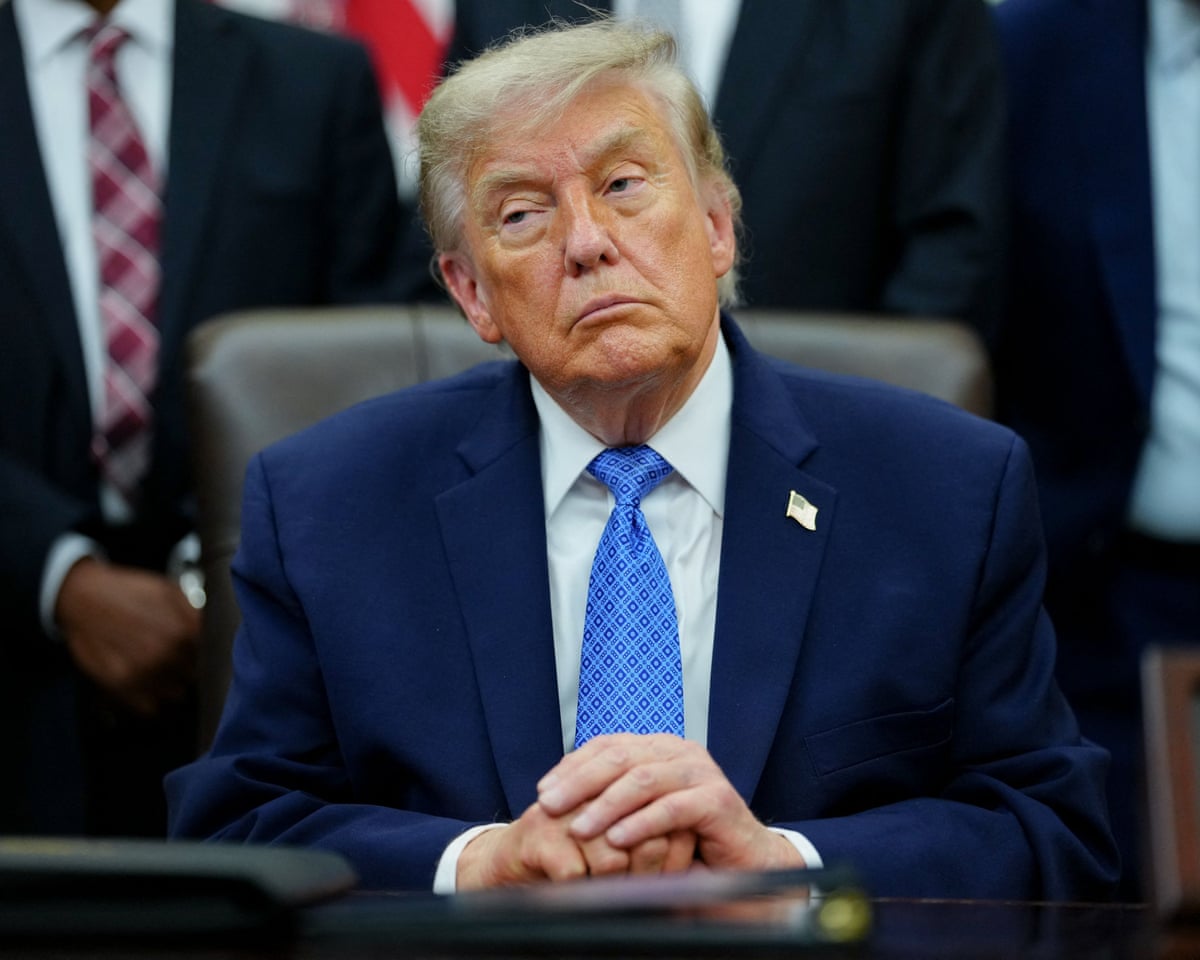
The stakes are unusually high even by the standards of midterms, which traditionally function as a referendum on the sitting president. Republicans currently control both chambers, and a Democratic takeover of even one would end the administration's ability to legislate without opposition, open the door to subpoenas and investigations, and give Democrats leverage over spending and nominations. A Republican hold, by contrast, would be read as a remarkable defiance of historical patterns and would likely embolden the White House to press ahead with its agenda on taxes, defence spending and immigration enforcement.
Background: The Map and the Mood
Republicans enter election day with a narrow House majority, reported in one pre-election explainer as 218 to 214 with two vacancies and one independent who caucuses with them. Democrats need a net gain of roughly four seats to take control. In the Senate, Republicans hold a 53 to 47 advantage; because Vice President JD Vance would break a 50 to 50 tie in his party's favour, Democrats also need a net gain of four seats to win outright control. Governorships are being decided in dozens of states; outlets differ on the exact count, with some reporting 36 and others 39, so the precise figure should be treated with caution.
The mood of the electorate has been the Democrats' greatest asset. A September Reuters/Ipsos poll put Trump's approval at 32 percent, the lowest level of his presidency. Rising consumer prices, higher fuel costs tied to the ongoing conflict with Iran, and discontent over immigration enforcement tactics have weighed on Republican candidates. CNN's chief data analyst Harry Enten reported that Democrats lead the generic congressional ballot by nine points, up from five a year ago and six over the summer, and that congressional approval stands at just 14 percent, with 45 percent of respondents saying their own representative does not deserve reelection. Some Latino voters who moved toward Trump in 2024 appear to be drifting back to Democrats, reportedly over economic frustration and enforcement methods.
Republicans are not without advantages. They have benefited from a mid-decade redistricting push in Republican-led states that made some seats harder for Democrats to flip, and Enten estimates Democrats need roughly a four-point national popular-vote edge to capture the House. Republicans have also had a spending advantage, helped by Elon Musk, whose contributions supporting Republicans have been reported at around 366 million dollars according to campaign finance records. AdImpact figures cited by the same reporting showed a record 3.8 billion dollars spent on political advertising as of mid-October, with the heaviest Senate spending in Texas, Ohio and Michigan.
Key Developments: What the Forecasts Say
The final forecasts converge on a House flip. Silver Bulletin gives Democrats a 95.1 percent chance of winning the chamber, with an average projection of 240 seats to 195. Decision Desk HQ puts the figure at 80 percent, with 238 Democratic seats projected, while VoteHub says 89 percent. Enten's final forecast on October 30 gave Democrats a 92 percent chance and 237 seats. The Cook Political Report projects Democratic gains of 12 to 25 seats, and Sabato's Crystal Ball rates 225 House seats as at least leaning Democratic with 17 toss-ups. Fox News's power rankings suggest a strong Democratic night could produce up to 240 seats, while a strong Republican night could still leave the party at 212, six short of a majority.
The Senate is far less settled. Silver Bulletin gives Democrats a 77.7 percent chance of control, CNN's Enten 71 percent, VoteHub 63 percent and Decision Desk HQ 60 percent, while Fox News rates the contest a toss-up. The battleground is largely on terrain that Trump carried comfortably in 2024. Polling averages cited by Newsweek show Democrats narrowly ahead in Alaska, where Mary Peltola is challenging Senator Dan Sullivan, in Maine against Susan Collins, in Ohio where Sherrod Brown is trying to return, and in Texas, where James Talarico faces Ken Paxton. Republicans lead narrowly in Iowa and, more clearly, in South Carolina, and Kansas is rated a toss-up. Michigan, a Democratic-held seat, leans toward the Democrats in the averages.
Enten offered an important caution: in these competitive Senate states, Republican candidates beat their final polling averages by an average of 4.1 points between 2018 and 2024, meaning poll leads for Democrats are far from guaranteed. Forecasting models also rest on different assumptions, and polling averages measure current preference rather than the probability of an outcome.
Beyond the headline contests, voters will weigh 145 statewide ballot measures. Eleven states have measures on voter identification or noncitizen voting. Missouri, Idaho, Virginia and Nevada have abortion-related questions. California's Proposition 40 would impose a one-time 5 percent tax on residents worth more than a billion dollars, mostly directed to healthcare, and Washington voters will decide whether to repeal a 9.9 percent tax on income above a million dollars. Maryland, Missouri and Colorado have measures on congressional redistricting, extending the mid-decade map wars into the ballot box.
Reactions and the Fight Over Election Integrity
The campaign's closing stretch has been shadowed by disputes over election administration. Trump has repeatedly claimed widespread cheating in American elections since 2020, without evidence, and recent headlines have included his urging Republicans to take over voting and warning that Republicans must win or Democrats will impeach him. The Justice Department has pursued grand jury subpoenas and litigation touching election officials in several states, a dispute covered in this series on October 31. Because states, not Washington, run elections, state officials and congressional Democrats say they are prepared for legal challenges should the administration attempt to intervene.
Democrats have framed the vote around affordability and corruption. Representative Hakeem Jeffries of New York, who would probably become Speaker, would be the first Black American to hold the post. He has pledged investigations into what he calls unprecedented levels of corruption under Trump, and has said a Democratic majority would prioritise healthcare, groceries, housing and energy costs. House Speaker Mike Johnson has spent the final days campaigning in Iowa, and Republican leaders have stressed economic achievements and warned of Democratic overreach. Republicans point out that a Democratic landslide is not assured, citing lingering voter scepticism of Democrats, their own spending advantage, and moderate voters' unease about some left-wing primary winners.

What to Watch on Election Night
Results will arrive in waves. Polls begin closing at 6 p.m. Eastern in parts of Kentucky and Indiana, with most of the East Coast and the Southeast closing by 8 p.m. Fox News analysts flagged Kentucky's 6th district, which Trump carried by 15 points in 2024, as an early indicator: if Democrats are competitive there, a wave may be building. Further signals will come from New York, where Representative Mike Lawler defends a seat in a district Kamala Harris won in 2024, from Nebraska, where fuel costs are pinching farmers and truckers, and from Democratic targets in Pennsylvania and New Jersey. Alaska's polls do not fully close until 1 a.m. Eastern, and with close Senate contests in several states and the usual lag in counting mail ballots, control of the Senate may not be known on Tuesday night.
Another unknown is the Iran conflict. U.S. officials have reportedly told Gulf allies to prepare for possible strikes after the midterms, a timeline that underscores how foreign policy and domestic politics are entangled. A Democratic House would gain tools to scrutinise the war effort, while a Republican hold would leave the White House with a freer hand.
What Comes Next
If forecasters are right, the immediate consequence of a Democratic House would be a divided government with a sharply confrontational tone. Investigations, oversight hearings and fights over government funding would dominate 2027, and legislation from the White House would stall. A Senate flip would go further, constraining judicial and executive-branch confirmations. Republicans, for their part, say a continued majority would let them pursue more tax cuts, large defence spending increases and deeper cuts to social safety-net programmes, building on the 2025 tax-and-spending law.
History offers a guide but not a guarantee. In 2010 Republicans gained 63 House seats under Barack Obama, and in 2018 Democrats gained a net 40 under Trump. Whether 2026 resembles either, or surprises the models as Republican candidates often have in tight Senate races, will become clear within hours of the polls closing. Whatever the outcome, the contested atmosphere around the vote suggests the fight will not end on election night, with turnout, certification and potential litigation all likely to shape the days that follow. Turnout itself may exceed 100 million voters if it resembles 2022, according to one explainer.
Published By | News Editor