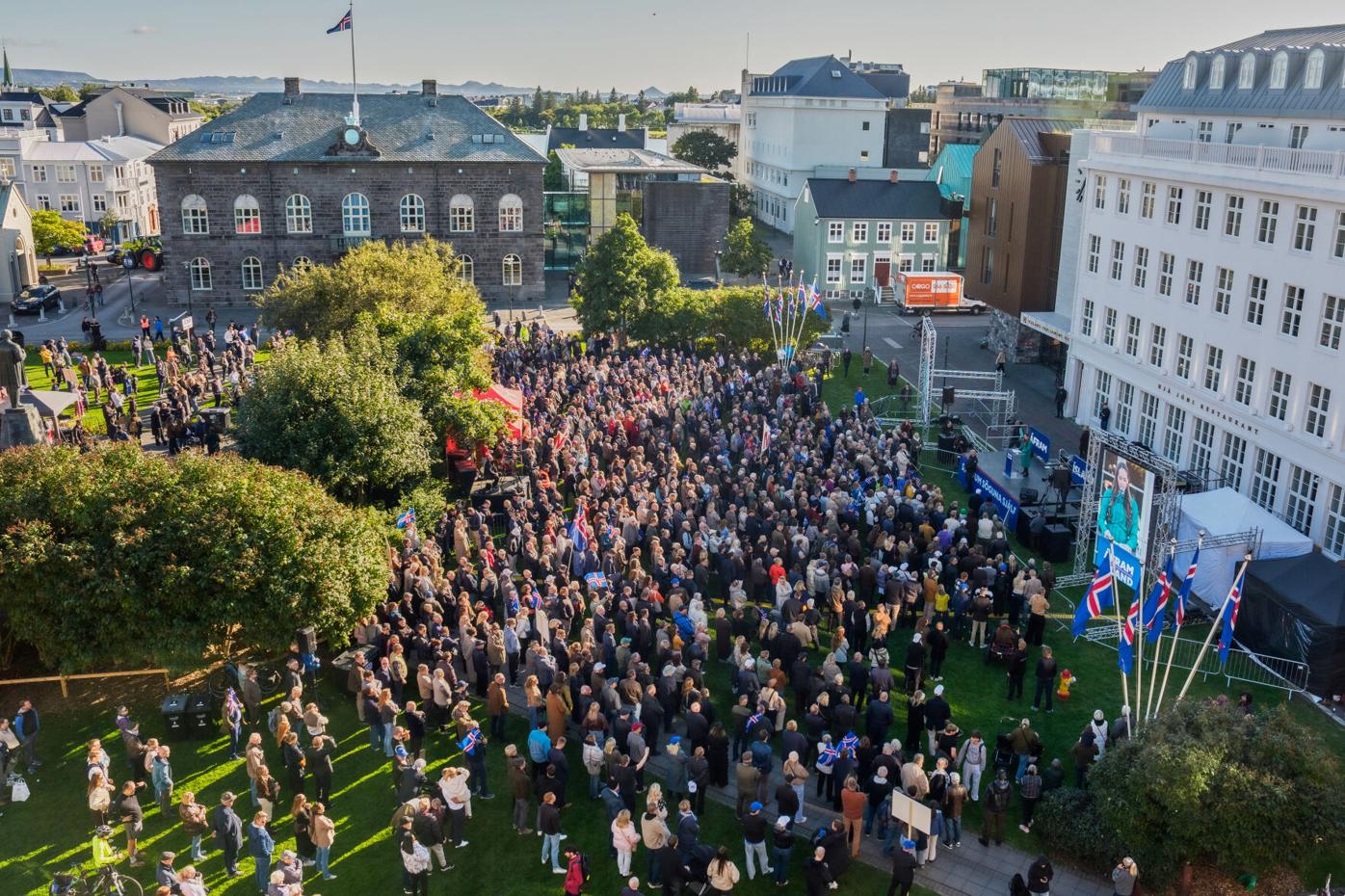
Icelanders went to the polls on Saturday, August 29, in a consultative referendum asking a deceptively simple question: should the government resume negotiations to join the European Union. Final pre-vote polling showed the country split almost exactly down the middle, with one widely cited Gallup survey giving the "No" side a narrow 51.6 to 48.4 percent edge and other tracking putting the race at an effective 46-46 tie. Results are expected early Sunday. The vote itself will not decide EU membership — it merely instructs Iceland's government on whether to reopen accession talks first launched in 2009 and abandoned in 2013 — but its outcome carries outsized symbolic weight for a small North Atlantic nation whose security calculus has been upended this year by President Trump's renewed campaign to acquire neighboring Greenland.
Background
Iceland occupies an unusual position in Europe's institutional architecture. A founding member of NATO since 1949, it has never joined the European Union, yet through its membership in the European Economic Area since 1994 it has already adopted roughly 9,000 pieces of EU law and regulation, giving it access to the single market without a seat at the table where those rules are written. That arrangement has functioned reasonably well for three decades, but it leaves Iceland subject to European economic integration without formal representation in Brussels — a gap that periodically resurfaces as a political issue, especially during economic turbulence.
Iceland's only serious prior attempt to close that gap came in the aftermath of its catastrophic 2008 banking collapse, when the government applied for EU membership in 2009 partly in hopes that eurozone entry could offer a more stable currency footing. Accession talks proceeded for several years but ultimately foundered on fisheries policy: joining the EU would mean submitting Icelandic waters, at least in principle, to the bloc's Common Fisheries Policy, and control over those waters is bound up with both the country's economy — fish and marine products still account for roughly 40 percent of its exports — and a deeper sense of national sovereignty forged in the mid-twentieth-century "Cod Wars" with Britain. A change of government shelved the talks in 2013, and the question largely receded from Icelandic politics for a decade.
It returned to the agenda under Prime Minister Kristrún Frostadóttir, whose center-left coalition — built around her Social Democrats and the Reform Party of Foreign Minister Thorgerdur Katrín Gunnarsdóttir, both pro-EU parties — campaigned on holding a referendum on resuming accession talks no later than 2027. Frostadóttir has made the case in explicitly economic terms, arguing that the costs of maintaining Iceland's independent currency and foreign reserves are substantial — "costing us a ton," in her words — and that eurozone membership could bring greater investment and macroeconomic stability, alongside access to EU grants and infrastructure financing. Euroskeptic parties, led by the opposition Independence Party, have countered by invoking the unresolved fisheries dispute and the bitter experience of the 2009-2013 talks as reasons to leave well enough alone.
Key Developments
What has changed the character of this year's campaign, more than any purely economic argument, is Greenland. President Trump has spent much of 2026 renewing and escalating his push to acquire the vast, ice-covered Danish territory, citing its strategic position, mineral wealth, and the new shipping lanes opening as Arctic sea ice retreats. Icelandic commentators have been quick to note the uncomfortable parallel: as Bifröst University politics professor Eiríkur Bergmann put it, "all of the arguments put forth by the U.S. president for why it would be necessary for the U.S. to acquire Greenland actually equally applied to Iceland — the only difference is that Iceland is formally an independent country." That observation has rattled a nation of roughly 380,000 people that has historically relied heavily on its NATO membership and a close bilateral relationship with Washington for its defense.
In direct response to the shifting security environment, Iceland recently signed a new defense and maritime-security pact with four other NATO members aimed at strengthening surveillance and cooperation across the Arctic and North Atlantic, a region where Russian naval activity has also been increasing. For a meaningful slice of the electorate, closer integration with the European Union — through renewed accession talks — has come to look less like a purely economic choice and more like a hedge against uncertainty in Iceland's traditional security guarantees, even though most analysts and Icelandic officials themselves stress that the referendum debate has remained primarily anchored in domestic economic and fisheries questions rather than the Greenland dispute.
The vote is being watched closely well beyond Reykjavík. In Brussels, officials have kept public comments notably muted, mindful that the referendum is a domestic and merely advisory matter, but analysts note real hope within EU institutions that a "Yes" result would offer a symbolic enlargement win at a moment when other accession tracks — Ukraine's multi-cluster negotiations chief among them — remain slow-moving and politically fraught. A small, wealthy, already largely EU-aligned country voluntarily choosing to move closer to Brussels would send a very different signal than the drawn-out, war-shadowed accession processes underway elsewhere on the continent.
Iceland's relationship with Brussels has always been complicated by its size: a population smaller than a mid-sized American city gives it an economy dominated by fishing, aluminum smelting, and, increasingly, tourism, meaning EU regulatory decisions that might be a rounding error for larger member states can have outsized effects at home. That asymmetry has long fed skepticism that Iceland's voice would ever carry real weight inside EU institutions, even as EEA membership already binds it to following rules it has no vote on — a tension often described locally as "fax democracy," in reference to Norway's similarly awkward EEA-without-membership arrangement.

Reactions
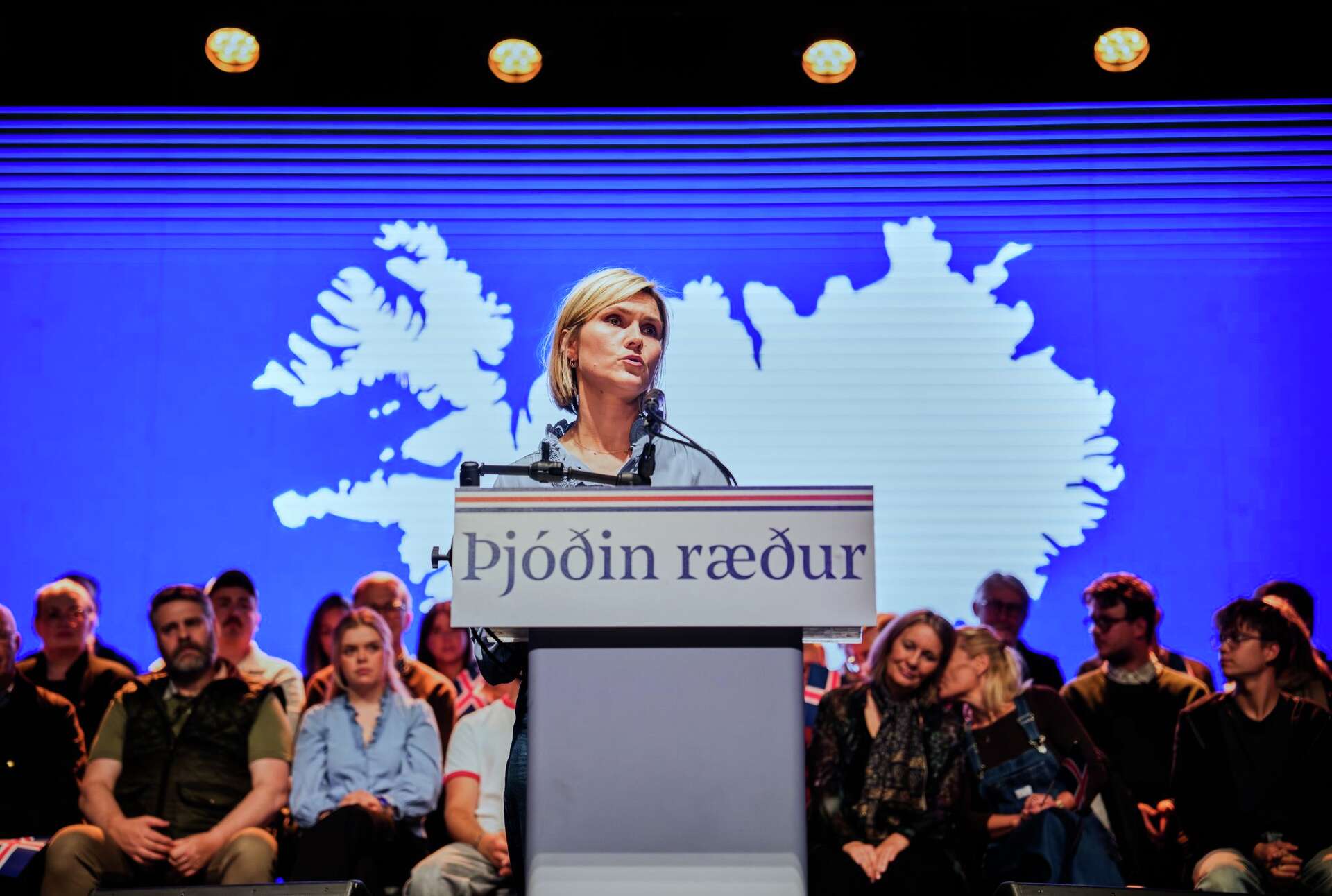
Frostadóttir has campaigned actively for a "Yes" vote in the referendum's final stretch, reiterating her argument that eurozone entry would deliver currency stability and investment opportunity that Iceland cannot access on its own, and that EU membership need not mean sacrificing meaningful control over fisheries if negotiated carefully. Gunnarsdóttir's Reform Party has echoed that message, framing renewed talks as a chance to negotiate from a position of strength given Iceland's existing deep integration through the EEA.
The Independence Party and allied euroskeptic voices have pushed back forcefully, arguing that the 2009-2013 experience already answered the fisheries question in the negative and that nothing material has changed to make Brussels more flexible on Icelandic demands for control over its waters. Some opponents have also cast the Trump-Greenland-driven security argument as an overreaction, noting Iceland's NATO membership already provides its core defense guarantee independent of any EU relationship. Public opinion, reflected in the razor-thin final polling, suggests neither side has managed to build a decisive majority, and the outcome may ultimately hinge on turnout patterns and undecided voters breaking late in one direction or the other.
Turnout itself will be an important variable in reading the result. Iceland's population is small enough that a referendum can swing on a few thousand votes, and both camps spent the campaign's final days working to mobilize supporters in Reykjavík and in the more euroskeptic, fisheries-dependent coastal communities where opposition to Brussels has traditionally run deepest. Regional news outlets in the Nordic countries and across northern Europe have covered the vote closely precisely because it functions as an informal referendum on European sentiment more broadly at a moment when EU enlargement, Arctic security, and the durability of the transatlantic relationship are all in flux simultaneously.
What's Next
If the "Yes" side prevails, Frostadóttir's government is expected to notify Brussels formally of its intent to resume the negotiations frozen since 2013, restarting a process that would likely take years to complete even under favorable conditions, and that would still require a further ratification referendum in Iceland before actual membership, alongside unanimous approval from all existing EU member states. Fisheries policy would almost certainly again become the central point of contention, with Reykjavík likely to seek specific derogations or transitional arrangements to protect domestic control over its exclusive economic zone.
If "No" wins, as the final polling suggested was narrowly more likely, the EU membership question will probably recede from the political agenda again, at least for the remainder of Frostadóttir's coalition's term, though the government would likely continue pursuing closer Nordic and NATO defense cooperation on a separate track from any EU process, particularly given the unresolved tensions over Greenland. Either way, the result will be parsed closely in Brussels as a data point on European public appetite for enlargement at a moment when the bloc is simultaneously managing Ukraine's accession bid and renewed security anxieties across its northern and eastern flanks, and in Washington, where Trump's Arctic ambitions have now visibly reshaped the political debate of one of America's oldest and smallest NATO allies.
Published By | News Editor