BUSINESS
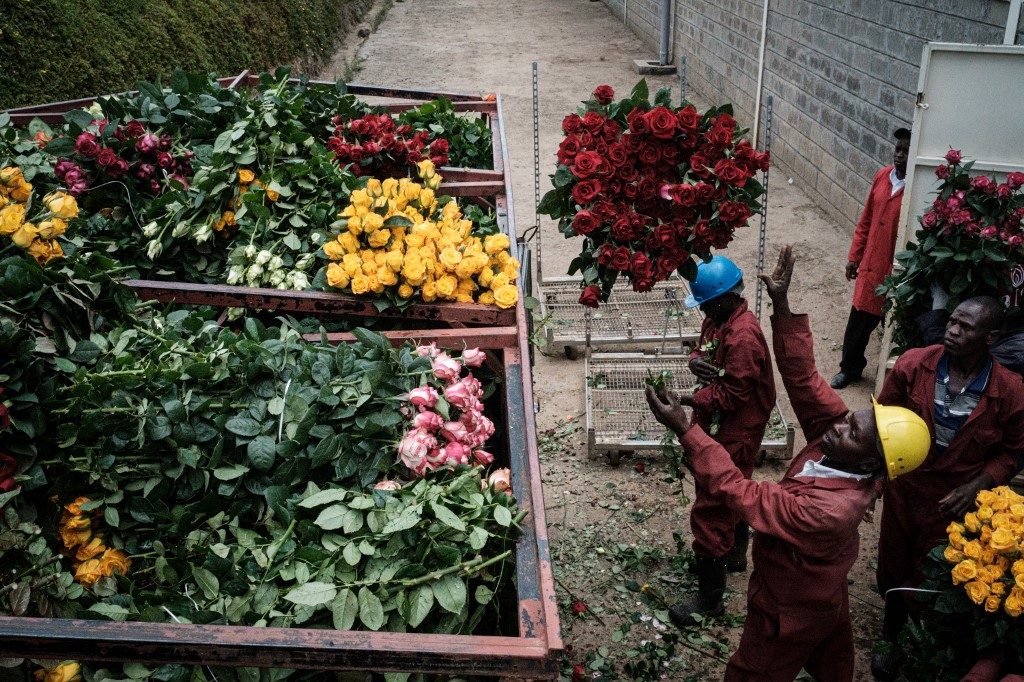
A rose cut in a greenhouse outside Entebbe has perhaps 72 hours to reach a buyer in Amsterdam, Dubai or London before it loses the freshness that makes it sellable at all. For years, that tight window was manageable: passenger jets flying out of Entebbe International Airport routinely carried Uganda's flowers in their cargo holds alongside holidaymakers' luggage, connecting through Gulf hubs like Doha, Dubai and Abu Dhabi to reach European auction houses within a day of harvest. That system has now broken down, and Uganda's floriculture industry — one of its most important non-traditional foreign exchange earners — is absorbing the damage.
According to the Uganda Flowers Exporters Association (UFEA), belly-hold cargo capacity on passenger aircraft passing through Entebbe has collapsed by 65 percent as airlines cut back services through Middle East hubs disrupted by regional conflict. For growers of roses and flower cuttings — crops with almost no shelf life and no tolerance for delay — the result has been blunt and expensive: tonnes of flowers cut, packed and ready for export are being destroyed because there is no way to get them to market in time.
"Confirmed shipments are being offloaded, flights are fewer, and exporters are struggling to secure space," Tom Gitau, general manager of Fresh Handling, one of the logistics firms serving the sector, said of the crunch. Where flowers do move, they are increasingly delayed — transit times that once ran a matter of hours have stretched to as much as 48 hours because of rerouted flights and congestion at alternative hubs. Every extra hour in transit degrades bloom quality, depresses the price a rose fetches at auction in the Netherlands, and raises the odds a shipment is rejected outright by buyers.
The freight bill is climbing too
Reduced capacity has done more than strand flowers on the tarmac — it has driven up what airlines charge for the space that remains. Air freight rates out of Entebbe have jumped from around $2.50 per kilogram to roughly $3.45 per kilogram, a rise of nearly 40 percent, as carriers pass on higher fuel costs, war-risk insurance premiums and the expense of longer, rerouted flight paths. Exporters describe a market where new surcharges appear with little warning, making it difficult to budget shipments even a few weeks out.
The squeeze does not stop at the airport gate. Higher global fuel prices are simultaneously pushing up the cost of running greenhouses, powering irrigation systems and trucking flowers from farm to airport, while imported fertilisers and crop-protection chemicals — items the sector depends on almost entirely from abroad — have also become pricier. For an industry that already operates on thin margins, the combination of rising input costs, rising freight costs and falling reliability is a serious threat to profitability, not just a logistics headache.

An industry that had just started climbing
The timing compounds the pain, because Uganda's flower sector had genuinely been on an upswing. Exports of cut flowers and live plants earned the country $68 million in 2025, up from $65.7 million in 2024 — modest by the standards of coffee or fish, but significant for an industry built on roughly 300 hectares of greenhouse production concentrated around Lake Victoria's shores near Entebbe. More than $200 million has been invested in the sector to date, and UFEA had set out an ambitious growth target: expanding cultivated area from 300 hectares to 1,000 hectares and lifting annual export earnings toward $300 million.
Almost all of that production leaves the country by air, and roughly 90 percent of it is sold through Dutch flower auctions — the world's dominant marketplace for cut flowers and the benchmark against which Kenyan, Ethiopian and Ugandan roses all compete for buyer attention. That heavy reliance on a single, time-sensitive export channel is precisely what makes the current cargo disruption so dangerous: there is no ready alternative route that preserves both the speed and the cost structure the business depends on.
The sector's importance goes beyond the export figures. UFEA data shows the industry employs more than 10,000 people directly, 80 percent of them women, and sustains more than 40,000 additional livelihoods through suppliers, transporters and service providers around the farms. Unlike coffee or maize, which are grown by millions of smallholder households scattered across the country, Uganda's flower industry is geographically concentrated and wage-employment based — meaning a prolonged crisis threatens to be felt acutely in specific communities near the farms, through layoffs and reduced hours, rather than diffusely across the countryside.
Government intervention sought
Industry leaders are now pressing government for help before the disruption forces farms to scale back permanently. UFEA and logistics operators are asking for support in securing charter cargo flights dedicated to perishable exports, diplomatic engagement with international carriers to preserve scheduled routes serving Entebbe, and some form of financial relief to help exporters absorb the spike in freight and input costs. None of these asks are new in principle — the sector has long complained about inadequate cold-storage infrastructure at Entebbe and the absence of a dedicated cargo carrier — but the scale of the current shock has sharpened the urgency behind them.
"This is a defining moment for our industry," UFEA executive director Esther Nekambi said, framing the crisis as a test of the sector's ability to adapt collectively. Growers, she noted, have been sharing logistics information more closely with one another to make the best of scarce cargo space, while partnerships with research institutions such as Makerere University are being leaned on to strengthen the industry's longer-term resilience. Even so, Nekambi acknowledged that maintaining strict compliance with international phytosanitary and labour standards — non-negotiable conditions for keeping access to European markets — becomes harder to sustain when the business itself is under this much financial strain.
What is really at stake
The immediate story is one of destroyed flowers and squeezed margins, but the deeper stakes are about diversification. Uganda's push to reduce dependence on a narrow band of traditional exports — coffee, tea, cotton — has leaned heavily on non-traditional agricultural exports like flowers, fish and horticultural produce to build new sources of foreign exchange and rural employment. A floriculture sector that had been growing steadily now finds its growth trajectory hostage to a geopolitical conflict thousands of kilometres away over which Uganda has no influence at all. That vulnerability is a reminder that the "non-traditional" export strategy is only as resilient as the logistics infrastructure — airports, cold chains, dedicated freighters — that connects Ugandan farms to distant buyers within hours, not days.
For now, the flowers keep being cut, packed and, in too many cases, thrown away. Unless cargo capacity through Entebbe recovers or Uganda finds a way to insulate its perishable exports from the volatility of Middle East air routes, the sector's ambitions of tripling in size and quadrupling export earnings will remain exactly that — ambitions, wilting on the tarmac before they can prove themselves in the market.
Published By | Features Editor