Written By | International News Desk
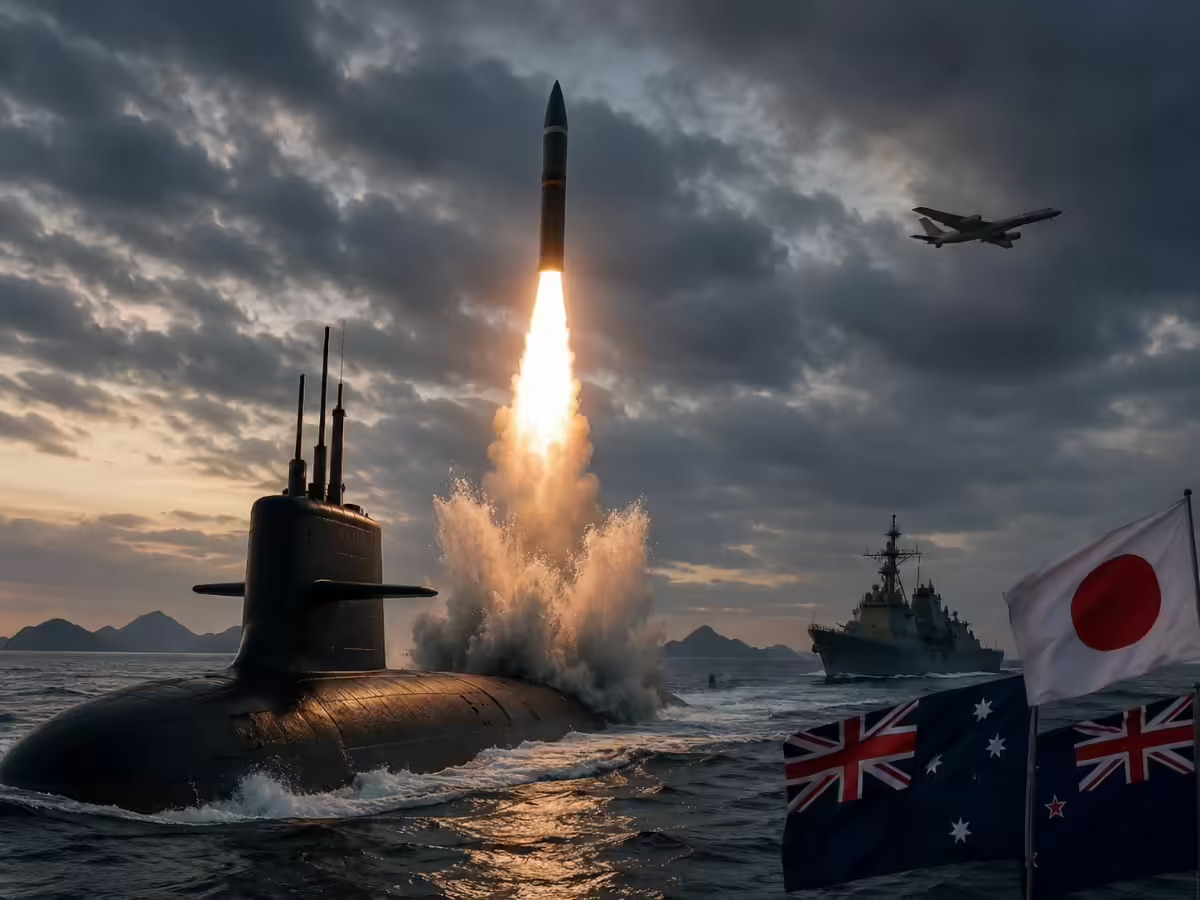
China's notification of the test to other nuclear powers, particularly the United States, became a significant point of friction in its own right. U.S
Background
China has spent more than a decade building out the sea-based component of its nuclear triad, developing a fleet of Jin-class nuclear-powered ballistic missile submarines armed with JL-2 and, more recently, the longer-range JL-3 submarine-launched ballistic missiles. Unlike the United States and Russia, which have for decades openly test-fired submarine-launched ballistic missiles into international waters as a matter of routine deterrence signaling, Beijing has historically kept such tests confined to its own territorial waters or conducted them with far less public visibility, reflecting both a more opaque strategic posture and a desire to avoid provoking neighbors in the crowded waters of the South China Sea and Western Pacific.
That pattern changed on July 6, 2026, when the People's Liberation Army Navy (PLAN) launched a submarine-based ballistic missile carrying a dummy warhead from waters near the South China Sea into the open Pacific Ocean, where it landed within a designated target zone on the high seas. According to multiple defense-focused outlets, this marked the first time China has ever launched a submarine-launched ballistic missile into international open waters, and the first time Beijing has publicly demonstrated, in the Indo-Pacific theater, that it possesses a credible strategic nuclear strike capability launched from a submarine at sea rather than from land-based silos or mobile launchers.
The test did not occur in isolation. It coincided with the opening of the thirteenth iteration of the China-Russia "Joint Sea" naval exercise (called "Maritime Interaction" by the Russian Navy), which began July 6 in the port city of Qingdao and continued through July 13. A Russian Pacific Fleet task group, including at least one corvette, arrived in Qingdao to take part, and analysts noted that the timing of the missile test alongside the start of the joint drills appeared calculated to project an image of deepening Sino-Russian strategic alignment at a moment when both countries face separate, serious frictions with the United States and its allies.
Key Developments
The missile involved is widely believed to be the JL-3, China's most advanced submarine-launched ballistic missile, which a Pentagon assessment has previously indicated is capable of reaching the continental United States when launched from waters near the Chinese coast. Reporting on the July 6 test indicated its flight path passed near Guam, the U.S. territory that hosts significant American military installations and serves as a key logistics and strike hub in any potential Indo-Pacific contingency, adding a pointed edge to the test's symbolism even though officials described the missile's actual target zone as a designated stretch of high seas.
China's notification of the test to other nuclear powers, particularly the United States, became a significant point of friction in its own right. U.S. officials said Beijing provided only a few hours' notice ahead of the launch and gave insufficient technical detail, falling well short of the notification standards that the other four recognized nuclear-weapon states under the Non-Proliferation Treaty — the U.S., Russia, the U.K., and France — have generally adhered to for tests of this kind. A State Department spokesperson, Tommy Pigott, characterized the test as "irresponsible," and said Beijing's "rapid and opaque nuclear weapons buildup is of great concern to the region and the world." Some defense analysts, including researchers at the Center for Strategic and International Studies, argued the episode underscores the need for a formal ballistic-missile launch notification agreement between the U.S. and China, similar to arrangements the U.S. and Russia negotiated during the Cold War, given the risk that ambiguity around such launches could be misread as the opening move of an actual attack.
China's Ministry of National Defense described the launch as a routine, previously planned annual training activity involving a dummy warhead, asserting it was not directed at any particular country or target and complied fully with international law. Beijing further maintained, contrary to the U.S. characterization, that it had released relevant information about the test in a timely manner and had notified the United States in advance — a direct rebuttal of the State Department's claim of short and inadequate notice, leaving the two governments in open disagreement over the basic facts of the notification process itself.
Reactions
The test drew swift and unusually blunt criticism from multiple U.S. allies and partners across the Indo-Pacific and South Pacific. Australian Foreign Minister Penny Wong called the launch "destabilizing to the region," arguing it needed to be understood "in the context of a rapid military build-up by China, which is lacking in the transparency and reassurance as to intent that the region expects." Japan's government issued a statement expressing "serious concerns regarding China's increasingly active military activities" and urged Beijing to reconsider its approach to ballistic missile testing going forward.
New Zealand's government was similarly critical, describing the test as "unwelcome" and noting that the launch occurred within or near the South Pacific Nuclear Free Zone, a treaty regime that New Zealand and other Pacific nations have long championed to keep the South Pacific free of nuclear weapons testing and deployment. A New Zealand government statement said, "We, like our neighbors in other Pacific countries, have no interest in China using the South Pacific as a testing site for missile capability." Taiwan, whose security is directly bound up with any demonstration of Chinese long-range strike capability, also registered concern over the test, according to multiple reports, given Beijing's continued military pressure campaign around the island.
China's Foreign Ministry pushed back forcefully against the wave of criticism. Spokesperson Mao Ning dismissed the U.S. State Department's characterization of the test as "typical double standards and hegemonism," urging Washington to view China's national defense and military development "objectively and rationally." Beijing's framing sought to cast the criticism itself, rather than the missile test, as the destabilizing act — a rhetorical pattern consistent with China's broader response to Western scrutiny of its military modernization in recent years.
What's Next
The test is likely to accelerate calls, particularly from Washington and Canberra, for a more formal and predictable notification regime governing Chinese strategic weapons tests, along the lines of the Cold War-era U.S.-Soviet ballistic missile launch notification agreements. Whether Beijing would agree to such an arrangement remains uncertain, given its historical preference for strategic ambiguity and its view that greater transparency about its nuclear arsenal could undercut the deterrent value of that ambiguity, particularly relative to a U.S. nuclear arsenal that remains considerably larger.
The episode also feeds into a broader, ongoing debate in Washington, Canberra, Tokyo, and Wellington about the pace and opacity of China's nuclear modernization, which independent estimates have suggested could see China's warhead stockpile continue to grow substantially over the coming decade. Coming during the same week as the China-Russia Joint Sea naval exercise, the test is likely to be cited by defense officials in Japan, Australia, and the United States as further evidence of deepening coordination between Beijing and Moscow, even though most analysts caution that the Sino-Russian relationship remains one of convenience rather than a formal alliance.
For Pacific Island nations more broadly, the test is likely to reinforce long-standing sensitivities about great-power militarization of a region that many local governments have worked for decades to keep free of nuclear weapons activity, dating back to French and American nuclear testing in the Pacific during the twentieth century. Expect continued diplomatic pressure on Beijing from New Zealand and other Pacific Islands Forum members, even as concrete countermeasures — beyond public statements of concern — remain limited given the constraints facing smaller Pacific states in confronting a major power directly.



