Written By | Business Experts
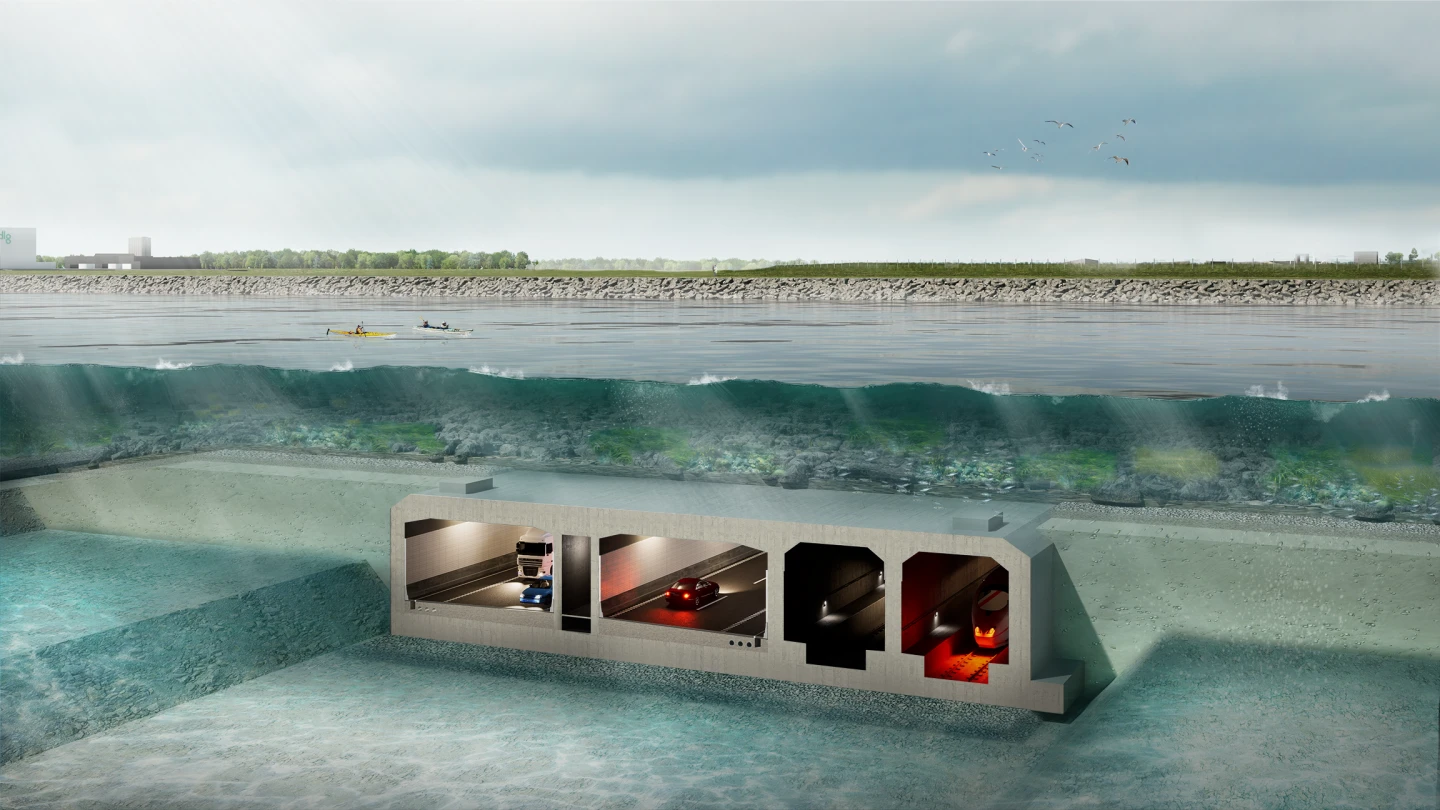
Spoil dredged from the Baltic seabed for the world's longest immersed tunnel has become 300,000 square metres of brand-new Danish coastline — with ponds, salt marsh and walking trails to follow
RODBYHAVN, Denmark
Forty-two football pitches that did not exist
Most enormous infrastructure projects leave behind a hole, a scar and a long argument. The Fehmarnbelt Tunnel has left behind a country that is measurably larger than it was.
On the southern coast of Lolland, at Rodbyhavn, roughly 300,000 square metres of new land now sits where the Baltic used to be — the equivalent of about 42 football pitches. It was not shipped in. It is the seabed itself, excavated to make room for the tunnel and then piled up, shaped and given a second job.
State-owned transport company Sund & Baelt, which is developing the project, confirmed the reclamation this week and said the area will 'become a unique experience for visitors'.
What is being built underneath
The Fehmarnbelt Tunnel is an 18-kilometre road-and-rail crossing between Rodbyhavn in Denmark and Puttgarden on the German island of Fehmarn. When it opens, it will be the longest immersed tunnel in the world.
The distinction between immersed and bored matters, and it is the reason the spoil exists at all. The Channel Tunnel was drilled through rock by tunnel boring machines. Fehmarnbelt is being assembled like flat-pack furniture on an industrial scale: 89 concrete elements, each 217 metres long and weighing roughly 73,000 tonnes, are cast in a purpose-built dry dock on land, floated out, then lowered into a trench dredged in the seabed and joined together underwater with millimetre tolerances.
Digging that trench produces an extraordinary volume of material. On a conventional project it would be a disposal problem. Here it became a coastline.
Inside the finished tube will run two electrified rail tracks and a dual-lane motorway, plus a separate service corridor for maintenance and emergency access. The projected cost is around 7.4 billion euros. Work started on the Danish side in 2020 and the German side in 2021, and completion is scheduled for 2029.
Two and a half hours to Hamburg
The headline benefit is time. A rail journey between Copenhagen and Hamburg currently takes roughly four and a half hours, routed the long way around or onto a ferry. Through the tunnel it becomes about two and a half. Car journeys drop by close to an hour. The 45-minute ferry crossing that generations of Scandinavians have grown up with becomes a seven-minute transit.
That is the kind of change that quietly rewires a region. Northern Germany and southern Denmark stop being two markets separated by water and start behaving like one.
The landscape plan
What makes the Rodbyhavn reclamation interesting is that it is not being left as an engineering by-product. It is being deliberately designed as coastal nature.
'We have reused material from the seabed to create an area where people can experience distinctive coastal nature, with walking trails, ponds and wildlife including birds, amphibians and insects,' said project manager Ditte Hjort.
The plan calls for three ponds and planting chosen to survive a genuinely punishing exposure — wind, salt spray and a Baltic winter. Soil excavated during the construction of the tunnel element factory has been spread across the site, and it carries a seed bank of its own, which is expected to do a good deal of the establishment work without anybody planting anything.
Hjort framed the appeal in terms most landscape projects cannot offer: 'What makes the new area so special is that visitors can follow nature's development right from the outset. We hope it will become a unique experience for visitors, with salt marshes and rich, diverse wildlife and plant life.'
Salt marsh is not a decorative choice. It is among the most effective carbon-storing and storm-buffering habitats available on a temperate coast, and it is exactly the habitat type that northern European shorelines have lost most of over the past century.
Eighteen years of argument
None of this arrived smoothly. Denmark and Germany signed the agreement to build the tunnel in 2008. The years that followed brought sustained opposition from ferry operators, whose business the tunnel exists to replace, and from conservation groups concerned about the Baltic's marine ecology and the effect of a vast trench on the seabed.
It is worth sitting with the irony. A project delayed for years partly on environmental grounds is now producing, as a side effect, a piece of engineered wetland that will be presented to the public as a nature destination. Both things can be true: the construction caused real disruption to a marine environment, and the spoil has been put to better use than a landfill.
Denmark's habit of making land
This is not a one-off. Denmark has become unusually comfortable with building new ground.
Lynetteholm, the artificial island under development off Copenhagen harbour, is planned to house 35,000 people and to function as a storm-surge defence for the city as sea levels rise. Further out, architecture studio Urban Power has designed Holmene, a proposed chain of nine artificial islands intended to become a sustainable technology hub.
Taken together, they describe a national position that is rarer than it should be: if you are going to move millions of tonnes of earth anyway, decide in advance what the earth is going to become.
What this means for you
If you travel in northern Europe, put 2029 in your mental calendar. A Copenhagen-to-Hamburg rail link at two and a half hours makes a weekend trip out of what is currently a day's commitment, and it will reshape the cheapest way to move between Scandinavia and the continent.
If you care about how things get built, the more portable lesson is the one about spoil. Every tunnel, every foundation, every basement produces material that has to go somewhere. The default is a truck and a hole. Rodbyhavn is a reminder that the default is a choice.
A coastline with a birth certificate
Most landscapes arrive without documentation. You can walk a salt marsh in Jutland or Norfolk and have no idea how it got there.
The new ground at Rodbyhavn will be different. It has a start date, a volume, a source and a project manager. Visitors will be able to watch a piece of coast assemble itself from nothing — first the pioneer plants, then the insects, then the birds — in real time and in public.
That is an unusual thing to be able to offer. It came out of a hole in the Baltic.



