COLD SPRING HARBOR, N.Y.
For years, doctors have watched one of medicine's most reliable emergency weapons quietly lose its power. Vancomycin — the antibiotic hospitals reach for when nothing else is working, the drug of last resort against MRSA and the gut infection C. difficile — has been increasingly outsmarted by bacteria that evolved ways to shrug it off. Now, in a discovery published this month, a team of chemists says they've found a way to strip that resistance away and hand vancomycin back its old power.
The breakthrough, published in the journal Nature Communications and detailed in a Cold Spring Harbor Laboratory report released this week, didn't come from a search for a new antibiotic at all. It came from a chemist tinkering with molecules for their own sake — and stumbling onto what may be one of the most promising tools yet against the growing global crisis of antibiotic-resistant "superbugs."
"This discovery came from fundamental chemical research," said John Moses, a professor at Cold Spring Harbor Laboratory (CSHL) who led the work. "Reaction development led to the discovery of the first inhibitor of an important enzyme involved in antibiotic resistance."
A QUIET CRISIS HIDING IN PLAIN SIGHT
Antibiotic resistance rarely makes headlines the way a new virus outbreak does, but public health officials have been warning for years that it's one of the gravest slow-moving threats to modern medicine. Each year, bacteria that have evolved to resist once-reliable drugs kill patients by turning routine surgeries, chemotherapy and even common infections into life-threatening emergencies. Hospitals and nursing homes, where vulnerable patients and heavy antibiotic use collide, have become the primary breeding grounds for these resistant strains.
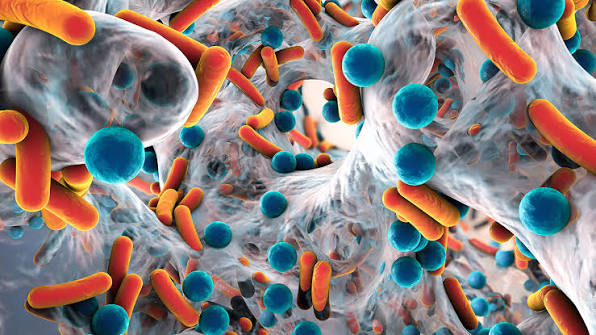
Among the most feared is vancomycin-resistant Enterococcus faecium, known in medical shorthand as VREfm — a hospital-acquired infection that has become increasingly common as the bacteria that cause it evolve new defenses against vancomycin, historically one of the last drugs doctors could count on when other antibiotics failed. When vancomycin stops working, physicians are often left with few, more toxic, or less effective alternatives.
"Scientists around the world are racing to find new ways to stay ahead of these evolving pathogens," the CSHL report on the discovery notes. The answer the Moses lab landed on wasn't a brand-new antibiotic, but a way to make an old one work again.

THE MOLECULE THAT CHANGED EVERYTHING
The story begins not with bacteria, but with a chemistry technique. Years ago, Moses and his team developed a methodology called "diversity oriented clicking," or DOC — a way of rapidly building large numbers of new chemical compounds by snapping molecular building blocks together, the way LEGO bricks click into new shapes. Using this approach, the Moses lab assembled a library of more than 150 novel compounds, a molecular toolbox that researchers across multiple fields, from cancer research to infectious disease, have been mining for potential drug leads ever since.
One of those compounds, first discovered back in 2020 and known as pghi-4, turned out to have a very specific and very useful property: it blocks a bacterial enzyme called secreted antigen A, or SagA. That enzyme plays a key role in helping certain bacteria remodel their outer cell wall — a process that, among other things, helps them dodge the effects of antibiotics like vancomycin.
Working in collaboration with Professor Howard Hang's laboratory at Scripps Research, the CSHL team tested what would happen if they paired pghi-4 with vancomycin against drug-resistant E. faecium. The results were striking: the combination restored vancomycin's ability to kill the resistant bacteria. When the two compounds were used together, the amount of vancomycin needed to kill VREfm dropped by up to eightfold compared with vancomycin alone. The effect held up not just in a single lab strain but across multiple clinical bacterial isolates, and — critically — the combination also reduced the bacterial burden in infected mice, an early but meaningful sign that the approach could translate from a petri dish into an actual treatment.
The research, led by first author K.T. Fam and colleagues, was published in Nature Communications on June 16, 2026, under the title "Genetic and pharmacological inactivation of peptidoglycan remodeling increases antibiotic susceptibility of vancomycin-resistant Enterococcus faecium." The work was funded by the National Institutes of Health, the National Cancer Institute, the Australian Research Council, the New York State Biodefense Commercialization Fund, the F.M. Kirby Foundation and the Starr Foundation.
REVIVING OLD DRUGS INSTEAD OF CHASING NEW ONES
What makes this approach different from the traditional antibiotic-discovery playbook is that it doesn't try to outrun resistance with an entirely new killer molecule — a process that has become slower, more expensive and less successful over the past two decades as the low-hanging fruit of antibiotic discovery has largely been picked. Instead, pghi-4 belongs to a category scientists call "antibiotic adjuvants": partner molecules that don't kill bacteria on their own, but instead disable the specific defenses bacteria use to survive an existing drug, effectively resetting the fight in the antibiotic's favor.
It's a strategy with an obvious appeal: vancomycin is already FDA-approved, well understood by physicians, and has decades of clinical safety data behind it. If an adjuvant like pghi-4 can be shown safe and effective in further trials, the path to getting a restored vancomycin-pghi-4 combination into hospitals could be considerably shorter than developing and approving an entirely new antibiotic from scratch — a process that typically takes upwards of a decade and costs hundreds of millions of dollars, with a high failure rate along the way.
Moses and his collaborators see this as just the beginning. By keeping their DOC compound library open for collaborative research, the team hopes similar adjuvant strategies could eventually be found for other superbugs, including drug-resistant strains of tuberculosis, which remains one of the world's leading infectious killers and is increasingly complicated by resistant strains in parts of Africa and Asia.
"This work reflects a philosophy of chemistry that's designed to accelerate drug discovery in its purest form," Moses said. "By using reliable, robust, and intelligent chemical reactions, we can build new molecules more efficiently. That's exactly the approach we used here."
EXPERT PERSPECTIVE
The CSHL findings arrive amid growing global alarm about antimicrobial resistance, which health authorities and researchers have repeatedly flagged as one of the top public health threats of the coming decades. International health bodies have warned for years that if resistance trends continue unchecked, the world could face a future in which routine infections, minor injuries and standard surgical procedures once again carry the kind of mortal risk they did before antibiotics were discovered in the 20th century. Researchers who study antimicrobial resistance have cautioned that new resistant strains are emerging faster than new antibiotics are being approved, creating what many in the field describe as a widening and dangerous gap.
Against that backdrop, restoring an existing, trusted antibiotic rather than starting from zero is seen by many microbiologists as a pragmatic and potentially faster route to new treatments. The CSHL team's approach — mining chemistry for narrow, targeted "helper" molecules rather than searching for the next blockbuster antibiotic — reflects a broader shift happening across academic labs and pharmaceutical companies alike, as the traditional antibiotic discovery pipeline has slowed and many major drugmakers have scaled back their antibiotic research divisions due to poor commercial returns.
Moses frames the discovery, fittingly, as a reminder of where medical breakthroughs often actually start. "Tomorrow's medical breakthroughs may begin not in a hospital, but rather at a lab bench, where a chemist is simply asking what new molecules are possible," according to the CSHL account of the research.

WHAT THIS MEANS FOR YOU
For most healthy people, this discovery won't change anything about daily life — vancomycin and pghi-4 remain in the research and early development stage, and there's no timeline yet for when, or if, this specific combination could reach pharmacy shelves or hospital IV bags. But the implications matter far beyond the lab for anyone who has ever had, or may one day have, a hospital stay involving surgery, chemotherapy, a serious infection or a long-term catheter — all situations where resistant bacteria like VREfm pose real danger.
If you or a family member are hospitalized, it's reasonable to ask your care team about their infection-control protocols and whether antibiotic resistance testing is standard practice for your case, particularly for anyone who is immunocompromised, has had recent extended antibiotic use, or is undergoing a procedure that carries elevated infection risk. On a personal level, the single most effective thing anyone can do to slow the broader resistance crisis remains unglamorous but well established: only take antibiotics when a doctor prescribes them for a bacterial infection, always finish the full prescribed course, and never take leftover or shared antibiotics for a new illness.
THE BOTTOM LINE
Vancomycin's slow decline against evolving superbugs has been one of the quieter worries in modern medicine — the kind of crisis that builds for years in hospital wards before it breaks into public consciousness. The Cold Spring Harbor Laboratory and Scripps discovery doesn't offer an overnight fix, and pghi-4 still has years of further testing ahead before it could reach patients. But it offers something the field has been short on: a genuinely new strategy, born from basic chemistry rather than a fresh hunt for the next miracle molecule, that could put some of medicine's most trusted old drugs back to work. In a fight where resistant bacteria have been outpacing new treatments for years, reviving what already works may prove to be one of science's smartest moves yet.
This article is intended for general information purposes. Anyone with concerns about antibiotic use, infection risk or hospital care should speak directly with a licensed medical professional.
Published By | Features Editor