Written By |

Abrego Garcia was detained again on Monday by US Immigration and Customs Enforcement (ICE) in Baltimore [Photo: AP]
Analysis
Kilmar Abrego Garcia, a Salvadoran construction worker who has lived in Maryland for years, has once again found himself at the center of a storm over US immigration policy.
Already once wrongfully deported to El Salvador in violation of a court order, Abrego Garcia was detained again on Monday by US Immigration and Customs Enforcement (ICE) in Baltimore. This time, officials plan to deport him to Uganda under a new arrangement between Washington and Kampala — a deal that analysts say is more about geopolitics and trade than immigration management.
A case caught in Trump’s crackdown
Abrego Garcia, 30, has been living in Maryland with his American wife and children under protected legal status since 2019, when a US judge ruled that deporting him would expose him to danger in El Salvador. Despite that, he was wrongly deported once before due to what the Department of Justice later called an “administrative error.” He was returned to the US after federal judges intervened. But his case has remained a flashpoint in former President Donald Trump’s hardline anti-immigration policies, which have sought to deport large numbers of refugees, asylum seekers, and migrants.
Jennifer Vasquez Sura, wife of Kilmar Abrego Garcia, attends a protest rally at the Immigration and Customs Enforcement field office in Baltimore, Monday, August 25, 2025, to support him [Photo: AP]
ICE now claims Abrego Garcia should be deported to Uganda. According to court filings, the idea came after he refused an offer to be sent to Costa Rica in exchange for pleading guilty to human smuggling charges. He is accused of helping undocumented migrants from Central America enter the US between 2016 and 2023, charges he denies. His trial is scheduled for January 2027. Abrego Garcia has also been accused of being linked to the MS-13 gang — an allegation he rejects. His lawyers insist the charges amount to “vindictive prosecution” driven by political motives.
On Monday morning, Abrego Garcia turned himself in at the ICE field office in Baltimore. His wife emerged minutes later in tears. His lawyer, Simon Sandoval-Moshenberg, confirmed a lawsuit was immediately filed in Maryland federal court to block the deportation.
A standing court order in Maryland prevents the Trump administration from deporting detainees for at least two business days after they file habeas petitions, buying Abrego Garcia’s legal team time to seek an interim order.
Uganda Steps In: Why Uganda?
In a surprise move, US immigration officials announced plans to deport Abrego Garcia there. Uganda recently agreed to accept some deportees from the United States under a “temporary arrangement” with conditions: no unaccompanied minors, no convicted criminals, and a preference for African nationals.
Uganda’s Ministry of Foreign Affairs said details of the deal are still being worked out. However, observers believe the Pearl of Africa is seeking trade concessions and improved diplomatic ties with Washington. Coffee, cocoa, vanilla, and petroleum products are among Uganda’s biggest exports to the US, where tariffs have recently increased. Kampala is hoping to boost its coffee exports in particular, competing with bigger suppliers like Colombia. The US, meanwhile, exports machinery and aircraft parts to Uganda, which imposes an 18% tariff on those products. Negotiations around tariffs, visas, and sanctions are believed to have accompanied the deportee deal.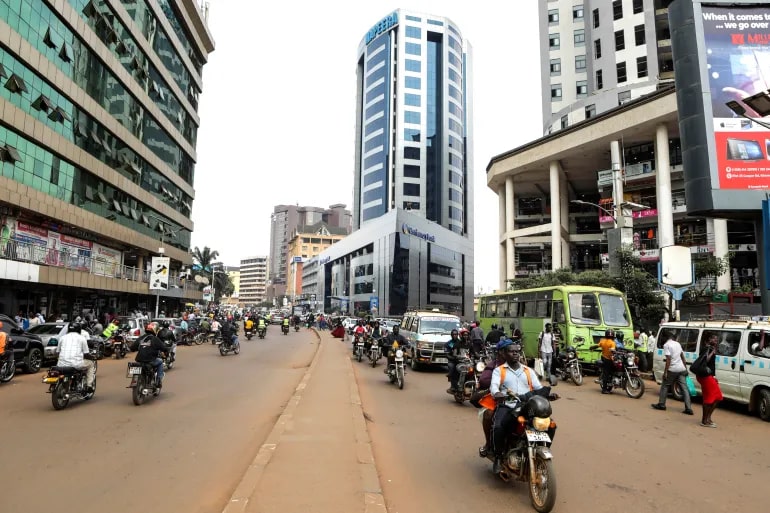
Rights concerns and political implications
Human rights lawyers have condemned the arrangement, arguing that it treats African nations as “dumping grounds” for unwanted migrants. “This is sacrificing human beings for political expediency,” Ugandan lawyer Nicholas Opiyo said. “If the US pays Uganda to hold its deportees, how is that different from human trafficking?”
Uganda, Africa’s largest refugee-hosting country, already shelters over 1.7 million displaced people from South Sudan, Sudan, and the Democratic Republic of Congo. The UN has praised its open-door refugee policy, but critics say Kampala’s poor human rights record undermines its credibility.
Opposition figures warn that accepting deportees could help President Yoweri Museveni’s government polish its international image ahead of Uganda’s 2026 elections, despite ongoing accusations of repression, corruption, and rights abuses. “This is about buying legitimacy,” opposition lawmaker Muwada Nkunyingi told the Associated Press. “The US should not ignore Uganda’s democratic and human rights issues in the name of trade.”
The bigger picture
Uganda is not alone. Eswatini, Rwanda, and South Sudan have also struck similar deportation deals with the US, often tied to trade concessions. Outside Africa, Costa Rica, Panama, and El Salvador have accepted deportees as well. In many cases, the deportees are described by US officials as “uniquely barbaric criminals” whose home countries refuse to take them back. Rights groups argue that these agreements violate international law and leave deportees in legal limbo — neither recognized as refugees nor treated as prisoners.
For Abrego Garcia, the battle continues. His legal team insists he is being targeted unfairly and vows to fight any attempt to deport him to Uganda. His story underscores not only the personal cost of America’s immigration wars, but also the geopolitical bargains shaping where — and how — human beings are displaced.
Torch Media Africa



