Background
Kryvyi Rih, an industrial city of roughly 600,000 people in central Ukraine's Dnipropetrovsk region, has endured repeated Russian air attacks over the more than four years of Russia's full-scale invasion, but it holds a particular symbolic weight: it is the hometown of Ukrainian President Volodymyr Zelensky. The city has been struck multiple times during the war, including a deadly April 2025 attack that killed 20 people, nine of them children, when a ballistic missile hit a residential area and a playground. That history made the events of August 21, 2026 land with particular force, both inside Ukraine and among its Western allies.
The attack occurred against the backdrop of an already brutal summer of long-range Russian strikes on Ukrainian cities, part of a broader pattern in which Moscow has combined ballistic missiles, cruise missiles, and Shahed-type attack drones to overwhelm Ukraine's air defenses, which have been increasingly strained by a shortage of Patriot interceptors — a shortfall Ukrainian officials say has been worsened by competing American demand for air-defense systems tied to the ongoing, separate U.S.-Iran war in the Middle East. Just a day before the Kryvyi Rih strike, a similar overnight barrage on Kyiv killed at least 12 to 14 people and wounded dozens more, underscoring the intensity of Russia's aerial campaign in the days leading up to this attack.
The war itself remains without a resolution nearly four and a half years after Russia's February 2022 invasion. Repeated rounds of diplomacy, including U.S.-brokered talks and proposals for limited measures such as an "air truce" restricting long-range strikes, have failed to produce a durable ceasefire, and both sides have continued to escalate strikes on infrastructure and population centers even as diplomatic channels remain nominally open.
Key Developments
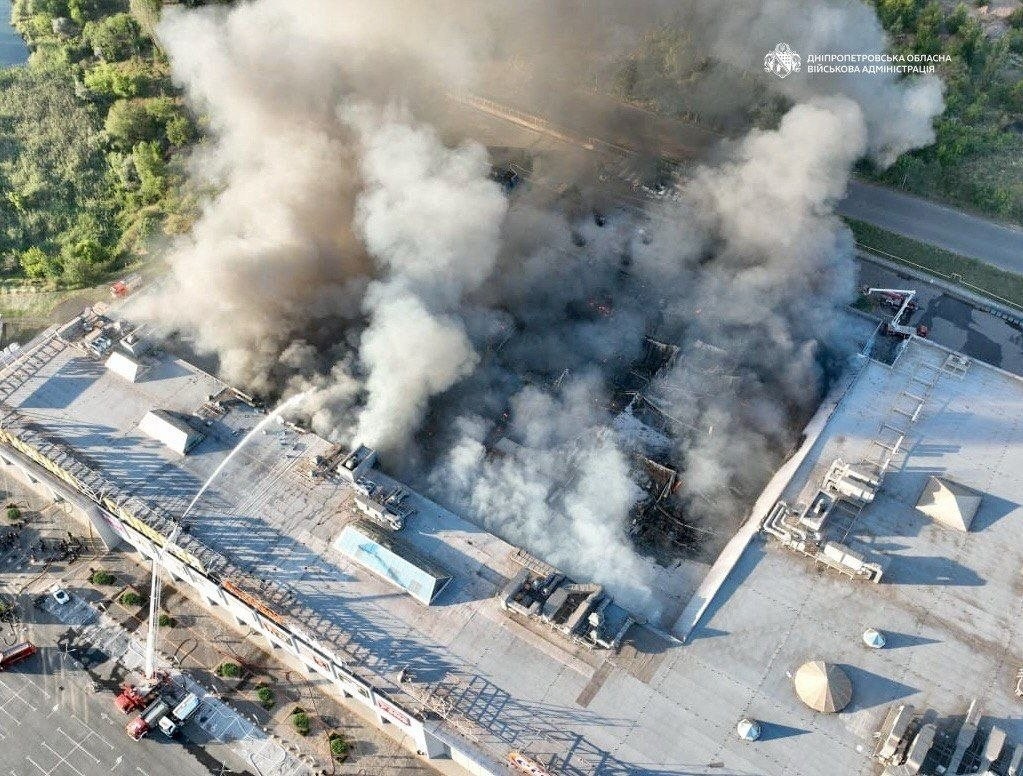
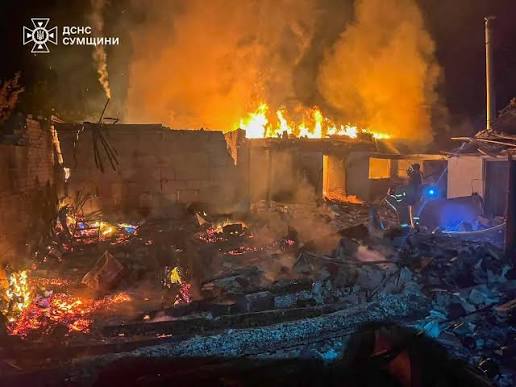
On the afternoon of Friday, August 21, 2026, Russian forces struck a crowded shopping center in Kryvyi Rih in broad daylight, in what Ukrainian officials described as a coordinated two-wave, or "double-tap," attack. According to President Zelensky and Ukraine's State Emergency Service, an initial wave of drones struck the mall, setting it ablaze and prompting an immediate emergency response. Roughly 26 to 30 minutes later, while rescue workers, firefighters, and medical personnel were already on scene treating the wounded and searching the rubble, a second wave struck the same location — a tactic that has drawn accusations of a deliberate strategy to maximize casualties among first responders as well as civilians.
As of the most recent reporting, the death toll stood at 16, with figures from Ukrainian authorities fluctuating between 14 and 19 across different reports as the search-and-rescue operation continued through the night and into Saturday morning; discrepancies in the toll are common in the immediate aftermath of such attacks as authorities work to confirm identities amid the wreckage. More than 130 people were reported injured, including at least 23 children. Nine people, including two children, remained unaccounted for as of Saturday, with rescue crews continuing to dig through the collapsed and burned structure in search of survivors or remains.
Zelensky said the second wave involved a jet-powered Shahed-type drone flying at extremely low altitude, a detail that Ukrainian officials say reflects an evolution in Russian strike tactics using faster, harder-to-intercept variants of the widely used Iranian-designed attack drone. The president also informed United Nations Secretary-General António Guterres directly about the strike, part of what Ukrainian officials described as an effort to press international bodies for a stronger response to what Kyiv characterizes as a deliberate campaign of terror against civilians.
The Kryvyi Rih attack came just one day after a separate overnight Russian missile-and-drone barrage on Kyiv killed at least 12 to 14 people and wounded roughly 33 to 40 more, damaging a children's hospital and residential buildings across several districts of the capital. Taken together, the two strikes represent one of the deadliest 48-hour stretches for Ukrainian civilians in recent months, and Ukrainian officials have pointed to the timing as evidence of an intensifying Russian air campaign rather than an isolated incident.

Reactions
President Zelensky condemned the strike in some of his starkest language in months, calling it "an absolutely cynical and despicable" act and describing the attack, along with similar strikes on civilian targets, as "nothing less than terrorist acts." He urged the international community to respond with "real pressure on the aggressor," framing the attack as part of a pattern of deliberate Russian brutality against civilians rather than a strike gone astray. He also vowed that Ukraine would respond, though he did not specify what form that response would take.
Notably, Zelensky publicly criticized the U.S. Embassy in Kyiv for what he called a "surprisingly disappointing" response to the strike, accusing American diplomats of avoiding direct mention of Russia in their statement on the attack — a rare public rebuke of the United States from Ukraine's president at a moment when Kyiv has been pressing Washington for continued military support, including additional Patriot air-defense batteries.
European officials were quick to condemn the strike. European Union foreign policy chief Kaja Kallas said the attack showed that Russia "continues to destroy Ukraine, no interest in peace," while Dutch Defence Minister Ruben Brekelmans expressed condolences and said the strike underscored the need to "accelerate our support for Ukraine." Several other European leaders and officials issued similar statements condemning the attack on social media and in public remarks, continuing a now-familiar pattern in which European governments respond to mass-casualty strikes on Ukrainian cities with pledges of further military and humanitarian assistance.
The strike also renewed criticism, both inside and outside Ukraine, of the state of Western air-defense support. Ukrainian officials have repeatedly warned that a shortage of Patriot interceptor missiles — a shortfall they attribute in part to competing demand generated by the separate, ongoing U.S.-Israel war against Iran — has left Ukrainian cities more exposed to exactly the kind of large-scale, multi-wave drone and missile attacks seen in both Kyiv and Kryvyi Rih this week.

What's Next
In the near term, rescue operations in Kryvyi Rih are expected to continue as crews search for the remaining missing residents, with the final death toll likely to rise as bodies are recovered from the wreckage — a grim pattern consistent with previous mass-casualty strikes on Ukrainian cities. Ukrainian authorities are also likely to formally document the attack as a potential war crime, given the double-tap tactic targeting rescue workers, adding to a growing body of similar allegations Kyiv has compiled against Russian forces over the course of the war for eventual international prosecution.
Diplomatically, the strike is likely to feature prominently in Ukraine's continued appeals to Western partners for additional air-defense systems, particularly Patriot batteries, as Kyiv seeks to close the gap exposed by this week's attacks. Zelensky's direct outreach to UN Secretary-General Guterres suggests Kyiv will also press for renewed attention at the United Nations, though prior such appeals have had limited practical effect given the Security Council dynamics involving Russia.
The attack is unlikely to alter the broader trajectory of the war in the short term, but it adds further strain to already difficult efforts to broker even limited de-escalation measures, such as the previously discussed mutual "air truce" on long-range strikes that Kyiv and Washington had explored earlier this summer. With Moscow showing no sign of curtailing its strike campaign and Ukraine's own air-defense capacity stretched thin, further attacks on population centers are widely expected in the weeks ahead, particularly as autumn approaches and concerns grow over renewed Russian strikes on Ukraine's energy infrastructure heading into winter.
For Kryvyi Rih itself, the attack on Zelensky's hometown carries a symbolic charge that is likely to keep the city in the international spotlight, even as it joins a long list of Ukrainian cities that have suffered mass-casualty strikes on civilian infrastructure since the war began in February 2022.
Published By | News Editor