MOROTO/KAMPALA
In Lokitumo Village, in Moroto district's Lotisan Subcounty, farmers who a year ago watched their fields crack under the sun are now harvesting sukuma wiki, onions and tomatoes twelve months a year. The change came from a solar-powered irrigation system installed by the Ministry of Water and Environment — a small, two-to-five-acre demonstration plot that officials now hold up as proof that agriculture can survive, even thrive, in one of Uganda's driest and most food-insecure regions.
That flicker of hope arrived in the same week Parliament moved from debate to decision on Karamoja's deepening hunger crisis, unanimously backing a motion demanding immediate government intervention, unlocking a dedicated disaster financing facility, and putting a national crop insurance scheme on the table for the first time as a serious policy option. Together, the two developments mark a shift in Uganda's response to the drought battering Karamoja and much of northern Uganda — from emergency relief alone toward a mix of financing, insurance and irrigation infrastructure meant to outlast this particular dry spell.
A crisis that has outgrown ad hoc relief
The scale of the emergency is what forced Parliament's hand. Chekwii County MP Simon Peter Longoli told the House that Karamoja has received virtually no meaningful rainfall since April, with more than 1.15 million acres of crops destroyed across the region. At least 20 deaths have been linked to hunger, according to legislators, although government has so far officially confirmed 16. An estimated 120,000 children in Karamoja are believed to be malnourished.
Moving the motion on July 16, Kilak North County MP Anthony Akol said the crisis had “evolved beyond an agricultural challenge into a humanitarian emergency,” pointing to deaths among children, the elderly and pregnant women. He called on government to expedite food and input deliveries — including seedlings and planting materials — in time for the next planting window, and to strengthen early-warning systems so that future dry spells are anticipated rather than reacted to.
Other MPs pressed for more durable fixes. Tochi County MP Peter Okot warned that farmers across Greater Northern Uganda had “invested heavily in planting before the unexpected dry spell destroyed their crops,” and that many more lives were at risk without urgent support. Omoro County MP Andrew Ojok went further, proposing that Parliament move beyond annual relief debates entirely by introducing crop insurance for smallholder farmers. “If we help farmers insure their crops, we shall go a long way in protecting livelihoods,” Ojok argued — a proposal that, if taken up, would represent a significant policy shift for a country where crop insurance uptake among smallholders remains negligible.
Money, mechanics and a Friday deadline
The motion's most concrete outcome was a push to fast-track US$38 million earmarked under the Northern Uganda Social Action Fund IV (NUSAF IV) Disaster Risk Financing Facility — money intended to respond to severe drought conditions not just in Karamoja but across West Nile, Acholi, Lango, Teso, Bukedi, Bunyoro and the Elgon sub-region. Legislators argued that a Shs4 billion emergency allocation announced earlier for relief and water-facility rehabilitation, while welcome, remains inadequate against the scale of need — and pressed for the NUSAF facility, designed precisely for shocks of this kind, to be activated without further delay.
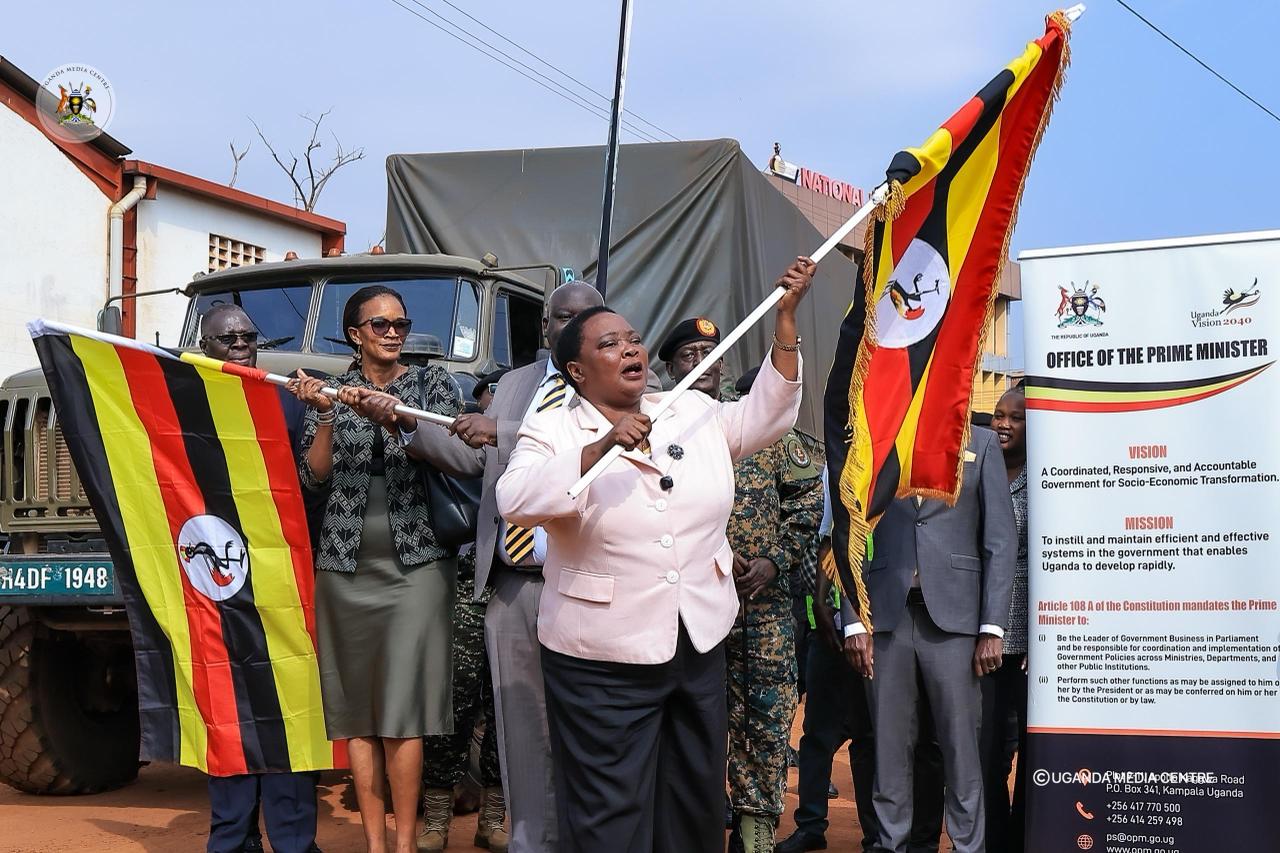
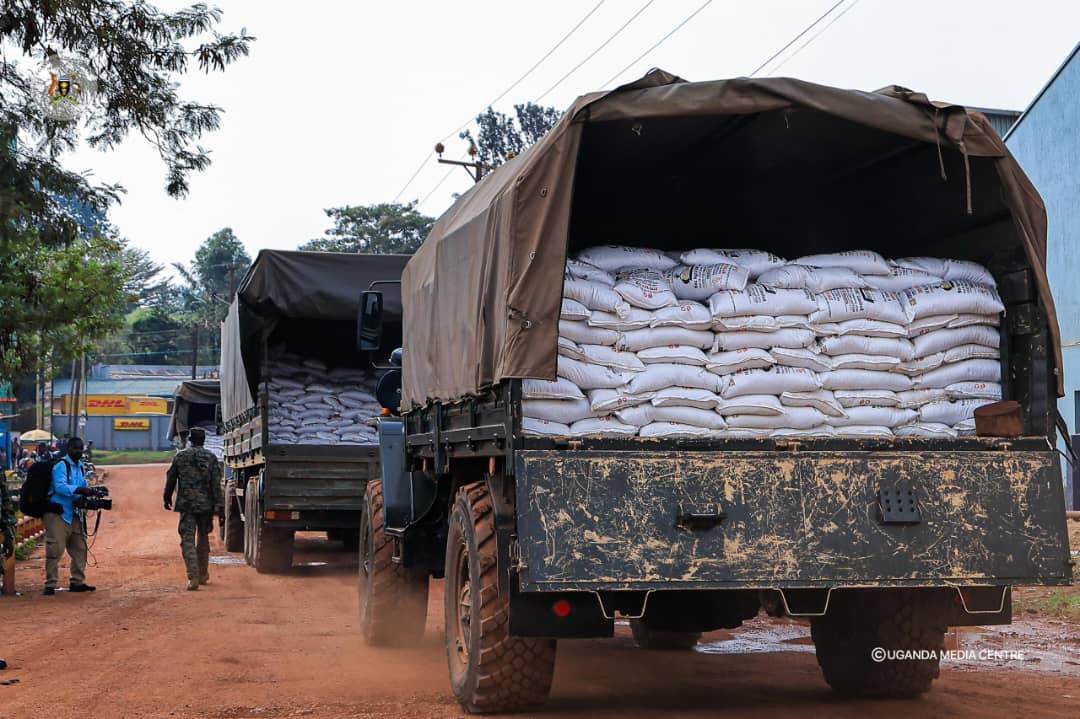
Prime Minister Robinah Nabbanja, responding to the debate, told Parliament that Cabinet had already reviewed a paper on the hunger crisis and that President Yoweri Museveni had directed the Office of the Prime Minister to coordinate emergency food distribution using the army. Food stocks have been positioned in Kigumba, Kiryandongo District, with the National Enterprise Corporation — the commercial arm of the Uganda People's Defence Forces — contracted to transport relief supplies into the worst-affected Karamoja districts. Nabbanja told MPs distribution was expected to begin on Friday, July 24, and urged legislators from affected districts to mobilise their communities to receive the assistance.
Longoli, for his part, pressed for the response to go beyond a single distribution round, calling for sustained food relief covering the full six months before the next harvest, distribution of drought-tolerant seed varieties by the Ministry of Agriculture, Animal Industry and Fisheries (MAAIF), and targeted nutritional support for malnourished children — a signal that legislators expect this week's army-coordinated airlift to be the start of a sustained response rather than a one-off gesture.
Why Lokitumo matters beyond Moroto
Against that backdrop of emergency logistics, the quieter story unfolding in Lokitumo carries outsized significance. The site is deliberately modest — the Ministry of Water and Environment caps each demonstration plot at two to five acres — but its purpose is to prove a model that can be replicated, not to feed the region on its own.
“The solar-powered water supply system focuses on establishing a minimum of two and a maximum of five acres of land per site as a centre of excellence where people are trained in irrigated agronomy,” said Ronald Kato Kayizzi, the ministry's Assistant Commissioner for Multipurpose and Bulk Water Development, who added that the Moroto site's success makes it a strong candidate for expansion.
Moroto District Senior Agricultural Engineer Geoffrey Wanamama, whose office trains farmers and monitors the project, said the results already rebut a common assumption about Karamoja's agricultural potential. “This project proves that agriculture is possible in Karamoja as long as there is sustainable water,” he said. Assistant Resident District Commissioner Aol Mark Musoke was blunter still: “In times of hunger like this, such a project becomes a lifeline for the region,” he said, calling for it to be scaled up across other food-insecure parts of Karamoja.
The human impact is tangible for beneficiaries. Josephine Tengori, one of the farmers using the irrigation system, said year-round vegetable production has changed her household's diet. “Our children are now healthy because they eat fresh vegetables, and this is helping us reduce malnutrition in our home,” she said. Alice Okwakol, another beneficiary, said the project has had knock-on financial benefits: members of her farmer group now save money through a Village Savings and Loan Association after selling surplus vegetables. Farmers also draw water from the system for livestock and household use, extending its value beyond crop production alone.
Farmers at the site were candid about the project's limits, however, telling officials they still need better access to quality seed, additional farm inputs and reliable markets to sustain production once the demonstration phase ends — a reminder that irrigation infrastructure alone cannot substitute for the broader input-supply and market-access systems smallholder farmers need.
The bigger picture for Uganda's food economy
Karamoja's crisis is a stark illustration of a structural vulnerability that extends well beyond the sub-region: Uganda's continued heavy reliance on rain-fed agriculture in a period of increasingly erratic rainfall. The interventions now converging on the crisis — emergency army-coordinated food distribution, a disaster financing facility designed for rapid activation, a nascent proposal for agricultural insurance, and small-scale solar irrigation infrastructure — represent different layers of response to the same underlying problem: farmers in drought-prone regions currently have almost no buffer between a failed rainy season and a humanitarian emergency.
Whether Parliament's momentum this week translates into lasting change will depend on follow-through that has proven elusive in the past — the NUSAF facility's disbursement speed, the fate of the crop insurance proposal once cost estimates are tabled, and whether the Lokitumo model receives the funding needed to expand beyond a single showcase site. For farmers in Karamoja who have now lived through repeated cycles of drought, relief and renewed drought, the test will not be this week's headlines but whether the region enters next year's dry season with meaningfully more resilience than it had this time around.
Published By | Features Editor