Written By | Health News Agencies
The FDA just approved the first at-home starting dose for an Alzheimer's drug — a 15-second injection that could spare patients months of IV drips
WASHINGTON / TOKYO / CAMBRIDGE, Mass.
For three years, starting treatment for early Alzheimer's disease has meant the same grim routine: drive to a clinic, sit in a chair, and let an IV drip amyloid-fighting antibodies into your bloodstream for about an hour, every two weeks, for a year and a half. On Monday, the Food and Drug Administration tore up that requirement — at least for one drug, and at least for patients willing to accept a new set of trade-offs.
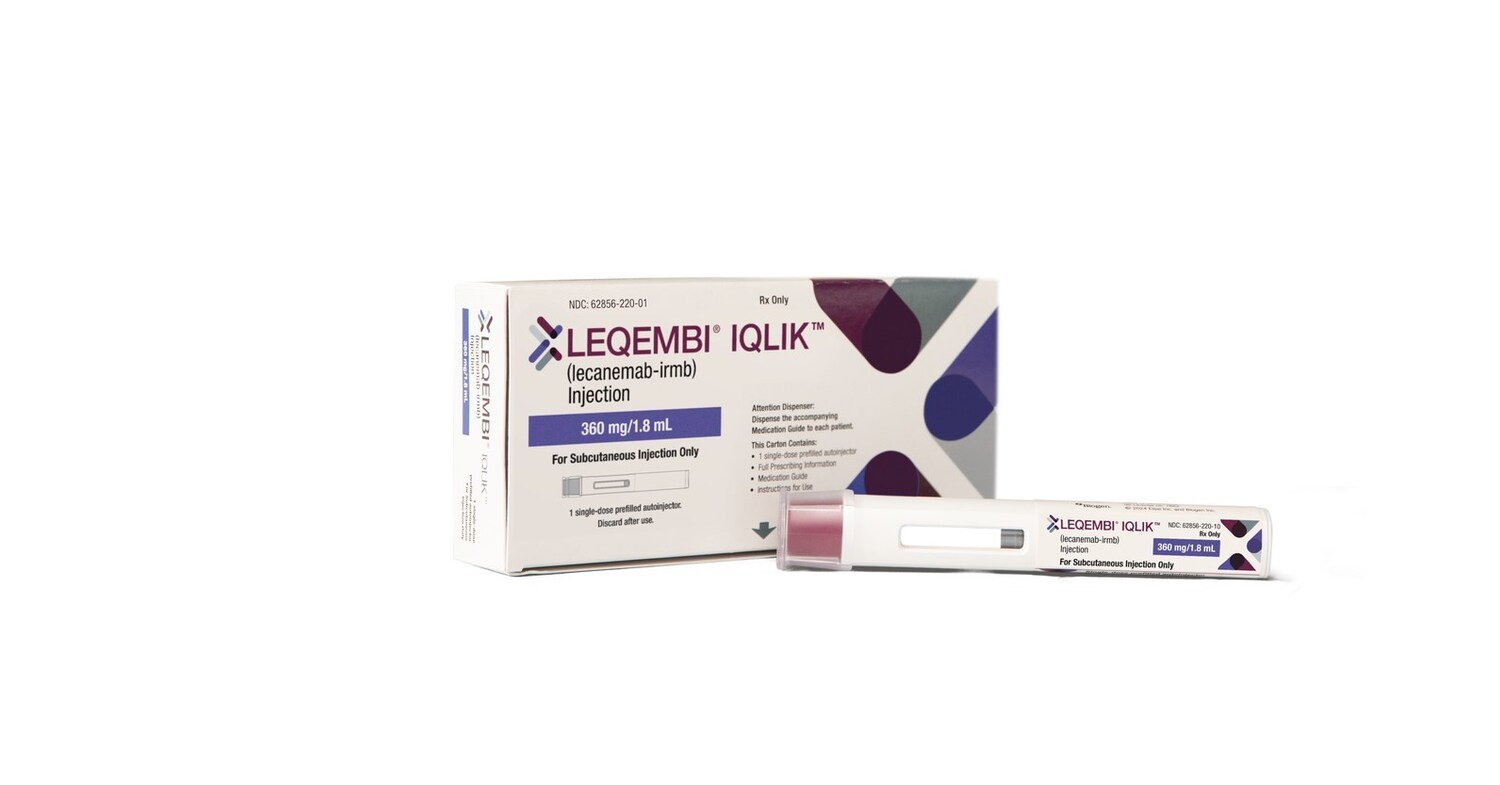
The FDA approved a supplemental application from Eisai and Biogen allowing LEQEMBI IQLIK, the subcutaneous version of their Alzheimer's drug lecanemab, to be used as a starting dose that patients or caregivers can inject at home. Shares of Biogen jumped 4.5% on the news. It's the first anti-amyloid Alzheimer's therapy in the world cleared for at-home initiation — not just maintenance, but the whole treatment course, from day one.
"The approval of LEQEMBI IQLIK for initiation dosing marks a new era of Alzheimer's treatments," said Dr. Howard Fillit, co-founder and chief science officer emeritus of the Alzheimer's Drug Discovery Foundation. "For the first time, patients and their care partners have meaningful choice in how anti-amyloid treatment is delivered."
But this is still a drug that carries a boxed warning — the FDA's most serious safety label — for brain swelling and bleeding. And the people who actually sell these drugs for a living aren't convinced the convenience upgrade will move the needle much.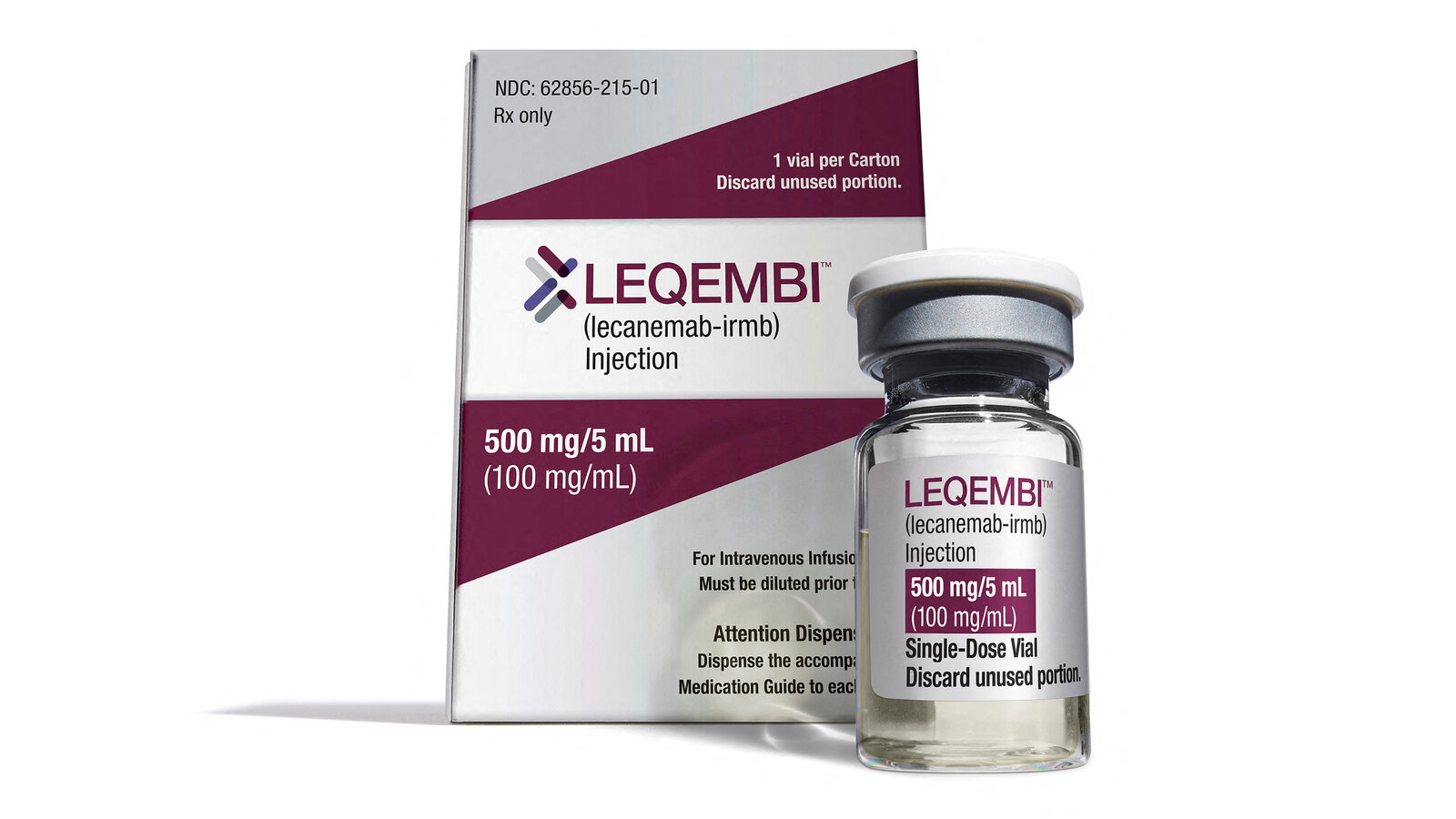
WHAT'S ACTUALLY CHANGING
Leqembi, generic name lecanemab-irmb, targets amyloid beta — the sticky protein that clumps into plaques in the brains of Alzheimer's patients and is believed to drive much of the disease's damage to memory and cognition. It was first approved by the FDA in 2023 for adults with mild cognitive impairment or mild dementia due to Alzheimer's, based on the pivotal Clarity AD trial, which found that IV lecanemab slowed cognitive and functional decline by 27% compared to placebo over 18 months, measured on a standard dementia rating scale. A subcutaneous, self-injectable version for maintenance dosing — after the first 18 months of IV treatment — won approval back in August 2025.
Monday's approval closes the loop: now patients can start on the subcutaneous version too, skipping the IV phase altogether if they and their doctor choose. The regimen is two 250 mg injections, delivered about 15 seconds apart via an autoinjector, once a week, for the first 18 months. After that, patients drop to a single 360 mg weekly injection for maintenance. Throughout, patients can switch back and forth between IV and at-home injections depending on what works for them.
Eisai says the at-home starting dose will actually hit U.S. pharmacies in late August 2026, distributed through specialty pharmacies rather than ordinary drugstores. In a company-sponsored survey of 50 early Alzheimer's patients and 50 of their caregivers, 94% said the autoinjector device was easy to use and that they felt confident giving themselves the shot at home.
The FDA's decision leaned on "bridging" data rather than a brand-new outcomes trial: sub-studies within the Clarity AD long-term extension found that once-weekly subcutaneous dosing produced blood levels of the drug equivalent to the IV version, with similar reductions in amyloid plaque and a comparable safety profile. Reuters noted the regulator explicitly acknowledged that the subcutaneous initiation regimen "was not tested in separate large trials measuring patient outcomes" — the approval instead rests on the assumption that if the drug behaves the same way in the bloodstream, it will work the same way in the brain.
THE PART THE PRESS RELEASE BURIES
Here's what should give any prospective patient pause. Leqembi's boxed warning covers something called ARIA — amyloid-related imaging abnormalities — brain swelling (ARIA-E) or micro-bleeding (ARIA-H) that shows up on MRI scans, sometimes without symptoms, sometimes with severe ones including seizures. In Eisai and Biogen's own safety data, 21% of patients on Leqembi experienced some form of ARIA, compared to 9% on placebo. ARIA-E specifically hit 13% of Leqembi patients versus 2% on placebo. Serious, symptomatic ARIA occurred in 0.7% of patients. Bleeds larger than a centimeter across — intracerebral hemorrhages — occurred in 0.7% of Leqembi patients versus 0.1% on placebo, and the company confirms some of those bleeds have been fatal.
The risk isn't evenly distributed. Roughly 15 to 16% of Alzheimer's patients carry two copies of a gene variant called ApoE ε4 — makes them "homozygotes" in medical terms — and for this group, the numbers are far starker: 45% experienced some form of ARIA on Leqembi, compared to 22% on placebo, with symptomatic ARIA-E striking 9% of homozygotes versus just 1-2% of everyone else. The FDA now recommends genetic testing for ApoE ε4 status before starting treatment, specifically so patients can make an informed decision about that risk before their first injection — whether that injection happens in a clinic or on their own kitchen counter.
The subcutaneous formulation adds its own, more mundane risk on top: localized injection-site reactions — redness, swelling, rash, pain, bruising, hardened lumps — which showed up frequently in trial data and, in some cases, were severe enough to delay or stop treatment altogether.
THE MONEY QUESTION
Wall Street's reaction has been a mix of applause and shrugs. BMO Capital Markets analyst Evan Seigerman said the at-home option could meaningfully boost how many patients actually start and stay on treatment, and gives Leqembi a real edge over its biggest rival, Eli Lilly's Kisunla (donanemab), which still requires IV infusions with no at-home alternative on the table. Multiple Wall Street analysts have recently reiterated buy or outperform ratings on Biogen, with price targets ranging from roughly $200 to $260 a share.
But analysts at Citi were more measured, cautioning that the approval alone isn't likely to trigger an immediate surge in prescriptions. The real bottlenecks for Leqembi adoption, they argue, have never really been about the needle — they're about everything that has to happen before a patient ever gets near one: identifying which patients actually have early-stage Alzheimer's rather than a different kind of cognitive decline, confirming amyloid buildup through expensive PET scans or spinal taps, finding a neurologist or specialist with capacity to manage ongoing MRI monitoring for ARIA, and navigating insurance reimbursement for a drug that, including monitoring costs, can run tens of thousands of dollars a year. An at-home needle doesn't solve any of that.
To help with cost, Eisai is running its LEQEMBI Companion program, which helps patients navigate insurance coverage, connects them to copay assistance, and — through a separate Patient Assistance Program — provides the drug entirely free to eligible uninsured patients who demonstrate financial need.
WHAT THE DRUG ACTUALLY DOES, LONG-TERM
For patients who do get on and stay on treatment, the long-term data Eisai has published is genuinely notable. Across three years of combined core-trial and extension data, lecanemab was associated with 1.01 fewer points of decline on the standard CDR-SB dementia scale compared to a matched, untreated comparison cohort; by four years, that gap widened to 1.75 points. In a similarly designed comparison against a separate research cohort, the gap reached 2.17 points by year four. In a subgroup analysis, 81% of patients who stayed on lecanemab through four years remained in the early stages of Alzheimer's disease, rather than progressing to moderate or severe dementia. Eisai frames the difference between a 0.5 and a 1.0 shift on that scale in stark human terms: the difference between mild impairment and losing the ability to be safely left alone, manage a household, or reliably recall recent events.
Lecanemab is now approved in 53 countries, including Japan, the U.S., China, the U.K., and Saudi Arabia, with regulatory reviews ongoing in six more — evidence of how central anti-amyloid drugs have become to the global Alzheimer's treatment landscape, even as debate continues in some scientific circles about how much amyloid clearance alone can meaningfully slow the disease for any individual patient.
EXPERT PERSPECTIVE
Neurologists who prescribe Leqembi generally frame the at-home option as an incremental, not revolutionary, advance: it removes a real logistical burden — the biweekly-to-weekly clinic visits that are especially hard on elderly patients and the family members who have to drive them — without changing the underlying calculus a patient and doctor have to work through about ARIA risk, genetic testing, and monitoring commitments. The FDA's own approval language reflects that framing, describing subcutaneous dosing as offering "greater convenience and flexibility" rather than superior efficacy or safety.
WHAT THIS MEANS FOR YOU
If you or a family member has been diagnosed with mild cognitive impairment or mild dementia due to Alzheimer's and has been putting off starting Leqembi because of the clinic-visit burden, this approval is worth a conversation with your neurologist when the at-home version launches in late August. Ask specifically about ApoE ε4 testing before you start, since that single blood or genetic test does more to predict your personal ARIA risk than almost anything else discussed at the appointment. Expect a baseline MRI before your first dose and periodic MRIs afterward — those don't go away just because the injection itself happens at home. And go in with realistic expectations about cost and logistics: even with Eisai's assistance programs, insurance approval, specialist access, and the sheer complexity of monitoring requirements remain real hurdles that a home-injection kit does not eliminate.
THE BOTTOM LINE
The FDA just handed Alzheimer's patients something that sounds like unambiguous good news: a 15-second shot they can give themselves at their own kitchen table instead of an hour hooked to an IV every other week. It genuinely is progress, and 94% of patients in Eisai's own study said the device felt easy and safe to use. But strip away the press release, and this is still the same drug, with the same boxed warning for brain swelling and bleeding, the same genetic risk stratification, and the same expensive, specialist-dependent path to actually getting on treatment in the first place. Convenience just got easier. The disease, and the decision to fight it, did not.



