Written By | Staff Writer

Uganda's formal banking sector remains dominated by foreign-owned commercial banks, even as the vast majority of Ugandans remain unbanked
KYANKWANZI/KAMPALA
Inside the auditorium at the National Leadership Institute in Kyankwanzi this week, several hundred leaders of Uganda's savings and credit cooperatives are being drilled in governance frameworks, risk management and “financial wellness.” But the sharpest moment of the seven-day SACCO Leadership Summit came not from a training slide but from a blunt admission by a former central banker: Uganda's cooperative movement, meant to be the financial backbone of rural farmers and traders, is crumbling from the inside just as the country needs it most.
“The fact that 80 percent of the financial sector is in foreign hands is a critical problem,” Prof. Ezra Suruma, a former Deputy Governor of the Bank of Uganda and former Finance Minister, told delegates on Monday. “I see them crumbling in my village and in other villages. I see them crumbling.”
Suruma's remarks, delivered at the inaugural summit organised by the Uganda Cooperative Savings and Credit Union Limited (UCSCU), have reignited a long-simmering debate about who actually controls Uganda's financial system — and what it means for the millions of smallholder farmers, traders and rural households who depend on Savings and Credit Cooperative Organisations (SACCOs) for the credit that commercial banks routinely deny them.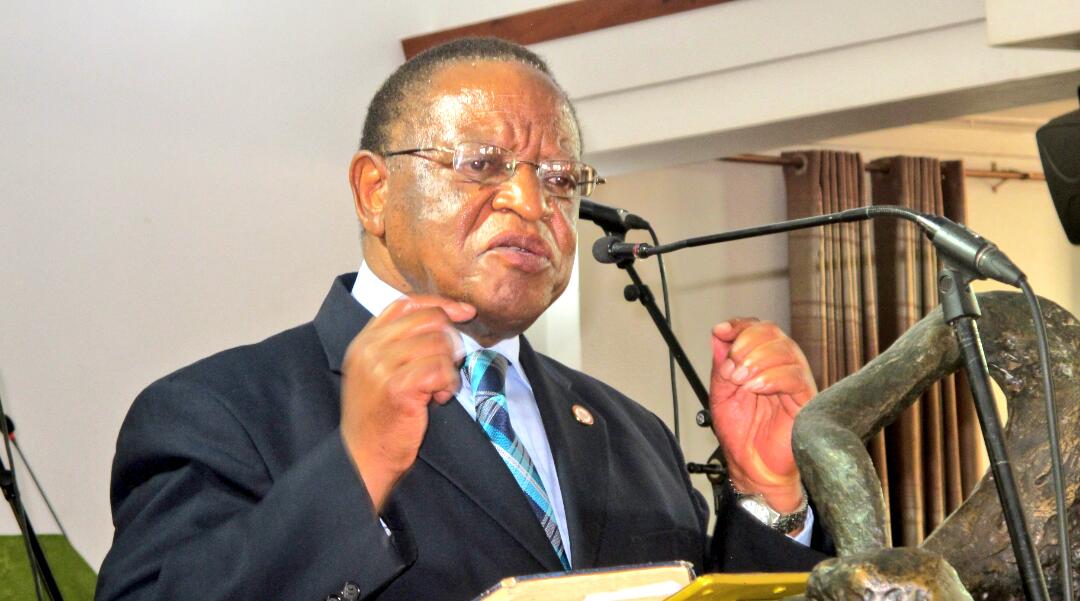
A sector both indispensable and fragile
Uganda's formal banking sector remains dominated by foreign-owned commercial banks, even as the vast majority of Ugandans remain unbanked. According to a 2018 Financial Sector Deepening Uganda (FSDU) survey cited at the summit, roughly 89 percent of Ugandan adults — about 16.5 million of 18.6 million people — lacked access to a bank account or other structured financial service. That gap is precisely the space SACCOs, Village Savings and Loan Associations (VSLAs) and microfinance institutions were built to fill.
The numbers illustrate both the scale of the opportunity and the scale of the problem. Uganda's Ministry of Trade, Industry and Cooperatives reported 9,189 registered SACCOs as of January 2020, spread across nearly every district and woven into the agricultural value chains that keep the country fed. Farmer groups use SACCOs to save proceeds from coffee, maize, soybean and dairy sales; they borrow from them to buy seed, fertiliser and livestock; and increasingly, women's savings circles and youth groups route their finances through SACCO structures linked to government programmes such as Emyooga and the Parish Development Model (PDM).
Yet many of these institutions, particularly at village and parish level, remain thinly capitalised, weakly governed and vulnerable to mismanagement or outright fraud — problems that have surfaced repeatedly in cooperative-sector reporting this year, from PDM SACCO leadership disputes to unresolved Emyooga loan defaults running into hundreds of millions of shillings in some districts. Suruma argued that fragmentation, more than any single scandal, is the underlying disease.
“There is a need for some unifying power, some unifying control, some unifying board,” he said. “I wish my village SACCO was part of a larger body to which it was accountable. Where is the solution to the management problem at the village or parish level?”
The stalled promise of a Cooperative Bank
Suruma's frustration is rooted partly in a piece of unfinished legislative business. Parliament amended the Cooperative Societies Act in 2019 specifically to create a legal pathway for a national Cooperative Bank — an institution that would sit above individual SACCOs, mobilising their collective capital and lending it back into the productive economy at scale, much as cooperative banking networks function in parts of Europe and Asia.
Six years later, that bank still does not exist. “We keep talking about the Cooperative Bank, but nothing seems to happen,” Suruma told the summit. In its place, the cooperative movement has taken an interim step: the National Cooperative Savings and Credit Society Limited, launched on September 18, 2025, which Suruma described as evidence that the sector understands the need to build “a sustainable cooperative financial ecosystem” even while waiting for full statutory backing.
The stakes go beyond institutional tidiness. Suruma tied the cooperative movement's fate to Uganda's broader employment and production crisis, arguing that regulators have been too narrowly focused on prudential compliance at the expense of growth. “We have an unemployment problem. If our financial institutions are not able to increase employment, then the economy will fail. The purpose of money is to increase production,” he said, criticising the Bank of Uganda for what he called an overemphasis on raising capital requirements rather than helping financial institutions expand.
Regulation catches up — cautiously
The Bank of Uganda, for its part, has been moving to formalise oversight of the SACCO sector, a process that has proven more delicate than initially planned. Under the Microfinance Deposit-Taking Institutions Act and accompanying 2023 regulations, “large” SACCOs — those holding voluntary savings above Shs1.5 billion and institutional capital exceeding Shs500 million — are required to obtain formal licences, after which regulated banks, insurers and payment providers will be barred from transacting with any SACCO that remains unlicensed.
The central bank originally set a March 31, 2026 deadline for regulated financial institutions to restrict dealings to licensed SACCOs, but pushed that back by six months to September 30, 2026, citing the need for further stakeholder consultation and public sensitisation. The extension was widely read within the sector as an acknowledgment that many large SACCOs were not yet ready to meet the documentation and governance standards required for licensing — precisely the “management problem” Suruma described.
Commercial lenders have, meanwhile, tried to position themselves as SACCO allies rather than competitors. Stanbic Bank has extended roughly Shs362 billion through community financial institutions under its Women, Youth and Farmers programme, backed by a Shs1 trillion commitment, cutting lending rates for eligible SACCOs to as low as 10 percent and offering loans of up to Shs7 billion. Working with aBi Finance, Stanbic has also pushed SACCO digitisation through its FlexiPay platform and trained more than 35,000 women leaders and farmer representatives in governance and financial management. Individual SACCOs such as Kyamuhunga People's SACCO in western Uganda — now serving roughly 60,000 members with total assets of Shs65 billion — are held up as evidence of what disciplined, well-governed cooperatives can achieve at scale.
What it means for farmers and the wider economy
For Uganda's agricultural economy, the outcome of this governance debate is not academic. SACCOs are often the only realistic source of working capital for smallholder farmers who cannot meet commercial banks' collateral requirements — financing that pays for fertiliser ahead of planting, bridges the gap between harvest and sale, or allows a farmer group to invest jointly in a maize sheller or milk cooler. When a village SACCO collapses or is captured by mismanagement, the damage radiates through the local agricultural economy in the form of lost savings, unavailable credit and diminished trust in formal finance — pushing households back toward informal moneylenders or weaker VSLAs.
UCSCU Chief Executive Officer Dr Sylivester Ndiroramukama, addressing the same summit, framed the seven-day training — running July 19 to 25 under the theme “Building a Resilient and Sustainable SACCO Ecosystem in Uganda” — as a direct response to those governance weaknesses. Sessions cover risk management, financial wellness, strategic communication and government policy alignment, and draw participation from the Bank of Uganda, Uganda Revenue Authority, the Financial Intelligence Authority and senior government figures including Gen. Salim Saleh and Prof. Ephraim Kamuntu.
Whether that training translates into the “unifying structure” Suruma is demanding — and whether the long-delayed Cooperative Bank finally moves from statute book to reality — will determine whether Uganda's SACCO sector becomes the vehicle for domestic capital control that its champions envision, or continues to fragment even as the informal economy it serves keeps growing. For now, the debate playing out in Kyankwanzi this week is as much about national economic sovereignty as it is about rural bookkeeping — a reminder that behind Uganda's agricultural growth numbers sits a financial plumbing system still very much under construction.