Written By | Health News Agencies
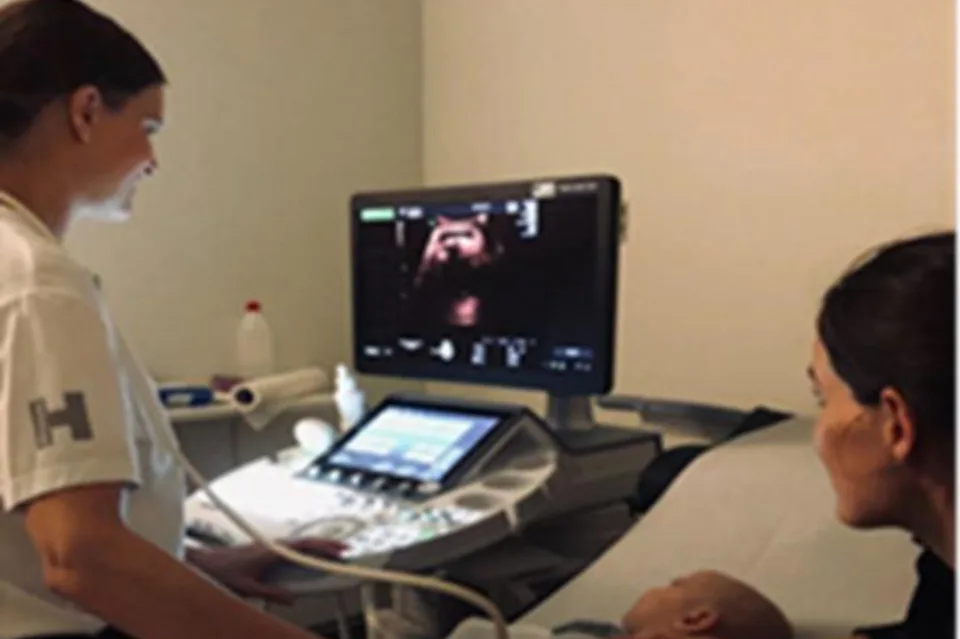
Danish scientists scanned 302 baby girls at three months old.
HEALTH
The scan nobody had thought to do
It is the most-taken medicine in pregnancy on the planet. More than half of all pregnant women use it. It sits in every handbag, every glovebox, every bedside drawer, and for decades it has carried the same reassuring label in every language: the safe one. The one you are allowed.
And then a team in Copenhagen did something startlingly simple. They took 302 baby girls, laid them down at three months old, and ran an ultrasound probe over their ovaries.
The girls whose mothers had taken paracetamol during pregnancy had, on average, ovaries 40 per cent smaller than the girls whose mothers had not. Their uteruses were 13 per cent smaller. They had 23 per cent fewer ovarian follicles — the microscopic structures that each hold a single immature egg, and which a woman is born with in full and never makes again.
The findings, published on 9 September 2026 in Human Reproduction Open, one of the world's leading reproductive medicine journals, have landed in the middle of a year already loud with argument about this drug. And they have split the experts down the middle.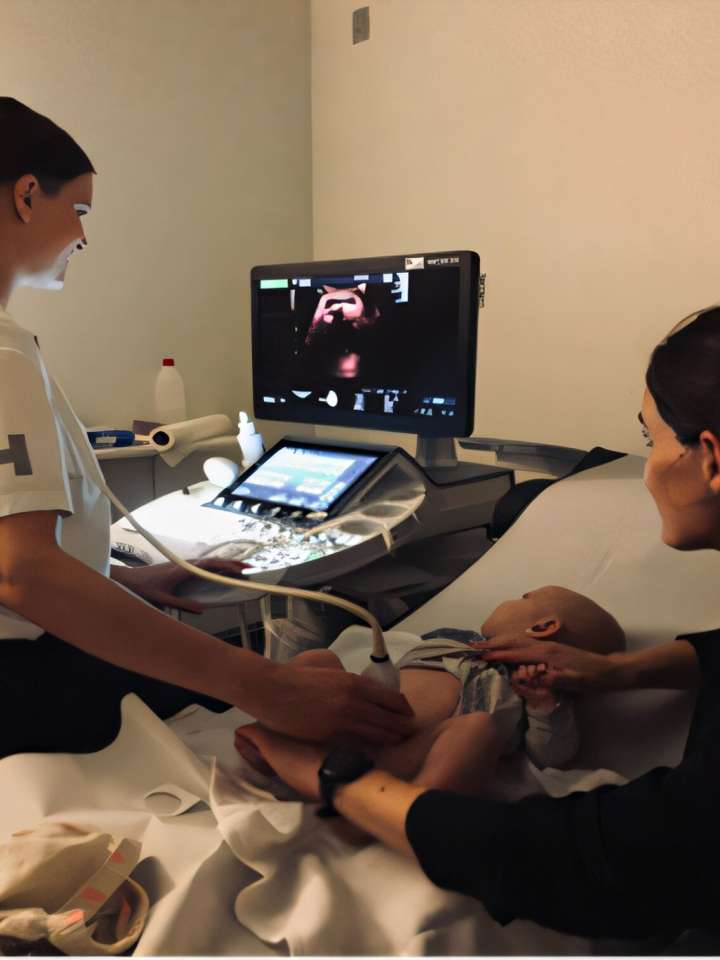
Why three months old is the only window that works
To understand why anyone would scan a baby's ovaries, you have to understand a strange and brief episode in human development called minipuberty.
For a few months after birth, an infant's reproductive hormone system switches itself on, briefly, and then goes quiet again for a decade. It is a dress rehearsal. And because the system is temporarily awake, it is the one moment in childhood when a researcher can look at the ovaries and the hormones and see something meaningful, without waiting fifteen years for puberty to arrive.
The biology behind the worry is equally specific. A woman's entire reproductive lifespan — her fertility and, eventually, the timing of her menopause — is laid down before she is born. Girls arrive in the world with every egg follicle they will ever possess. From that moment the supply only falls. There is no resupply, no second chance, no adult intervention that can add to the store.
So if something in foetal life interferes with how that store is built, the consequence is set before the child takes her first breath. Animal studies had been hinting at exactly this for years. Nobody had properly checked in humans.
COPANA: what they actually did
The Copenhagen Analgesic Study — COPANA — ran at Copenhagen University Hospital–Rigshospitalet from March 2020 to November 2022. It was designed from the outset to answer this one question, which makes it, as far as its authors are aware, the first prospective human study built specifically to test whether foetal exposure to paracetamol affects later ovarian function.
A total of 3,425 healthy pregnant women were invited. Of those, 685 enrolled in the first trimester. Crucially, the researchers did not simply ask the mothers to remember at the end — a method that quietly ruins a great deal of pregnancy research. The women reported their paracetamol use every two weeks as they went, and handed over a first-trimester urine sample that was chemically tested for the drug.
Then 302 of their daughters were examined at around three months old with ultrasound and blood tests. The girls were sorted by when exposure first happened: early foetal life, before 17 weeks (92 babies); mid-to-late foetal life, at 17 weeks or beyond (67 babies); and a comparison group of 143 girls with no exposure at all.
The timing mattered. Girls first exposed before 17 weeks showed the ovarian and uterine volume differences. Girls first exposed at 17 weeks or later showed the reduced follicle counts. And a small subgroup of 22 girls exposed only in early pregnancy also had lower levels of anti-Müllerian hormone — the blood marker clinics around the world already use as a proxy for a woman's remaining egg reserve.
Six tablets. Across nine months.
Here is the detail that has unsettled specialists most, and it is not the 40 per cent.
These were not women medicating heavily. About 53 per cent of the mothers used paracetamol at all. Most took it for headache or migraine — around 70 per cent — or for musculoskeletal aches, around 18 per cent. Only 5 per cent took it for fever.
The median total dose across the entire pregnancy was three grams. That is six 500-milligram tablets. Spread across nine months. Not one mother in the study exceeded the recommended daily maximum of 4,000 milligrams.
This was, in other words, about as cautious and ordinary a pattern of use as exists anywhere in obstetrics — the pattern that every current guideline in Europe and the United Kingdom would call entirely appropriate.
The second cohort, followed into adolescence
A single snapshot of 302 infants would be interesting but fragile. So the researchers went looking for a completely separate group to test the finding against.
They turned to 1,210 girls from the Copenhagen Mother-Child Cohort, a study that began in 1996 and recruited pregnant women from three university hospitals in the city. These girls had been followed from infancy all the way into adolescence.
In that independent group, foetal exposure to paracetamol was associated with smaller uteruses at puberty and smaller ovaries during adolescence. The direction of travel matched.
It is not a clean replication, and the authors do not claim it is. The older cohort measured exposure differently — mothers were asked once, early in the third trimester, about medication use, and the analysis lumped paracetamol together with anti-inflammatory drugs, so it cannot isolate paracetamol on its own. But two cohorts, two decades apart, two different methods, pointing the same way, is harder to wave off than one.
"Must now be revised" — the split
The journal published a commentary alongside the study, and it did not hedge.
Professor Christian De Geyter, who leads the department of Reproductive Medicine and Gynecological Endocrinology at the University Hospital of Basel in Switzerland, wrote that "the eminent importance of Fischer et al's (2026) findings cannot be stressed enough". He pointed to the apparent dose-responsiveness of the results — a hallmark that toxicologists look for when separating a real effect from noise — and to how neatly the human data now sits on top of the existing animal research.
His conclusion was blunt: "Recommendations on the use of paracetamol during pregnancy must now be revised."
Others were considerably cooler. Gavin Stewart, a senior lecturer in evidence synthesis at Newcastle University, told the Science Media Centre he was worried the authors were over-interpreting what is, structurally, an exploratory result. Hugh Taylor, a reproductive endocrinologist at Yale School of Medicine, made the objection that haunts all research of this kind: the study cannot separate the drug from the illnesses it was taken for.
And the American College of Obstetricians and Gynecologists, the body whose guidance governs American delivery rooms, was unambiguous. The findings, it said, "do not indicate that current clinical recommendations should change". ACOG added that the clinical significance of the differences remains uncertain.
The scientist in the middle of it is urging calm
The most striking voice in this argument belongs to the woman who produced the data.
Dr Margit Bistrup Fischer, a post-doctoral researcher in the Department of Growth and Reproduction at Rigshospitalet who led COPANA, has spent the week telling anyone who will listen not to panic.
"Women who have used paracetamol during pregnancy should not be alarmed by our findings," she said. "Our study examined associations at the population level and cannot predict outcomes for any individual woman or child. Many women who used paracetamol during pregnancy had daughters whose ovarian measurements were similar to those of daughters born to women who did not use paracetamol."
She went further, and dismantled the strongest version of her own headline: "Importantly, our study does not evaluate if paracetamol causes reproductive problems, nor does it provide evidence that prenatal exposure affects future fertility or age at menopause."
On what happens next, she is careful: "Animal studies have demonstrated that impaired formation of ovarian follicles can lead to reduced fertility and earlier reproductive ageing. Whether the differences observed in our study have implications for fertility and age at menopause in humans remains unknown and will require long-term follow-up of the girls in our cohort."
What the study genuinely cannot tell you
The limitations here are real and the authors list them without flinching.
The design is observational, and the paper states plainly that "causal inference cannot be established". The main cohort came from a single hospital. Every mother in it was a white woman with a healthy, full-term pregnancy — which means the findings may not travel well to other populations. The girls were examined at one single point in infancy. Ovarian measurements were available for only around two-thirds of the infants.
The researchers also did not statistically adjust for the sheer number of outcomes they tested, which raises the risk of false positives — a criticism the sceptics have seized on. And while the results held after excluding the mothers who took the drug for fever, the team could not entirely rule out that the underlying conditions prompting paracetamol use played some role of their own.
Above all: nobody in this study has been followed to the point of trying to conceive. The work measured organs, not outcomes. It cannot say whether a single one of these girls will face a fertility problem or an early menopause.
The year the painkiller became political
This lands into a public conversation that is already inflamed.
In September 2025, federal officials in the United States moved to change paracetamol's label over a contested link to autism — a claim that generated enormous noise and comparatively little evidence. Since then, a Danish registry analysis of more than 1.5 million children, published in JAMA Pediatrics in April, found no significant association between prescribed paracetamol in pregnancy and autism. Nearly a year on from the announcement, the label has still not changed.
It is worth stating clearly: the COPANA study did not look at autism. It examined the reproductive development of girls. These are separate questions with separate evidence, and conflating them helps nobody.
But the context explains the temperature. Pregnant women have spent a year being told contradictory things about the one medicine they were previously told was safe — and this study, however carefully worded, will be read by many of them as one more reason to be frightened.
What this means for you
If you are pregnant, or hoping to be, the practical guidance has not changed — and the reason is not stubbornness.
The alternatives are worse. Ibuprofen and aspirin carry serious, documented risks in pregnancy unless a clinician has specifically recommended them. And untreated high fever is itself genuinely dangerous to both mother and foetus. Paracetamol remains the first-choice option in European and UK guidelines precisely because the things it replaces are more hazardous, not because anyone ever believed it was inert.
What has changed is the case for thinking twice about the casual dose. Fischer's own framing is the useful one: the findings "should not discourage women from using paracetamol when it is medically indicated but rather encourage informed discussions about when medication is necessary and when alternative approaches may be considered".
In practice that means: for a mild headache or an aching back, ask whether rest, hydration, heat, physiotherapy or gentle exercise might do the job first. Fischer has specifically flagged these non-pharmacological routes as sufficient in some situations, given proper counselling. For a fever, ring your midwife or obstetric team rather than waiting it out — and seek urgent care for a high or persistent fever, a severe headache with vision changes, or severe abdominal pain.
Keep a short log of what you take, the dose and the reason, and bring it to your antenatal appointments. And do not stop a medicine a clinician has recommended without speaking to them first.
If you have already had a baby and took paracetamol while pregnant — which, statistically, more than half of readers in that position did — the honest answer is that this study tells you nothing about your daughter. It describes averages across groups. Many exposed girls in the cohort had entirely ordinary measurements.
The long wait
The study was funded by Danish research foundations and the EU-backed MERLON project, and the authors declared no financial ties to organisations with an interest in the result.
They are now calling for something the research world is notoriously bad at delivering: larger studies that measure exposure repeatedly across pregnancy, and that follow the children into adolescence, adulthood and eventually menopause, tracking what actually happens to their fertility.
De Geyter, for all his urgency, ended his commentary on the same note. The attention this study generates, he wrote, will hopefully "encourage sustained long-term follow-up of the exposed individuals".
That follow-up will take thirty years. In the meantime, the world's most trusted painkiller has acquired a question mark — not a warning label, not a ban, not proof of harm, but a question that 302 ultrasound scans in a Copenhagen hospital have made impossible to ignore.



