Written By | Staff Writer
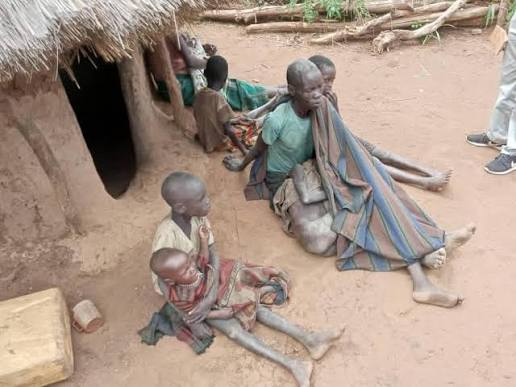
What makes the Karamoja deaths particularly difficult for the government to explain away is that they were, in a technical sense, foreseeable.
KAMPALA
For the second time in four years, Uganda's north-eastern Karamoja sub-region has become a byword for a crisis the government insists it did not see coming, even though the warning signs had been building since April. The Office of the Prime Minister confirmed this week that at least 16 people have died from hunger-related causes in recent weeks in Karamoja, as a prolonged dry spell that began at the start of the planting season has withered maize, sorghum and soybean fields across the region, according to Uganda's state broadcaster and multiple outlets including Xinhua and the Nation.
The deaths, reported in the hardest-hit districts, have not been independently verified by outside agencies, but the government's own acknowledgment of the toll marks a significant admission for a sub-region long treated as a chronic, low-visibility emergency rather than an acute one. Prime Minister Robinah Nabbanja said thousands of families have been left without food after the dry spell destroyed crops that farmers had planted in April, the traditional start of the growing season, and that little or no rain has fallen since.
On July 13 — today — the Office of the Prime Minister is seeking Cabinet approval to procure additional food supplies for the wider Karamoja sub-region and neighbouring districts, following an initial emergency dispatch of 22 tonnes of relief food, comprising 13 tonnes of maize flour and nine tonnes of beans, delivered earlier this week to the worst-affected subcounties of Loduku and Loyoru in Kaabong district, according to New Vision and ChimpReports.
A crisis that was forecast months ago
What makes the Karamoja deaths particularly difficult for the government to explain away is that they were, in a technical sense, foreseeable. Uganda's Ministry of Water and Environment had already projected below-average rainfall across the country for the June-to-August period, driven by a developing El Niño pattern over the equatorial Pacific, and had specifically warned that the north and parts of eastern Uganda would receive only occasional, isolated rainfall this July. Environment Minister Beatrice Anywar reiterated in early July that the whole country should brace for a hot, dry month.
Even more specifically, food security analysts using the Integrated Food Security Phase Classification (IPC) system — the same methodology used to declare famines internationally — had flagged Karamoja as being in serious trouble months in advance. An IPC analysis covering April to July 2026 found that 473,000 people in Karamoja were facing crisis-level hunger or worse, including some 41,000 people already in "Emergency" — IPC Phase 4, one step below famine classification. That represented roughly 32 percent of the sub-region's analysed population, according to IPC data compiled by aid agencies operating in the area.
In response to those early warnings, the World Food Programme, working with funding from the Irish government, launched an anticipatory cash transfer programme in early July for more than 6,000 vulnerable families in Karamoja, intended to help households buy food and cope with the dry season before hunger tipped into a full-blown emergency, according to a report by the Observer and Uganda Online. That the deaths occurred despite this early intervention illustrates both the severity of this year's dry spell and the scale of need that a programme reaching a few thousand families could not fully absorb.
A recurring geography of hunger
Karamoja's vulnerability is not new, and that history is part of what makes this month's deaths so politically uncomfortable for Kampala. Uganda's poorest sub-region, spanning districts including Kaabong, Kotido, Moroto, Napak and Nakapiripirit, has suffered recurrent, near-cyclical food crises for more than two decades, driven by a combination of erratic rainfall, deforestation, overgrazing, crop pests, weak market access and chronic under-investment in irrigation infrastructure. In 2022, Uganda's own official human rights body reported that more than 2,200 people died of starvation and related illnesses in the north-east — a toll that dwarfs the current confirmed count but that took months to be fully documented and acknowledged.
Analysts who track the region note that climate change is compounding older structural problems rather than creating a wholly new crisis. Pastoralist communities in Karamoja have historically used mobility — moving herds and households in response to rainfall patterns — as their primary buffer against drought. But population growth, land pressure, cross-border cattle raiding and government restrictions on traditional grazing corridors have progressively narrowed that option, leaving more households dependent on rain-fed crop farming in a sub-region where rainfall is becoming less reliable, not more.
The economics of a food emergency
Beyond the immediate human toll, the Karamoja crisis carries broader economic implications for Uganda's agriculture-dependent economy. Agriculture employs more than 70 percent of Uganda's workforce and contributes roughly a third of national GDP, but that headline figure masks a deep divide between the country's better-watered, commercially oriented farming regions — the coffee belt in the west, the sugar and tea estates in central and western Uganda — and semi-arid subsistence zones like Karamoja, where a single failed rainy season can push tens of thousands of households from food security into emergency within a matter of weeks.
The government's own agriculture ministry has repeatedly urged farmers nationally to reduce dependence on rain-fed cultivation by adopting drought-tolerant crop varieties and investing in irrigation and water storage. Uganda's National Agricultural Research Organisation has in recent weeks promoted a new bio-stimulant technology, marketed as Skeepon, designed to help crops withstand short-term drought and heat stress; officials have suggested the product could eventually be extended to farmers in drought-prone areas including Karamoja. But the technology, which costs between UGX 12,000 and UGX 27,000 per acre to apply, was still in early rollout phase nationally as the current crisis unfolded, and it is unclear how much reach it has had so far among Karamoja's largely subsistence farming households, many of whom have limited cash income to invest in inputs even when heavily subsidised.
For a country that has staked significant political capital on agro-industrialisation — including a record Shs 2.26 trillion budget allocation for the sector in the 2026/27 financial year — the optics of hunger deaths in one of its own regions are uncomfortable. Much of that budget has been directed toward irrigation schemes, agro-processing parks and value-addition infrastructure concentrated in higher-potential farming zones, raising questions from some lawmakers and civil society advocates about whether enough of Uganda's agricultural investment is reaching the drylands where the need is most acute.
What happens next
With Cabinet expected to weigh in on additional emergency food procurement, the immediate question is one of scale and speed: whether the government can move food into Karamoja's most affected subcounties faster than the current 22-tonne delivery managed, and whether donor partners such as WFP and Ireland will expand their cash-transfer safety net beyond the initial 6,000 households reached. Longer term, the deaths are likely to reignite a familiar debate in Uganda's Parliament over whether Karamoja needs a fundamentally different development model — one centred on irrigation, livestock market infrastructure and diversified livelihoods — rather than repeated emergency relief operations that treat each drought as a one-off shock rather than a recurring feature of the region's climate.
For now, families in Loduku, Loyoru and other hard-hit subcounties are counting on this week's food dispatch to hold them over, even as forecasters warn the current dry spell is expected to persist through August.



