PARIS
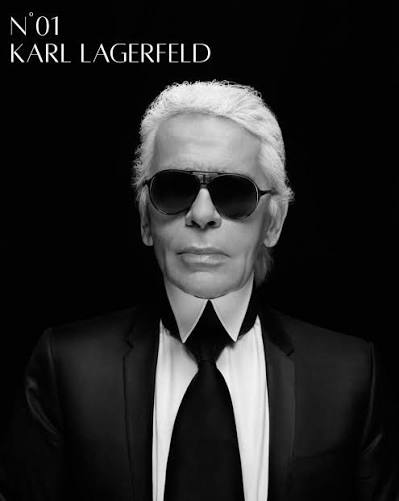
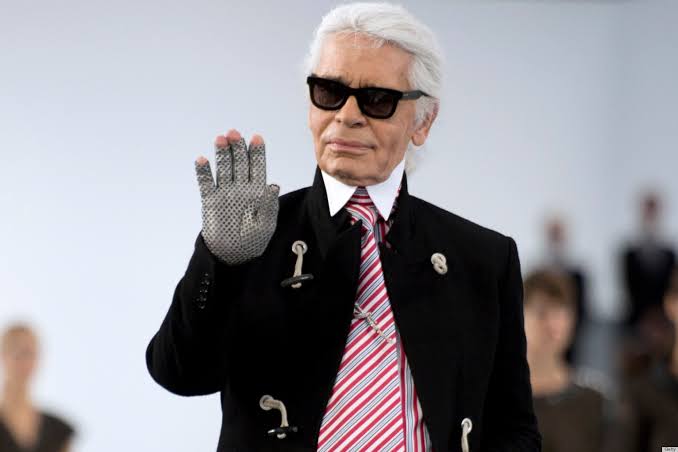
The campaign image is disarmingly simple. Paris Hilton, in sharp monochrome tailoring, stands beside a wall of stacked retro television sets. On every screen is a man in a dark suit, white shirt with a high collar, tie neatly knotted. White hair pulled into a ponytail. Sunglasses. He is talking, and he is funny, and he sounds — in accented English — very much like someone the fashion world has not heard from since 2019.
He is called NOT-KARL. The hyphen and the negation are doing a great deal of work.
The Karl Lagerfeld house launched its fall/winter 2026 campaign globally on September 1, across digital, social, print and out-of-home, uniting the Karl Lagerfeld, Karl Lagerfeld Jeans and Karl Lagerfeld Paris lines under one creative story. Hilton returns as the face of the maison for a third consecutive season, extended now through spring/summer 2027. Photographed for the first time by Matt Easton, the campaign continues the house's 'From Paris With Love' narrative. But it is the new character everyone is looking at.
The problem NOT-KARL solves
Every fashion house built around a single, hyper-visible founder eventually faces the same structural question: what happens to the brand's voice when the voice stops speaking? Karl Lagerfeld — the label, as distinct from the man who ran Chanel and Fendi — is a particularly acute case, because it was constructed entirely around a living personality as recognisable as any logo he ever drew. His silhouette was the brand identity: the collar, the glasses, the ponytail, the gloves, the withering one-liner delivered to whichever journalist stood closest. When he died in February 2019, the house inherited an iconography with no one authorised to inhabit it.
NOT-KARL is the answer the company arrived at, and the name is the most interesting design decision in the entire project. It is not 'Karl'. It is not a resurrection or a hologram or a claim to speak for a dead designer. It is a character who wears the codes while explicitly announcing that he is a different entity — a piece of legal and ethical hedging built directly into the branding.
"Wit and irreverence"
The house's framing is careful. "Continuing that relationship while introducing NOT-KARL feels particularly meaningful," said Pier Paolo Righi, CEO of Karl Lagerfeld. "As a new member of the brand's world, he brings wit and irreverence, creating an unexpected dialogue with Paris and giving us new and innovative ways to play with format, storytelling and perspective while remaining true to Karl's point of view."
Note the phrasing: a new member of the brand's world, not a revival of its founder. Righi is describing a mascot, not a medium.
Hilton's own comment is warmer and less lawyerly. "Having NOT-KARL on set made this shoot feel so iconic and just unexpected," she said. "It brought such a magical energy. I'm excited for what's to come next!"
The centrepiece is a black-and-white film in which Hilton and NOT-KARL exchange banter — a two-hander between a woman who has spent twenty-five years engineering her own public persona and a character who is, quite literally, engineered. The house says the voice, though synthetically generated, was built from a two-hour recording by a human voice-over artist: a hybrid rather than pure machine output.
Hilton is joined this season by model Kit Butler as the face of menswear. The FW26 collection leans into sharp tailoring and elevated outerwear in a largely monochrome palette, with the K/Autograph bag range positioned as the season's key accessory.
The uncomfortable questions
There are real objections, and it would be strange to write about this campaign without naming them.
The first is consent. Lagerfeld cannot approve, refuse or comment on a character designed to evoke him. The house's answer is the negation in the name — homage rather than impersonation — but the visual codes are specific enough that the distinction relies on the audience choosing to accept it.
The second is craft. Fashion campaigns have always been fantasy, but historically fantasy made by people: photographers, stylists, retouchers, models. Each synthetic element added to the pipeline is a job not commissioned.
The third is simply whether it works. Lagerfeld's appeal was never the ponytail. It was the speed and cruelty of his judgement, an unpredictability no brand-safe system can replicate. A character engineered by a marketing department to be irreverent is, by definition, irreverent within approved limits.

What this means for you
As a shopper, the immediate relevance is small: the FW26 collection is sharp, monochrome and commercially straightforward, and the K/Autograph bags are the pieces most likely to sell through.
As a consumer of advertising, the relevance is larger. NOT-KARL is a test case, and every rival house is watching how it lands. If audiences accept a synthetic brand character with a heritage name attached, expect the model to spread — there is no shortage of houses with a beloved dead founder and a marketing budget.
The practical skill worth developing is a habit of noticing. Increasingly, campaigns will contain elements that were not photographed, spoken or performed by anyone. Brands that disclose this, as Karl Lagerfeld has done reasonably clearly here, are behaving better than those that will not. And there is a consumer question underneath it all: do you want the brands you buy to keep their founders alive as characters? There is no obviously right answer — but it is now a question you will be asked repeatedly, whether or not anyone poses it directly.
Paris, in September
The campaign will be celebrated during Paris Fashion Week with an event hosted by the maison; details are promised in early September. NOT-KARL, the house says, will continue beyond this season — "the first step in NOT-KARL's broader story."
That is the sentence to watch. A one-off gimmick is a campaign. A recurring character is a strategy — an attempt to build a permanent, controllable spokesperson who never ages, never says the wrong thing to a journalist, and never dies.
Lagerfeld, merciless about sentimentality and famously fond of the future, might have found the whole thing very funny. That is the one thing about this campaign nobody can generate: his actual opinion of it.
Published By | Features Editor