ADDIS ABABA
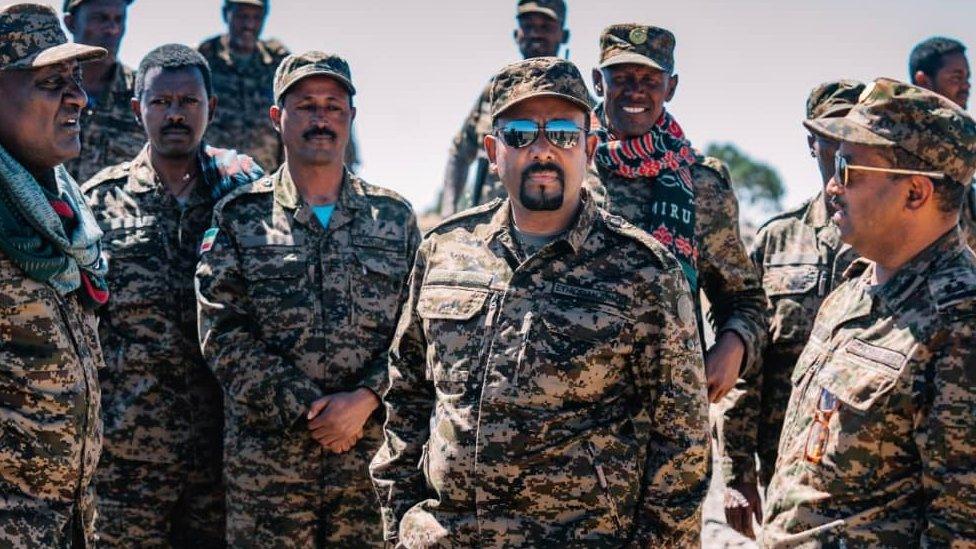
Prime Minister Abiy Ahmed has put cabinet ministers and senior officials through military conditioning, images posted on his official social media accounts show, a striking display of a leadership recast for war. The drills come more than five weeks after fighting resumed in northern Ethiopia between federal forces and a rebel alliance that includes the Tigray People's Liberation Front (TPLF), and amid the most dangerous confrontation with neighboring Eritrea in more than two decades.
The boot camp
According to GBC Ghana Online, which cited Abiy's official accounts, participants wore matching brown overalls and carried out jogging, push-ups, squats and seated drills at the Hurso military training center. The report named House of Federation Speaker Muferiat Kamil, Finance Minister Fitsum Assefa and Health Minister Mekdes Daba among those attending. The start date and duration of the program were not disclosed. Civil administrators in Ethiopia seldom receive military training.
Abiy has justified the program as a way to build discipline and speed national development, saying economic prosperity requires leaders who are "physically fit, morally strong, and intellectually capable." He ties it to his goal of building an "unbreakable nation" able to withstand internal and external pressure. "Soldiers have targets while civilians have goals. The objective of both is victory," he said. Supporters see an effort to improve executive efficiency and cohesion. Critics argue that militarizing civilian governance blurs the line between civil administration and military authority during a fragile period.

How the war resumed
The training makes more sense against the events of the past two months. The Tigray war ran from November 2020 to November 2022 and ended with the Pretoria agreement. After the National Election Board revoked the TPLF's party registration in May 2025, the TPLF restored the pre-war regional administration under Debretsion Gebremichael, creating a rival government, according to Wikipedia's chronology. Clashes erupted in early 2026, and by mid-July the TPLF called the Pretoria accord "effectively dead."
On Sept. 20, seven armed groups announced the Ethiopian People's Forces Coalition for Survival, pledging to overthrow Abiy's government. Fighting broke out across Tigray, Amhara and Afar on Sept. 23, and each side blamed the other for violating the 2022 deal, the UN reported. Drone strikes on Sept. 22 that hit a school in Alamata killed 14 civilians and injured 22, according to Wikipedia; a BBC medic put the civilian toll in Alamata at no fewer than 52, a figure the same source records separately.
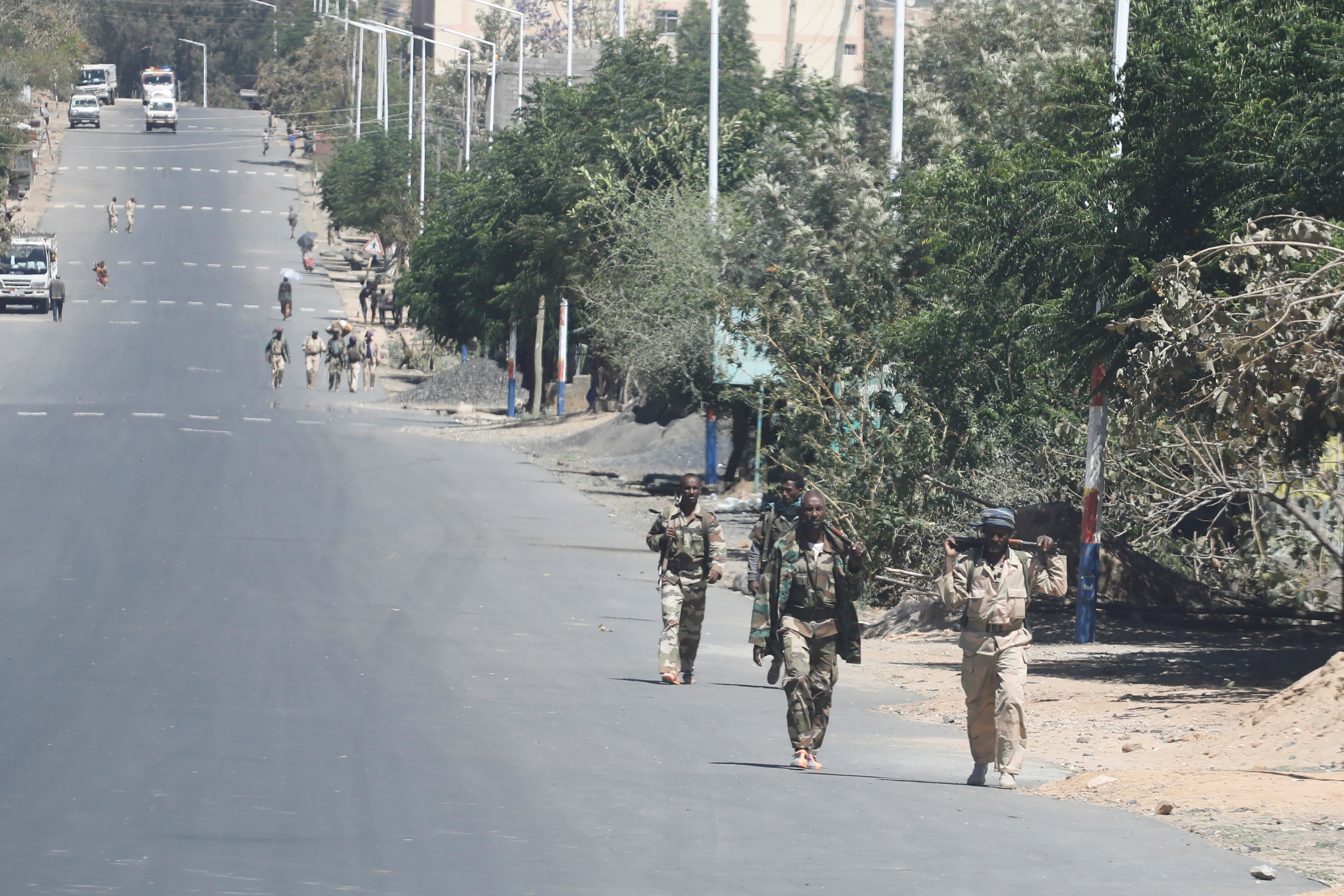
Federal forces then took the initiative. The Ethiopian army and allied forces entered Mekelle, Tigray's capital, in the first days of October after the TPLF said it had withdrawn "temporarily," according to Reuters reporting carried by Al Jazeera. The army also took Adigrat, Adwa and Zalambessa between Oct. 10 and 12, and the Critical Threats Project reports it captured Shire on Oct. 8.
The picture since has been contested. Critical Threats said Tigrayan forces reportedly retook the border town of Rama after Ethiopian troops withdrew from several border localities on Oct. 17 to 19, even as federal forces captured Semema, Zana and Abiy Addi between Oct. 20 and 22. Fighting also continues along the Tigray-Amhara border, where the Amhara Fano National Movement has clashed with federal forces. Many of these claims come from partisan sources and could not be independently verified.
Eritrea: from proxy accusation to direct standoff
The most alarming development is the dispute with Eritrea, which fought alongside federal forces in 2020 to 2022 but is now an adversary. On Oct. 1, Ethiopia closed its embassy in Asmara and expelled 10 Eritrean diplomats; Eritrea responded by severing all diplomatic ties. Abiy, sworn in for another five-year term on Oct. 5 according to Wikipedia, has insisted that landlocked Ethiopia must have Red Sea access.
Witnesses told Reuters on Oct. 7 that dozens of Eritrean soldiers drove through Adigrat in two trucks, about 25 kilometers (15 miles) from the Eritrean border. Eritrea's information minister, Yemane Meskel, did not deny that troops crossed the border; he called Ethiopia's self-defense narrative a cover for a war of aggression. On Oct. 9, Ethiopia's foreign minister, Gedion Timothewos, told the UN Security Council that Eritrean troops had advanced up to 60 kilometers into Tigray, calling it "a blatant act of aggression" and invoking the right of self-defense under Article 51 of the UN Charter. Eritrea's foreign minister, Osman Saleh, urged the council to condemn Ethiopia's "deplorable declaration of war." Eritrea denies backing the TPLF and accuses Addis Ababa of seeking regime change in Asmara. Neither side's claims have been independently verified.
On Oct. 19, Abiy told state media that Eritrea is backing rebel groups to destabilize Ethiopia, and warned of "extremely severe consequences" if Eritrea does not become "a development partner," according to Critical Threats. Eritrea answered a day later that Abiy had issued "three-year old threats of war of aggression and invasion," tied to Ethiopian sea access. Eritrea fears Ethiopia intends to seize the port of Assab, according to Al Jazeera.
Analysts quoted by Al Jazeera on Oct. 11 were stark. Hossamaldeen Ibrahim of the Bloomsbury Intelligence and Security Institute described "a high-risk phase of limited but direct military confrontation" and warned that severed diplomatic ties removed "the last formal mechanism for crisis management." Professor Matthias Rompel said "the danger of a wider interstate conflict is real," but "not inevitable." The Economist's Tom Gardner called it "the most dangerous moment for the region" since the 1998 to 2000 border war.
A new government for Tigray
On Oct. 16, Abiy announced an interim government for Tigray to serve six months ahead of regional elections, with four chief executives and a rotating presidency, according to Wikipedia. Most appointees had previously split from the TPLF. Critical Threats reported that Getachew Reda, intelligence chief Redwan Hussein and minister Abraham Belay will oversee the council on Abiy's behalf. A UN representative in Ethiopia met the administration's head on Oct. 21 and expressed support. ACLED questioned whether the move signaled the end of the Pretoria agreement, according to Wikipedia.
Humanitarian and diplomatic toll
UN Secretary-General António Guterres called on Oct. 9 for an immediate halt to the fighting, expressed serious concern about reports of Eritrean forces in Ethiopia, and urged Pretoria signatories to resume dialogue, UN News reported. UN humanitarian chief Tom Fletcher called for safe aid access; the UN said fighting is displacing people in central, northwestern and eastern Tigray, though no verified figures are available. Ethiopian official figures cited by Wikipedia put deaths at 272 and wounded at 260, but independent counts are lacking and the figures are hard to reconcile with the civilian deaths reported in Alamata alone. Southern Tigray faces crisis-level food insecurity, with disrupted fuel, markets and communications.
The African Union chairperson urged restraint and asked former Nigerian president Olusegun Obasanjo to mediate, according to Wikipedia. The United States urged restraint from both governments, and the UN Security Council held closed consultations on the Horn of Africa. Bloomberg reported Ethiopia planned to withdraw 3,000 troops from Somalia; Somalia said it had not been informed.
Analysis: a government preparing for a long fight
Three themes stand out. First, Abiy appears to be consolidating power under wartime conditions. A fresh mandate, a loyalist-run interim administration in Tigray and a ministerial boot camp all project a leader who expects confrontation to continue and wants his own team disciplined and visible. The risk, as critics note, is that civil government becomes more securitized just as a political settlement is needed.
Second, the interim Tigray council may entrench the very split Abiy says he wants to heal. Because most appointees are former TPLF members who broke away, the TPLF and its allies may refuse to recognize it, and the six-month election timetable looks ambitious in a region where fighting continues and aid has stalled.
Third, the Eritrea confrontation is the largest strategic risk. With no diplomatic channels, competing narratives at the UN and a stated Ethiopian ambition for sea access, an incident at the border could escalate quickly. Rompel's point that escalation is not inevitable is worth keeping in view; Critical Threats reports an unverified claim that Eritrean officials traveled to Kenya to encourage mediation.
What to watch
Observers should watch for any African Union or UN-brokered mediation, the fate of the interim Tigray administration, the control of towns around Adigrat and Shire, new Eritrean troop reports, and whether Ethiopia moves forces from Somalia. The ministers' push-ups are a sideshow; the substantive question is whether Addis Ababa and Asmara can find a way to talk before one of them acts on the other's worst-case narrative.
Published By | News Editor