World Politics
Background
Colombia sits astride one of the most seismically active zones on Earth, wedged against the boundary where the Nazca, Caribbean and South American tectonic plates grind past one another beneath the northern Andes. The country has a long history of destructive earthquakes, including a 1999 quake that devastated the coffee-growing city of Armenia and killed more than a thousand people, and periodic tremors tied to the subduction zone off its Pacific coast. Even so, seismologists say nothing in the country's modern instrumental record compares to what struck on the morning of Monday, August 10, 2026.
A magnitude 7.4 earthquake ruptured with an epicenter near the small mountain town of San José del Palmar in the department of Chocó, roughly 240 kilometers west of the capital, Bogotá, at a depth of about 107 kilometers. Colombia's Geological Service (Servicio Geológico Colombiano) described it as the strongest earthquake to hit the country so far this century. Shaking radiated outward across a wide swath of western Colombia, rattling the cities of Pereira, Cali, Manizales, Armenia and Quibdó, and was felt as far away as Bogotá, and across the borders in Ecuador, Panama and Venezuela, prompting evacuations in neighboring countries as well.
The timing gave the disaster an unusually sharp political edge. The earthquake struck barely three days after Abelardo de la Espriella, a Trump-aligned, hard-right former defense attorney, was sworn in as Colombia's president on August 7 in a heavily guarded ceremony held in Cali rather than Bogotá — the first Colombian inauguration held outside the capital in more than a century. De la Espriella took office following a bitterly contested transition, having narrowly defeated leftist candidate Iván Cepeda in a June runoff that outgoing President Gustavo Petro's camp claimed was tainted by fraud. The earthquake has become, in effect, the new government's first real-world stress test, arriving before de la Espriella's cabinet had even fully settled into their ministries.

Abelardo de la Espriella, Colombia's new president
Key Developments
The human toll has climbed rapidly and is still rising. By Tuesday, August 11, Colombian authorities put the confirmed death toll at at least 132, with more than 570 people injured, though officials and rescue coordinators have repeatedly cautioned that the count is preliminary and likely to grow as crews reach more remote and hard-hit areas. Casualties are concentrated in three departments: Risaralda, whose capital Pereira has reported roughly 40 deaths and dozens of collapsed structures; Valle del Cauca, home to Cali, with around 27 deaths and more than 30 collapsed buildings; and Chocó, nearer the epicenter, with a smaller confirmed toll but severe, harder-to-assess damage given the region's poor road access.
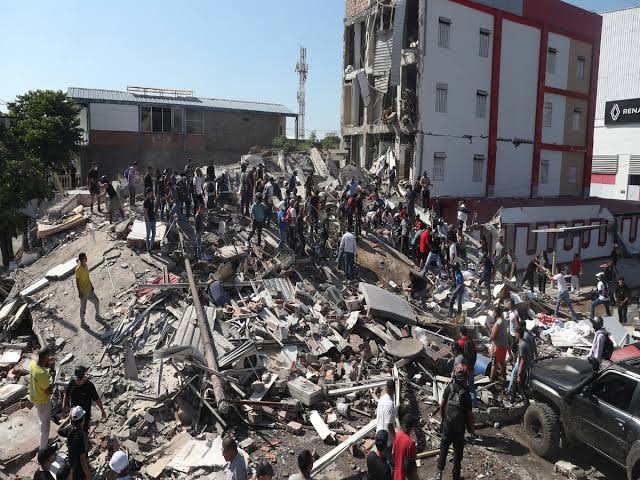
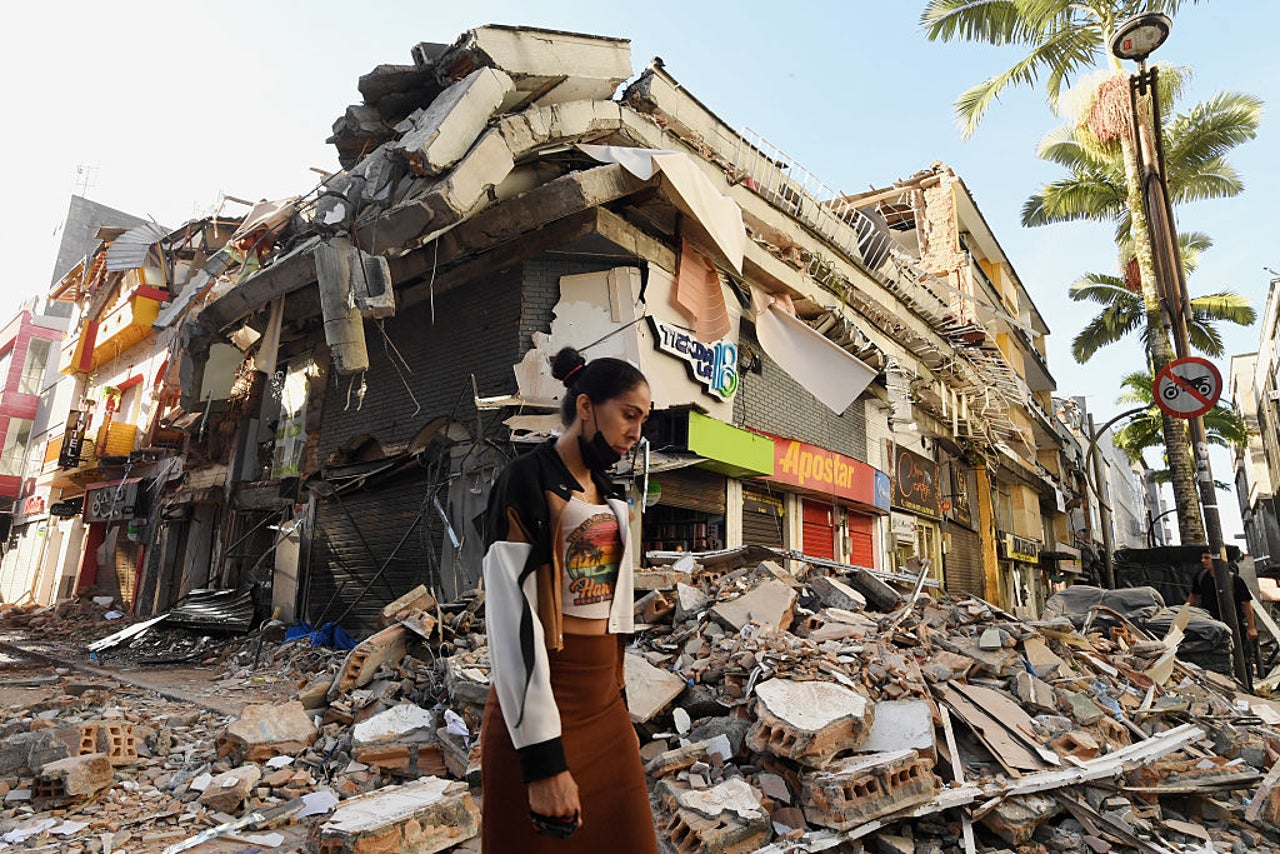
The physical destruction is extensive. Colombian officials have reported that at least 86 buildings have collapsed outright, with three hospitals among them and roughly 18 additional health facilities damaged or knocked out of service — a especially dangerous combination in the middle of a mass-casualty event. Thirty-nine schools were damaged, an estimated 1,500 to 5,000 homes were destroyed or rendered unsafe, and at least seven regional airports suspended operations as runways and terminals were inspected for structural damage. Search-and-rescue teams using dogs and heavy equipment worked through a second consecutive day and night on August 11, digging through rubble in Pereira, Cali and smaller towns near San José del Palmar for survivors still believed trapped.
President de la Espriella moved quickly to put his young government at the center of the response. Within hours of the quake he declared a formal state of national disaster, a legal designation that unlocks emergency funding and streamlines the deployment of federal resources. He said he had "assumed direct leadership of the response," convened a Unified Command Post (Puesto de Mando Unificado) in Chocó to coordinate rescue operations, and ordered what he described as the country's "entire military and police apparatus" — engineers, field hospitals, search teams and roughly 1,000 additional security personnel — into the affected zones, partly to prevent looting amid the chaos. Authorities in Cali and Pereira separately imposed overnight curfews, running from around 8 p.m. to 5 or 6 a.m., both to maintain order and to keep streets clear for rescue vehicles.
The disaster has also reopened a bitter political fault line between de la Espriella and his predecessor. Former President Petro, writing on social media, suggested the quake might be linked to seismic risks around the Hidroituango hydroelectric dam on the Cauca River — one of Colombia's largest and most controversial infrastructure projects, long dogged by structural and environmental concerns during its construction. Petro called for officials to explain the "main risk" at Hidroituango. The remarks drew sharp backlash from commentators and members of the public who accused the former president of exploiting a still-unfolding tragedy to relitigate an old political grievance, with critics posting "no sea miserable" ("don't be miserable/heartless") in response. Geologists have not linked the quake to the dam, and officials have not indicated any imminent threat to the structure, though the exchange underscored how quickly the disaster has been pulled into Colombia's polarized politics.
Reactions
International offers of help arrived within hours. The United States, through the State Department, pledged an initial $15.5 million in emergency assistance aimed at shelter, food, protection services and damage assessments — a notable gesture given the close and still-developing relationship between the Trump administration and de la Espriella, who campaigned on aligning Colombia more closely with Washington. Regional leaders were quick to offer solidarity as well: Mexican President Claudia Sheinbaum, El Salvador's Nayib Bukele and Chile's José Antonio Kast all publicly offered assistance, while Israel, Ecuador and France also pledged support. European Commission President Ursula von der Leyen said the EU had activated its Copernicus satellite mapping service to aid damage assessment and rescue coordination, and United Nations agencies — including UNICEF, which warned that thousands of children in the affected departments urgently need shelter, clean water and psychosocial support, and the World Food Programme — said they stood ready to assist pending a formal request from Bogotá.
Domestically, reaction has split along now-familiar lines. Supporters of de la Espriella have pointed to his rapid disaster declaration, personal visits to Pereira and the swift military mobilization as evidence that a security-minded outsider can also manage a humanitarian crisis competently. Critics, including allies of Petro, have questioned whether a government barely a week old — with many senior posts still being filled — has the institutional depth and disaster-management experience to sustain what will likely be a long and complicated recovery, particularly in Chocó, one of Colombia's poorest and least accessible regions. The exchange between Petro and government officials over the Hidroituango dam has itself become a secondary story, with local media noting that unsubstantiated claims about the dam's role risked distracting from the immediate rescue effort and potentially stoking unnecessary panic among residents near the reservoir.
What's Next
In the near term, the priority remains search and rescue: officials have said the window for finding survivors trapped in collapsed structures narrows significantly after 72 hours, meaning the coming days will be decisive. Colombia's government will also face mounting pressure to accelerate damage assessments so that international aid — much of which is still described as "pending request" or contingent on formal government asks — can be fully mobilized and distributed, particularly to isolated Chocó communities that are difficult to reach by road.
Politically, the earthquake is likely to shape perceptions of de la Espriella's presidency well beyond the immediate crisis. A competent, sustained recovery effort could help the new administration build credibility with a public that only narrowly elected him amid fraud allegations from the Petro camp; visible failures, delays in aid distribution, or a drawn-out reconstruction process in Risaralda, Valle del Cauca and Chocó could instead become an early drag on his approval ratings. Analysts will also be watching whether the disaster forces a recalibration of de la Espriella's stated first-term priorities — which centered on a hardline security crackdown against cartels and guerrilla groups and a rupture in relations with Cuba and Nicaragua — toward reconstruction spending and disaster preparedness instead. Longer term, the quake is expected to renew debate in Colombia over building codes and seismic retrofitting, especially given how many schools, hospitals and homes proved vulnerable to a magnitude that, while severe, was not without precedent for a country situated so close to major fault systems.
Published By | News Editor