Written By | Jovita Hasto
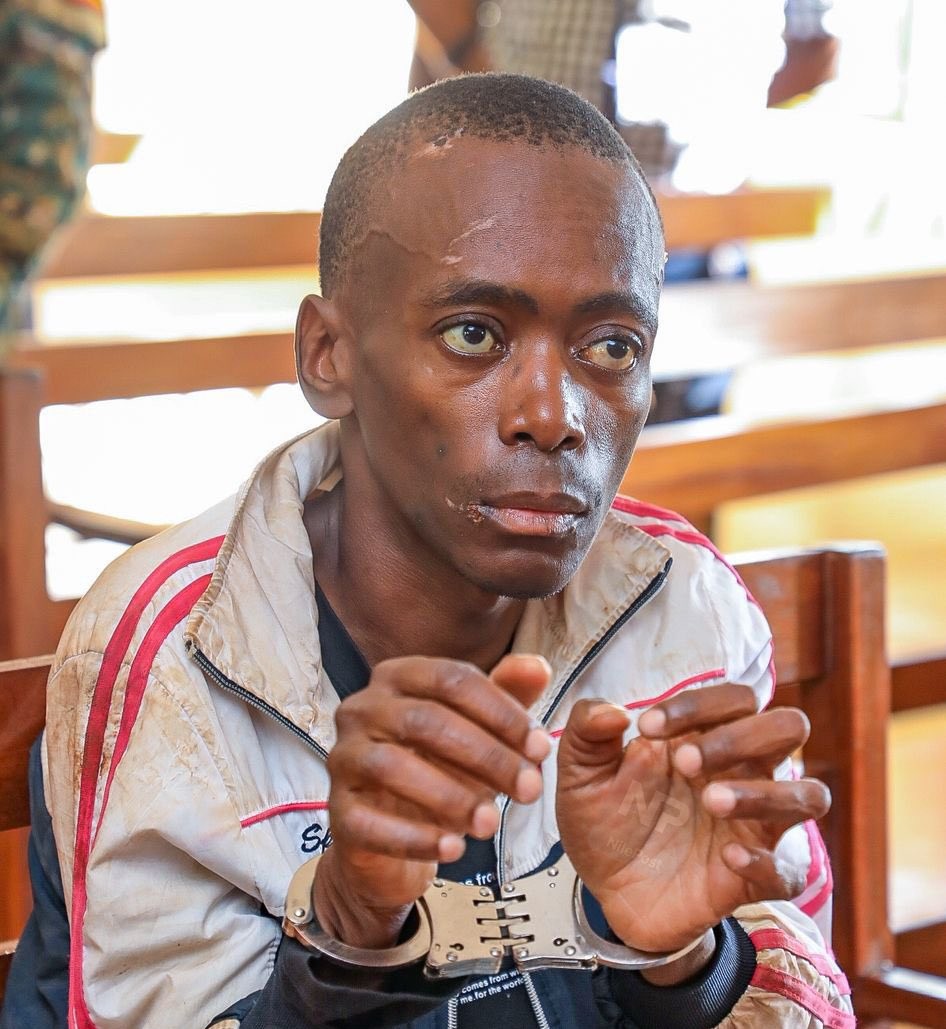
Okello Onyum
COURT
The High Court in Kampala has sentenced Christopher Okello Onyum to death for the murder of four toddlers at Ggaba Early Childhood Development Centre on April 2, 2026.
During the proceedings, Justice Alice Komuhangi Khaukha ruled that the convict deserved the death penalty, noting that the case falls among the “rarest of rare” offences, which warrant the maximum sentence.
In delivering her judgment, she explained that the convict was sentenced on four counts of murder in accordance with the 2013 sentencing guidelines. She noted that the starting point for a murder conviction is 35 years’ imprisonment.
“The death penalty is the maximum sentence. We have sentencing guidelines, which offer direction on what sentences should be given for particular cases. They provide a starting point, and for the offence of murder, the starting point is 35 years’ imprisonment. From there, the court may increase to death or reduce the sentence depending on the aggravating and mitigating factors,” said Justice Komuhangi.
Prosecution’s Position
Earlier, the prosecutor, Mr. Jonathan Muwaganya, submitted that the aggravating factors—including the grave injuries inflicted on the toddlers and the terror caused within the Ggaba community—justified the maximum sentence.
Mr. Muwaganya emphasized that the crime falls within the “rarest of rare” category.
“The killer attacked the children in what should have been their safest place and, as someone who could have been their father, murdered them in a gruesome and cruel manner. This places the offence in the ‘rarest of rare’ category and warrants the maximum sentence,” he argued.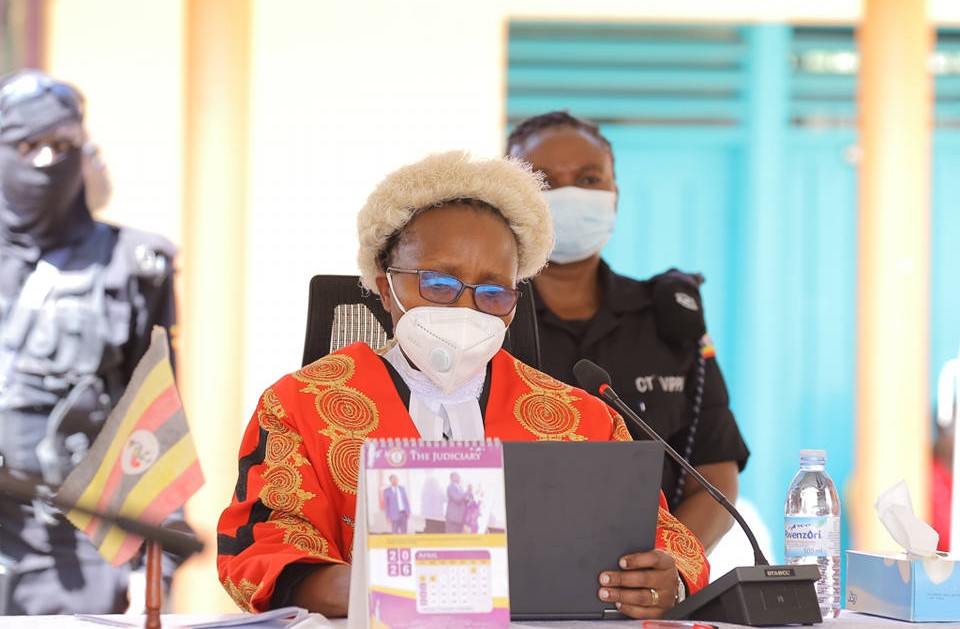
Justice Alice Komuhangi Khaukha
Court’s Considerations
Justice Komuhangi based her ruling on paragraphs 15 and 17 of the sentencing guidelines.
“Paragraph 17 provides that a court may only pass a death sentence in exceptional circumstances where alternative sentences such as life imprisonment are manifestly inadequate. Paragraph 15 describes the ‘rarest of rare’ cases as those where the offence was planned, premeditated, and executed with precision,” she stated.
Key Factors Considered by the Court
The judge outlined several factors before arriving at the death sentence:
The judge noted the emotional trauma inflicted on the families, citing the testimony of one mother who collapsed in court while recounting her loss.
She also dismissed the argument that the convict’s background could justify the crime.
“Coming from a broken family is not a justification for slaughtering innocent children,” she stated.
Suspected Motive
Justice Komuhangi expressed belief that the killings were linked to ritual sacrifice.
“I find no reason why someone would leave their home to slaughter children in a place where they are meant to be safe, except for ritual or blood sacrifice,” she said.
Final Ruling
The court agreed with the prosecution that the case fell within the “rarest of rare” category, noting that the killing of four children within such a short time was unprecedented.
“The sentence must serve not only as punishment for the convict but also as a warning to others who engage in such acts. They must know that they will be found and will not escape the long arm of the law,” the judge ruled.
She concluded that there was no justification to impose a lesser sentence.
Warning to the Public
Justice Komuhangi warned against the increasing cases of ritual killings, emphasizing that perpetrators would be prosecuted.
“Unlawful killings are on the rise, and if not addressed, we shall continue to lose lives. These crimes must be punished to deter others,” she said.
Okello’s sentencing now stands as a strong warning against ritual killings and crimes involving human sacrifice in Uganda.
Torch Media Africa



