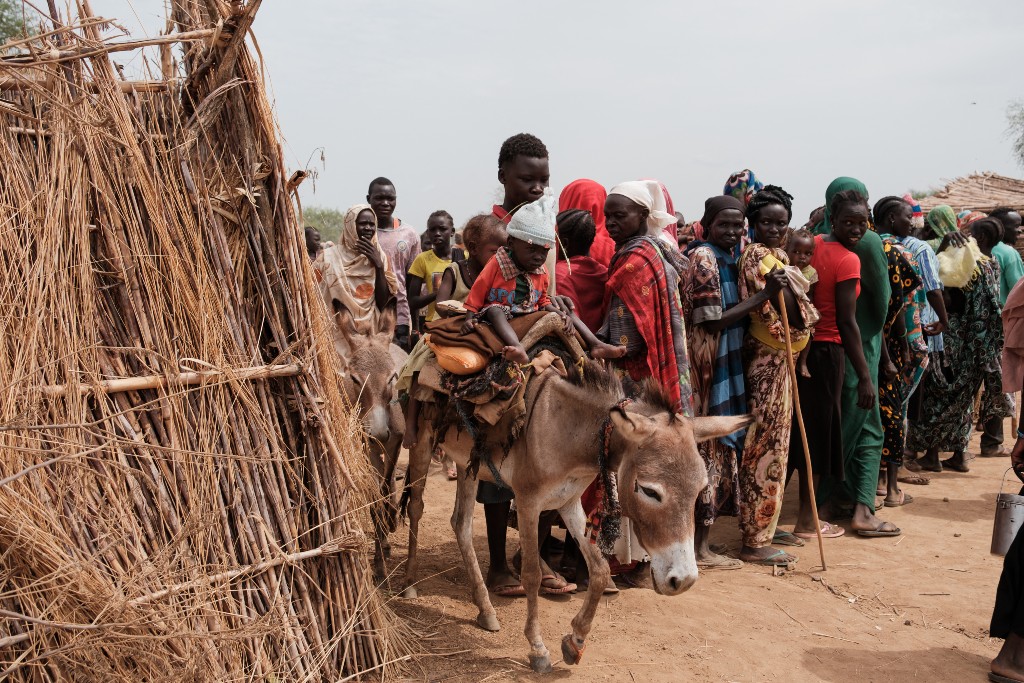
DARFUR - Starvation is claiming the lives of approximately 100 people daily in Sudan, according to an aid official's briefing to the United Nations Security Council. Among the hardest-hit areas is South Kordofan’s Nuba Mountains, where hundreds of thousands have sought refuge from a brutal two-year conflict. Despite limited aid flights and convoys, the scale of the crisis demands significantly more assistance, with urgent international pressure needed to ensure aid access.
South Kordofan, often overshadowed by the globally recognized Darfur region, faces severe famine conditions. An estimated 780,000 displaced people live in temporary camps within the Nuba Mountains, controlled by the Sudan People’s Liberation Movement–North (SPLM-N), an armed group uninvolved in the ongoing civil conflict. Local leaders report that 20% of families face severe food shortages, and 30% of children suffer from malnutrition—a situation exacerbated by the 2023 locust invasion and the influx of new arrivals.
A nurse’s struggle in Al-Hilou camp
During a visit to South Kordofan in October, I met a nurse at al-Hilou, an informal settlement of stick huts near Tongouli village. Displaced by fighting, she now oversees the camp, which has no well, clinic, or formal aid. The camp’s inhabitants have fled violence, killings, and atrocities perpetrated by the Sudanese Armed Forces (SAF) and the Rapid Support Forces (RSF).
In al-Hilou, starvation and malnutrition are rampant. One young mother in the camp shared her harrowing story. During an RSF attack on Habila in January 2024, her husband, father, and six relatives were killed, and she and several female family members were raped. Her eight-year-old son, too weak to stand, succumbed to malnutrition during my visit.
“We have no food to give,” the nurse explained, tirelessly moving between tents to identify critical cases of malnutrition. Sparse aid deliveries, last seen in the summer, have done little to stem the crisis. Residents survive on sorghum husks and wild cucumbers.
Rising malnutrition and death rates
The Mother of Mercy hospital in Gidel reported a 130% increase in malnutrition cases during the third quarter of 2024 compared to the previous year. Meanwhile, a hospital near al-Hilou treated 483 malnutrition patients between August and November, 230 of them acute cases. No official data captures the total deaths by starvation, but the visible toll on children and adults signals a dire and worsening crisis.
Despite these grim conditions, critical food aid remains blocked. “What would I eat?” the nurse asked, reflecting the shared plight of those she cares for.
Obstructed aid and global inaction
Both the SAF and RSF are accused of obstructing aid deliveries, exacerbating the famine. South Kordofan’s camps are particularly isolated, with no major aid agency presence during my five-day visit.
The U.N.’s humanitarian appeal for Sudan remains only 59% funded, with a $1.1 billion shortfall. International sanctions have targeted senior RSF commanders, but U.N. Security Council efforts to enforce aid access obligations have faltered.
The global community must act decisively to address this humanitarian disaster. Aid blockages must end, and all parties controlling territory must facilitate access. Meanwhile, donors must increase contributions to bridge funding gaps and provide lifesaving support to Sudan’s most vulnerable populations.
Without stronger action, famine and starvation will continue to claim lives in Sudan, making the suffering of war victims even more unbearable.
Source: justsecurity.org
Published By | Dickens Tiharihondijo