Written By | Evan Sande Ndahura
Sande Evan Ndahura is a Ugandan writer, poet, political thinker, and social commentator
History teaches us a recurring lesson: when rulers fear ideas, they attack education. More specifically, they target liberal education, subjects that train people to think critically, question authority, understand power, and situate politics within the context of history, society, and economics. From Napoleonic France to modern authoritarian states, the scrapping or weakening of liberal and political education has always been a deliberate strategy of control. Uganda today is no exception.
Napoleon Bonaparte and the Fear of Liberal Minds
During the late 18th and early 19th centuries, Napoleon Bonaparte understood something many rulers before and after him would also grasp: citizens trained in philosophy, political theory, history, and law are difficult to manipulate. Liberal subjects equipped people to read between the lines of power, interpret political manoeuvres, and question legitimacy. To secure his regime, Napoleon centralized education, tightly controlled curricula, and sidelined liberal studies that nurtured independent political thought.
Yet, even with these measures, the French people continued to demand political rights and freedoms. Napoleon’s strategy worked only temporarily. It delayed resistance but did not eliminate it. This pattern repeats itself across history.
Adolf Hitler suppressed critical humanities in favour of ideological indoctrination. Joseph Stalin reduced independent political thought to state propaganda. Augusto Pinochet in Chile purged universities of liberal thinkers. More recently, authoritarian regimes across Africa, Asia, and Eastern Europe have either defunded, demonised, or outright abolished liberal arts and political education, often branding them as “useless,” “foreign,” or “anti-development.” The intention is never academic reform; it is political survival.
Uganda and the Slow Death of Political Education
Uganda’s case follows this historical script with disturbing precision. Political education as a subject was scrapped from the secondary school curriculum, and over time, arts and social science courses have increasingly been portrayed as irrelevant to national development. Universities now face subtle and overt pressure to prioritise sciences at the expense of humanities, philosophy, political science, history, sociology, and development studies. The dominant narrative has become simple and dangerous: science equals development; liberal studies equal waste. This is not merely an education policy debate, it is an ideological shift with profound political consequences.
Museveni Then vs Museveni Now: A Self-Critique Ignored
Ironically, the most powerful argument against this policy comes from President Yoweri Kaguta Museveni himself, as expressed in his own words in the past.
In the book What Is Africa’s Problem? (edited by Elizabeth Kanyogonga), pages 162–163 capture a speech Museveni delivered at the University of Dar es Salaam on July 11, 1986. Speaking as a revolutionary leader fresh from a liberation struggle, Museveni emphasised ideological consciousness as the foundation of Africa’s progress. He argued that Africa’s problems were not accidental but the result of historical and political phenomena that must be understood. He insisted that universities should be centres of ideological activity, not mere factories of technical skills. His words were unambiguous:
“I am not impressed that somebody is an engineer or a doctor if he doesn’t want to know anything about politics.”
He spoke of Development Studies as a deliberate intervention to ensure professionals understood socio-economic realities, warning that expertise without political guidance turns professionals into tools—capable of serving oppression as easily as progress. He concluded that expertise must be guided by politics, and young people must be at the forefront of struggles for social justice, not privilege. This was Museveni at his most intellectually honest and historically grounded.
Yet today, the same Development Studies he once praised has been dismissed as a “useless course.” Political education has been removed from schools. Liberal subjects are ridiculed. What changed? The uncomfortable answer is this: a politically conscious population is no longer convenient to those in power.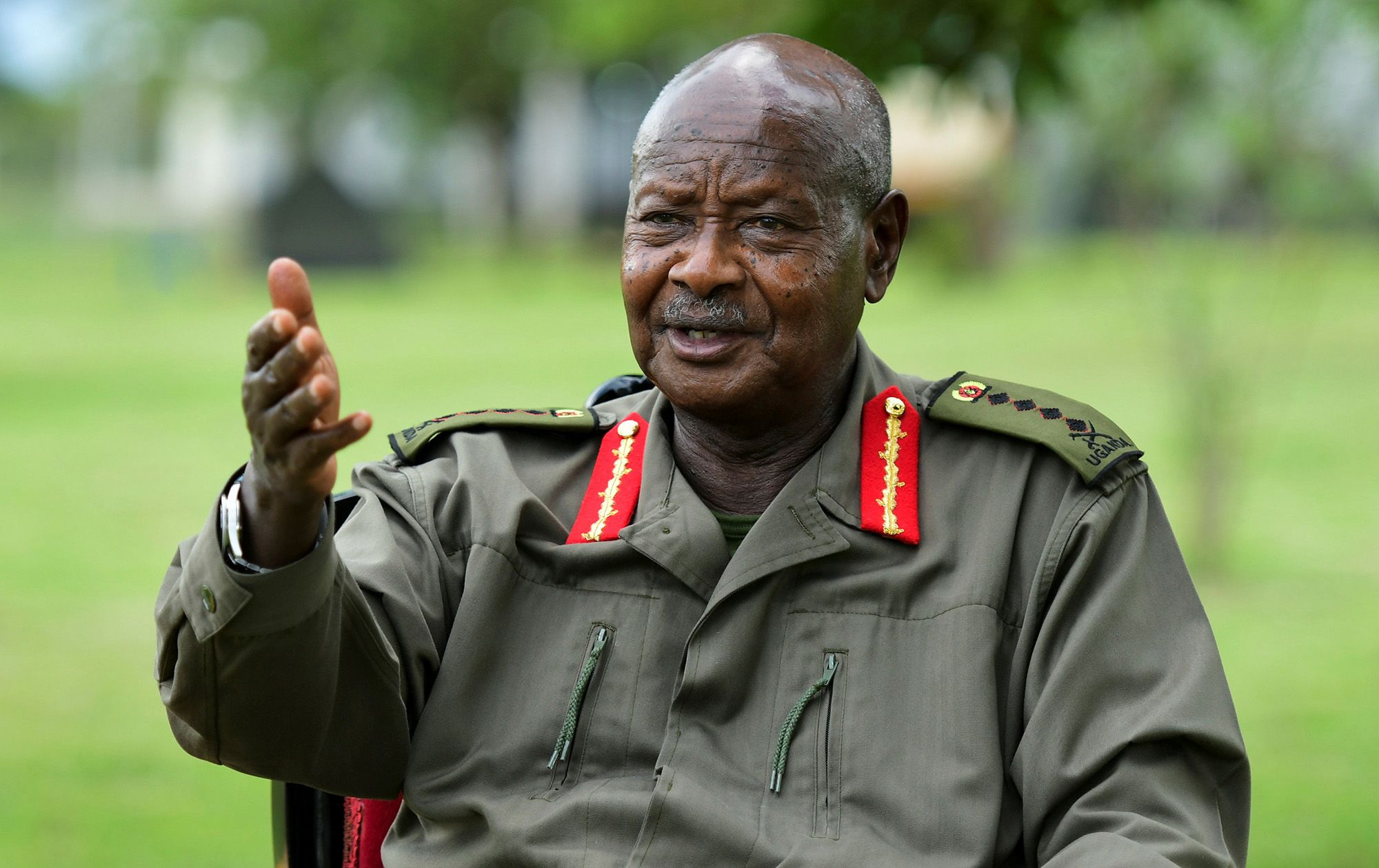
The Cost of an Uninformed Youth and a Blind Legislature
The consequences are already visible. Uganda is producing generations of young people who can pass exams but cannot interrogate power. They know formulas but not constitutions. They understand technology but not ideology. They can mobilise on political waves, slogans, and emotions, but lack historical grounding and policy literacy.
In Parliament, the contrast is stark. Earlier parliaments, though imperfect, contained legislators with ideological training, historical awareness, and the ability to debate policy beyond party lines. Today, many legislators are products of populism rather than political education. Parliamentary debates increasingly reflect loyalty, patronage, and survival instincts rather than ideological conviction or national vision.
When political education is absent, legislation becomes shallow. Oversight weakens. Accountability fades. Democracy turns procedural rather than substantive.
What Ugandan Students Are Missing
By scrapping political education and liberal studies, Uganda has denied students:
Science without political consciousness produces efficient servants of any system, good or bad. Liberal education does not oppose science; it humanises it, contextualises it, and guides its use toward the public good.
Why Liberalism and Political Education Matter
Liberalism, in its educational sense, is not about Westernisation or rebellion; it is about freedom of thought, civic responsibility, and informed participation. Political education creates citizens, not subjects. It builds leaders, not followers. It strengthens institutions by producing people who understand why they exist, not just how to operate within them. A state that fears liberal education ultimately fears its own people.
Conclusion: You cannot Develop What You Cannot Think About
Uganda stands at a dangerous crossroads. By dismantling political education and undermining liberal studies, the country is mortgaging its democratic future. Development driven by uncritical minds is fragile. Leadership without ideological grounding is reckless. Governance without informed citizens is authoritarian by default. History, from Napoleon to modern regimes, shows that suppressing ideas may buy time, but it never builds nations.
If Uganda is to develop sustainably, it must return to what even its current president once understood: politics guides expertise, ideology shapes progress, and education must liberate the mind before it trains the hand.
About the Writer
Sande Evan Ndahura is a Ugandan writer, poet, political thinker, and social commentator. He is a Pan-Africanist who believes in liberation through a mighty pen rather than a gun. He writes on governance, political education, African history, and the intersection between ideology and development, with a strong focus on youth consciousness and democratic accountability in Africa.



