Written By | Joshua Nahamya
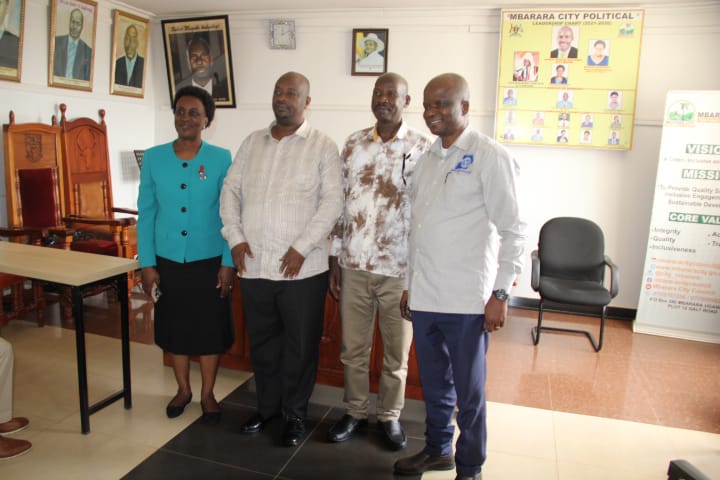
A team of Mbarara city leadership merge with Uganda AIDS Commission to counterattack HIV prevalence in Mbarara City
Mbarara City
The Uganda AIDS Commission (UAC) has rallied media practitioners in Mbarara City to support efforts aimed at eliminating HIV/AIDS as a public health threat by 2030.
During a high-level press briefing held at Mbarara City Hall on Friday, officials from the commission joined city leaders, journalists, and technical experts to assess the current state of HIV services and discuss emerging challenges that could undermine progress toward the national target.
Officials from Uganda AIDS Commission addressing the media in Mbarara on Friday
A key focus of the engagement was to evaluate access to life-saving HIV services following recent changes in international funding support.
Officials from the Uganda AIDS Commission said the regional consultations are intended to gauge how communities are accessing and valuing local HIV services, especially after the suspension of some HIV support from international partners.
“We wanted to know how the campaign against HIV/AIDS is progressing—whether services are still focused on fighting the disease and how they are being handled,” a UAC official said.
“We also want to understand whether the suspension of HIV support from abroad has affected service delivery. Did services reduce, or are they continuing normally?”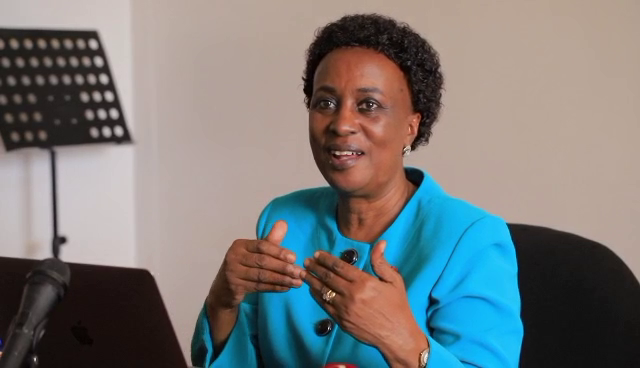
UAC official addressing Journalists
The officials added that feedback from patients, community leaders, and local authorities will inform national policy discussions.
“We want to hear from the people receiving these services—patients and community leaders—on how they rate them. The issues raised here will be reviewed, and those beyond the capacity of local leaders will be forwarded to our top leadership in Kampala and included in our report to the President,” the official added.
Media urged to promote accurate reporting
UAC officials emphasized that achieving the 2030 target will require collective effort from all sectors of society, particularly the media.
They called on journalists to report accurate statistics on HIV/AIDS while highlighting both success stories and persistent challenges such as stigma and discrimination.
“Members of the media play a critical role in shaping national attitudes toward HIV prevention and stigma reduction,” a UAC official said.
“We want you to report the correct statistics and figures. Accurate information on what is being done is very important. Highlight the success stories, but also expose the challenges of stigma, discrimination, and practices in communities that are contributing to the spread of HIV.”
Officials noted that while expert clients and peer educators have made significant contributions in linking communities to treatment services, more public awareness is needed to encourage people to know their HIV status, adhere to treatment if positive, and protect themselves if negative.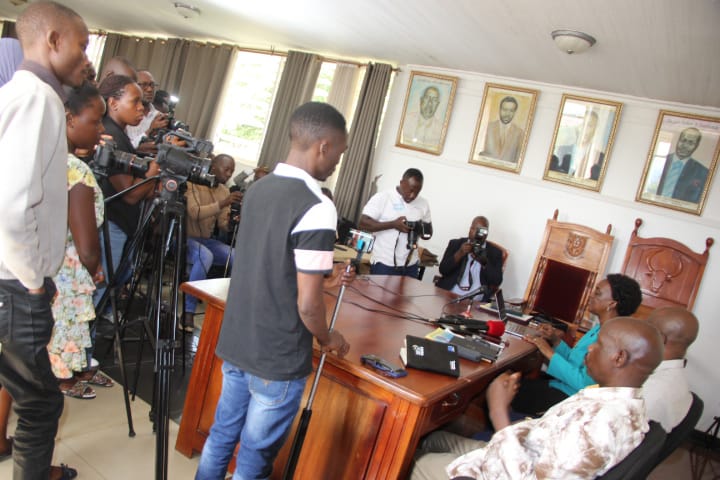
Press briefing at Mbarara City Council by Uganda AIDS Commission on ways to curb HIV prevalence
Social and cultural factors driving infections
Assistant Resident City Commissioner Polly Katwire highlighted social and cultural factors that continue to fuel HIV infections in Mbarara City.
Katwire pointed to the growing number of bars and lodges as potential high-risk environments, particularly for young women. He also raised concern about cases of cross-generational sexual relationships involving older men and university students.
“If you go to the bars, you find many young girls gathered there. It is our collective responsibility to see how we can guide and transform them,” Katwire said.
He also condemned cases where older men allegedly target university students.
“You find older married men going to university hostels in the evening looking for young girls. Research shows that older people are often the ones living with HIV and they end up infecting young girls,” he said.
Katwire called for stronger collaboration involving university student leaders, religious institutions, and cultural leaders to help address the problem.
Polly Katwire, Assistant RCC warning old married men going for young girls in Universities
Population pressures and staffing challenges
Deputy City Clerk Simon Ejua said Mbarara City’s rapid population growth is also contributing to increased vulnerability to HIV infection.
According to Ejua, the influx of refugees and unemployed youth has increased cases of prostitution and other high-risk activities.
“We have a growing refugee population in Mbarara City. Some refugees move from Nakivale and settle here, and this has contributed to increased prostitution,” Ejua said.
He also highlighted a shortage of health workers in health facilities, despite the availability of HIV medicines.
“Medicines are available in health centres, but we have a shortage of health workers. You find critical staff such as laboratory assistants missing, while others are working as volunteers even when many qualified people are looking for jobs,” he said.
Ejua urged the Uganda AIDS Commission to advocate for the recruitment of more permanent health workers through the Ministry of Health. 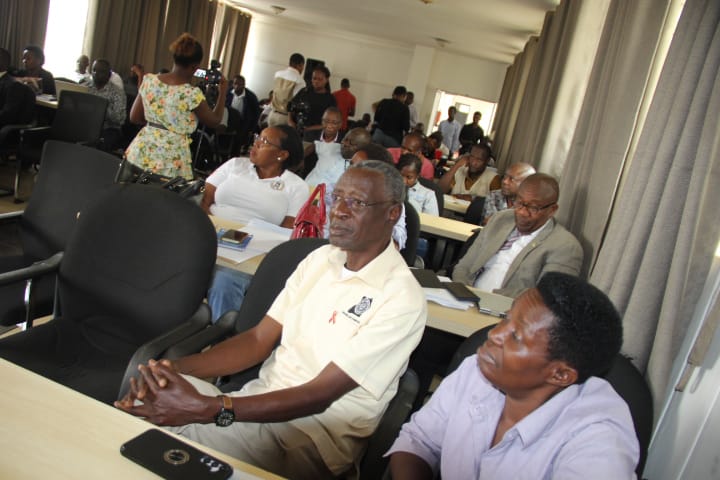
Some of the city leadership and a team Uganda AIDS Commission that attended a media engagement about ending HIV by 2030 in Uganda
New community response plan
Mbarara City’s HIV Focal Person Dorcus Twinabaitu announced the formation of a new HIV management committee to strengthen community-led prevention efforts.
The committee will organize dialogues in communities, schools, informal settlements, and workplaces to gather ideas aimed at reducing new infections.
“As a city, we are going to constitute a working improvement committee that will focus on community engagement,” Twinabaitu said.
“I urge the people of Mbarara to participate in these dialogues because we cannot do it alone as health workers.”
She said the campaign will also target high-risk groups, including sex workers, and will involve religious organizations such as the Mothers’ Union and Muslim faith groups, as well as local entertainers, in spreading prevention messages.
“For HIV management, it is not only the responsibility of health workers—it is a responsibility for all of us as residents of Mbarara,” she said.
“If we bring our ideas together and commit ourselves, many of the solutions we need do not necessarily require a lot of money but rather behavioural change.”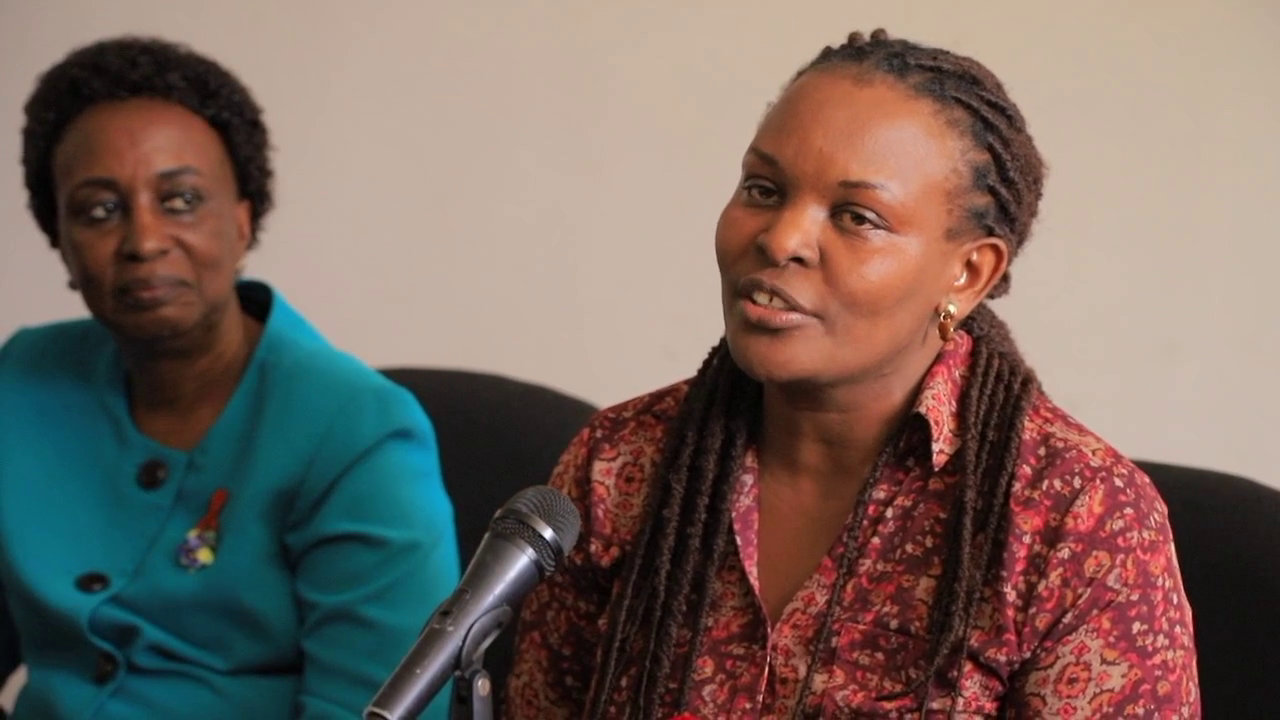
Dorcus Twinabaitu, HIV focal person Mbarara City, flanked by the Uganda AIDS Commission official, addressing journalists
Call for collective responsibility
As the meeting concluded, officials emphasized that with only four years remaining to meet the 2030 target, there is an urgent need for stronger community engagement and individual responsibility.
They stressed that promoting responsible behaviour among young people and eliminating stigma against people living with HIV will be critical in reversing infection trends and achieving the national goal of ending HIV/AIDS as a public health threat.
Torch Media Africa



