Economic & Social Transformation
Contractors chosen, money still pending
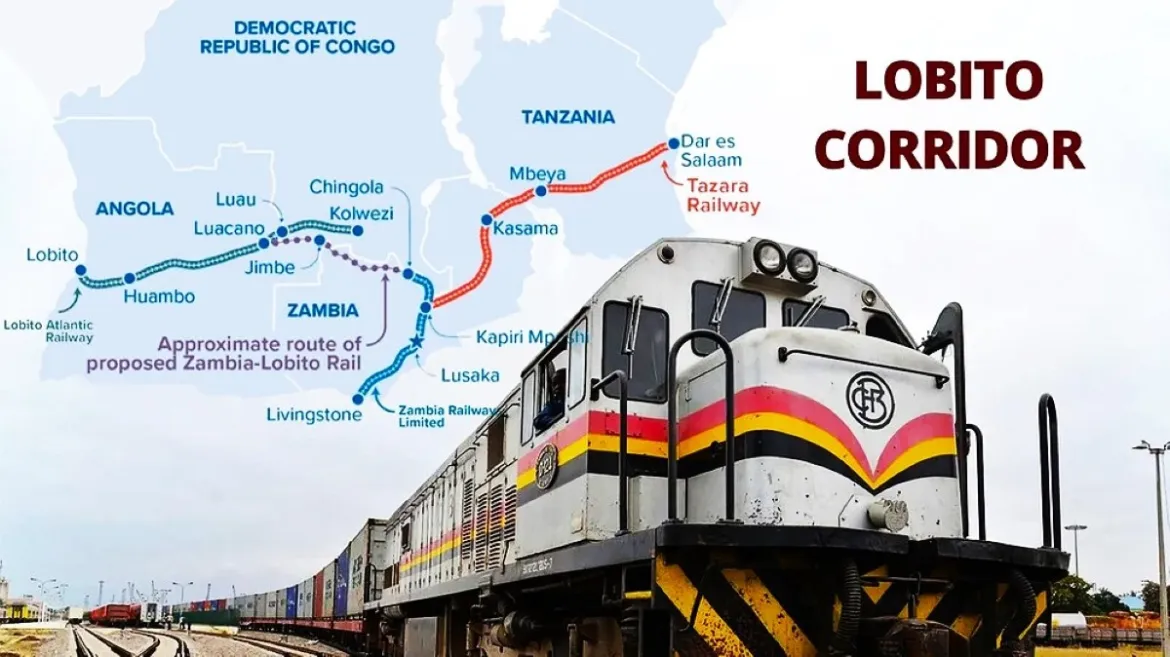
On 27 October 2026 the Africa Finance Corporation (AFC) named the preferred bidders for the 830-kilometre greenfield railway meant to connect Zambia's Copperbelt to Angola's Atlantic coast. On the Zambian side the winning group is led by Italy's Webuild (40%), with Turkey's IC İçtaş and Portugal's Mota-Engil holding 30% each. On the Angolan side AFC picked a Mota-Engil and Odebrecht consortium. Webuild's package, Lot 1B, covers roughly 517 km from the Angolan border to Chingola and includes 22 bridges and viaducts, eight stations and three maintenance depots. The remaining 313 km runs from the border to Luacano, where the new line will join the existing Benguela railway down to the port of Lobito.
The announcement is a real step forward, but it is not a construction start. Negotiations on the engineering, procurement and construction (EPC) contracts open in November and are expected to take eight to twelve weeks. Neither contract values nor payment terms have been disclosed. Financial close for the Zambian line is still targeted for the fourth quarter of 2027, more than a year after the builders were chosen. Zambia's environment agency, ZEMA, puts the cost of the full project at US$3–5 billion including rolling stock.
This article argues that the Lobito story is less a single project than the opening move in a broader contest over how Central and Southern Africa's mineral heartland reaches the sea. Three rail systems are now competing for the same copper and cobalt tonnes: the Western-backed Lobito Corridor to the Atlantic, the China-backed TAZARA revival to Dar es Salaam, and Tanzania's own standard-gauge railway (SGR) pushing west toward Lake Tanganyika, Burundi and eastern DRC. Whether that competition produces cheaper logistics and broader development, or stranded assets, will be one of the region's defining economic questions this decade.
Why the route to the sea matters so much
Zambia and the Democratic Republic of Congo are landlocked mining economies. Their concentrate and cathode moves by truck or by ageing rail to ports in Tanzania, South Africa, Mozambique and Namibia, often over journeys of 2,000 km or more. Ecofin Agency reports that mineral exports face bottlenecks, high transport costs and transit times that can exceed 20 days. Promoters of the Lobito line say it could cut transit to around seven days, compared with up to 16 on other routes. That is a target rather than a result, and it depends on border procedures, rolling stock and operating arrangements.
The stakes are rising because output is rising, at least in the DRC. Glencore alone produced 210,600 tonnes of copper in the DRC in the first nine months of 2026, up 37% year on year. Zambia is a more complicated case. The government restated its goal of 3 million tonnes of copper a year by 2031 after a record 2025, but H1 2026 output was only about 447,000 tonnes, up 0.45% on the year. Shanghai Metals Market analysis notes that hitting the near-term goal of 1 million tonnes in 2026 would require second-half output roughly 24% above the first half. Transport capacity does not mine copper, but transport costs shape which deposits are viable and how much of the value stays in the region.

The Atlantic option: Lobito
The Lobito Corridor has two pieces. The first is the 1,289-km brownfield Benguela line from the port of Lobito to the DRC border, now run under a 30-year concession by Lobito Atlantic Railway (LAR), a joint venture of Trafigura, Mota-Engil and Vecturis. In December 2025, LAR closed a US$753 million financing package: US$553 million from the US International Development Finance Corporation (DFC) and US$200 million from the Development Bank of Southern Africa (DBSA). The US DFC says the upgrade is intended to lift capacity to roughly 4.6 million tonnes a year and cut critical-mineral transport costs by up to 30%.
The second piece is the greenfield Zambian extension. Here the financing picture is a patchwork. In April 2026, AFC and the African Development Bank each committed US$500 million within a package of roughly US$1.3 billion. In August, the AfDB board approved a US$255 million African Development Fund loan and a US$10 million grant from the Roma Process/Mattei Plan facility for Zambia's participation, with phased resource mobilisation envisaged up to US$500 million. Italy's Cassa Depositi e Prestiti separately lent AFC €250 million over ten years, guaranteed up to 80% by export credit agency SACE, under Rome's Mattei Plan. That facility is a corporate line to AFC, not a ring-fenced railway allocation, but Webuild's selection gives it a concrete outlet.
The commercial case rests on volumes. ZEMA's environmental study projects about 2 million tonnes of freight a year by 2031, rising to 2.7 million tonnes in the early 2040s; AFC talks of potential up to 5 million tonnes. The gap between those figures is the central question. The European Centre for Development Policy Management (ECDPM), in its report "The Lobito Corridor: Between European Geopolitics and African Agency," warned that copper and cobalt export forecasts and projected Lobito port traffic may be over-optimistic, and flagged competition from TAZARA as a material risk. Other cited risks include financing gaps at close, slow mine-clearing in eastern Angola, cross-border coordination and local workforce constraints.
The Indian Ocean option: TAZARA reborn
TAZARA, the 1,860-km Tanzania–Zambia Railway built with Chinese support in the 1970s, had decayed to the point where freight fell below 500,000 tonnes a year, a fraction of its design capacity. On 29 September 2025, the TAZARA Authority signed a public-private partnership concession with China Civil Engineering Construction Corporation (CCECC) to rehabilitate, modernise and operate the freight business. The programme was formally launched in November 2025. CCECC reportedly plans around US$1 billion for track upgrades and US$400 million for locomotives and wagons.
Progress has been visible but early. In April 2026, parent company CRCC restated a three-year delivery timeframe, with survey and design nearing completion. In mid-July 2026, construction began on a new training centre and an operations control building. Independent progress figures are not yet available, and logistics analysts caution that betting on large TAZARA rail volumes in 2026 or 2027 is a wager rather than a plan.
The SGR wildcard
Tanzania is building a third axis. Its electric standard-gauge railway already carries passengers between Dar es Salaam and Dodoma, and the government has been moving to put port-to-inland freight on the line, loading cargo at Dar es Salaam's Malindi berth for haulage to Bahi in Dodoma Region. In April 2026, Standard Chartered arranged about US$2.33 billion of syndicated financing, including European export-credit cover, for SGR Lots 3, 4 and 5. On 20 July 2026, President Samia Suluhu Hassan laid the foundation stone for the 506-km Tabora–Kigoma section (Lot 6), with a reported cost of around US$2.7 billion and completion targeted by 2030. Once it reaches Lake Tanganyika and links toward Burundi, the SGR becomes another potential outlet for eastern DRC minerals and, in time, a competitor for Zambian freight.
Development or just extraction?
For Zambia and the DRC, competition between corridors is potentially good news. Rival routes give miners bargaining power over tariffs and create redundancy when a road washes out or a port congests. But three questions will decide whether the new rail geography delivers broader economic and social gains.
The first is whether corridors carry more than minerals. Angola's government and partners have pitched the Lobito line as an agribusiness and logistics corridor, pointing to vast underused arable land in the provinces it crosses. Two-way freight, carrying fertiliser, fuel and equipment inland and farm produce outward, is what turns a mining railway into a development corridor. Without it, empty return wagons erode economics and the line serves a narrow enclave.
The second is debt and risk allocation. Much of the financing comes as concessional and development-bank lending, but sovereigns still carry contingent risks. Zambia, which only recently completed a lengthy debt restructuring, cannot afford a project whose revenues fall short of what lenders were promised. Transparent traffic guarantees, if any, will matter.
The third is local content and jobs. Webuild, Mota-Engil, Odebrecht and CCECC bring the engineering muscle, but the long-term dividend lies in maintenance skills, local suppliers and rail operations staff. TAZARA's new training centre and the Lobito promoters' workforce plans should be judged on how many Zambians, Angolans and Tanzanians end up running the systems.
What to watch next
Over the coming months, three markers will show whether the race is real. The first is whether the EPC contracts for the Zambia Lobito Railway are signed within AFC's eight-to-twelve-week window. The second is whether LAR publishes credible freight volumes on the upgraded Benguela line, which is the clearest test of demand. The third is whether TAZARA's rehabilitation moves from buildings to track renewal on schedule. If all three advance, the Copperbelt could, for the first time in half a century, choose among genuinely competitive exits to two oceans. If they stall, the region risks paying for geopolitical ambition with its own scarce borrowing capacity.
Published By | Business News Editor