Written By | Staff Writer
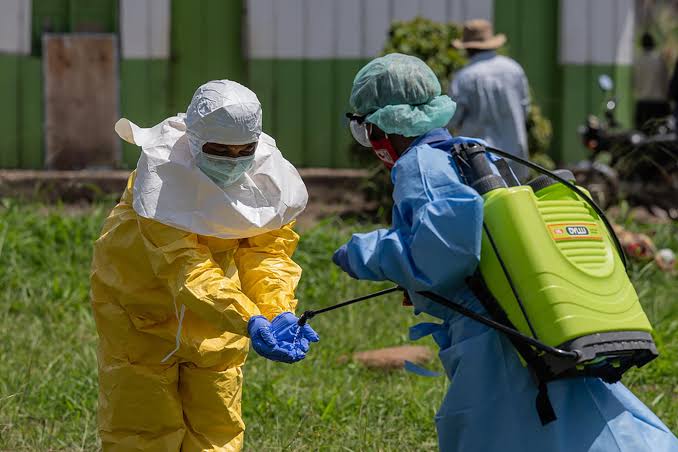
Uganda's handling of this year's Bundibugyo virus outbreak has moved from the field to the journals.
Uganda's handling of this year's Bundibugyo virus outbreak has moved from the field to the journals. A cluster of peer-reviewed analyses published in recent days — including an early-release paper in the US Centers for Disease Control and Prevention's Emerging Infectious Diseases and a Notes from the Field report in its Morbidity and Mortality Weekly Report — finds that Uganda detected, notified and responded to the outbreak faster than the international benchmark requires. The same papers identify the two things the country could not fix on its own: cross-border data sharing, and the continued absence of any licensed vaccine for this particular Ebola virus.
What is happening
On 15 May 2026 Uganda's Ministry of Health declared an outbreak of Ebola disease caused by Bundibugyo virus, following confirmation of the pathogen in both Uganda and the Democratic Republic of the Congo. Uganda's index case was imported: a Congolese man who travelled to Kampala and died there. Two days later, on 17 May, the WHO Director-General determined that the cross-border Bundibugyo situation constituted a Public Health Emergency of International Concern.
Uganda ultimately recorded 20 confirmed cases, with transmission confined to Kampala and neighbouring Wakiso. Of those, the large majority — 15 — were directly imported from the DRC, with five arising from local secondary transmission. Two deaths were recorded; case-fatality figures cited in the literature vary between roughly 10 and 15 per cent depending on the cut-off date and denominator used. The last patient was discharged, the mandatory 42-day countdown ran without a new confirmed case, and the WHO confirmed the end of Uganda's outbreak in late August.
What has changed this month is the evidence base. Researchers have now published a structured assessment of exactly how quickly Uganda moved, using the 7-1-7 framework — an increasingly standard global metric that sets targets of seven days to detect a suspected outbreak, one day to notify public health authorities, and seven days to complete an initial set of early response actions.
The findings
An early action review was conducted over a two-day workshop on 8–9 July 2026, examining timeliness and identifying bottlenecks and enablers across nine response pillars. Its conclusion, published as an early release in Emerging Infectious Diseases (Volume 32, Number 10), is that Uganda met all three 7-1-7 targets:
The detail about how detection occurred is worth pausing on. The alert did not originate from a laboratory or a sentinel surveillance system but from a community leader who knew whom to call. That is a form of infrastructure — built over years of Uganda's repeated filovirus outbreaks — that does not appear on an equipment inventory but that determined the timeline here.
The review was blunter about what did not work. Despite 15 of Uganda's 20 confirmed cases having been directly imported from the DRC, real-time cross-border surveillance data sharing was identified as a bottleneck. Uganda's national response was fast; the regional information flow feeding it was not. That is a structural finding, not an operational one, and it cannot be resolved by any single ministry of health.
The vaccine problem
The harder scientific issue running through all of this reporting is that Bundibugyo virus has no licensed vaccine and no approved species-specific therapeutic. The vaccines and monoclonal antibody treatments that transformed outbreak response over the past decade — above all rVSV-ZEBOV — were developed against Zaire ebolavirus, a different species within the same genus.
Whether the Zaire vaccine offers useful cross-protection against Bundibugyo has been one of the central questions of 2026. Licensed Zaire vaccines show early evidence of partial cross-reactive immunogenicity, but the WHO has judged that evidence insufficient and recommended against deploying rVSV-ZEBOV as a countermeasure in the current Bundibugyo outbreak. On 31 July, on consideration of new evidence, the WHO's technical advisory group authorised a Phase 3 clinical trial of rVSV-ZEBOV in the DRC — a decision to generate the missing data rather than to assume it.
In parallel, three Bundibugyo-directed vaccine candidates — from IAVI, Moderna and the University of Oxford — have been placed on an expedited development track, and the WHO-sponsored PARTNERS trial protocol has been deployed in both the DRC and Uganda to evaluate candidate vaccines and therapeutics under outbreak conditions. Running a randomised trial during an active filovirus emergency is methodologically and ethically demanding, and whether it produces usable evidence is one of the open questions of the year.
The scale of the surrounding epidemic explains the urgency. The 2026 Bundibugyo outbreak is the largest on record for this species. Uganda's toll of two deaths sits beside a DRC epidemic that had recorded 3,398 confirmed deaths by the second week of September. Uganda's containment — 20 cases from 15 separate importations, with only five onward infections — looks very different against that comparison.
Who the main players are
Why it matters
The 7-1-7 result gives Uganda something it has rarely had: a documented, externally framed performance benchmark rather than a narrative claim. For a country that has faced repeated viral haemorrhagic fever emergencies, being able to point to a published finding that it met all three timeliness targets is a durable asset in negotiations over health financing, regional surveillance architecture and research partnerships.
For global health policy, the more consequential finding is the gap the review exposes. A national system can be fast and still be exposed if the epidemiological information crossing the border into it is slow. Fifteen of Uganda's twenty cases arrived from another country's outbreak. No amount of domestic improvement addresses that; only a functioning regional data-sharing mechanism does.
And the vaccine gap is a direct product of how countermeasure development is funded. Zaire ebolavirus attracted sustained investment because of the scale of the West African epidemic of 2014–16. Bundibugyo, previously responsible for small and geographically contained outbreaks, did not — until 2026, when it produced the largest outbreak of its species on record in a region with long experience of Ebola and no species-specific tool to deploy against it.
This sits within a broader national push. Uganda has been positioning science and technology as central to its stated ambition of a tenfold expansion to a US$500 billion economy by 2040 — a framing that ran through the third National ICT Summit at Nakawa in early September and the Deep Technology Summit convened by the Science, Technology and Innovation Secretariat, and that extends to space and earth observation work, including a climate-monitoring camera built with regional partners for deployment to the International Space Station. Outbreak response capability is the part of that portfolio that has now been independently measured.
What to watch next
Uganda's outbreak is over, the numbers are published, and the response holds up to external scrutiny. The unresolved parts of the story are regional and pharmaceutical — and both will still be unresolved when the next importation arrives.



