Written By | Entertainment Desk
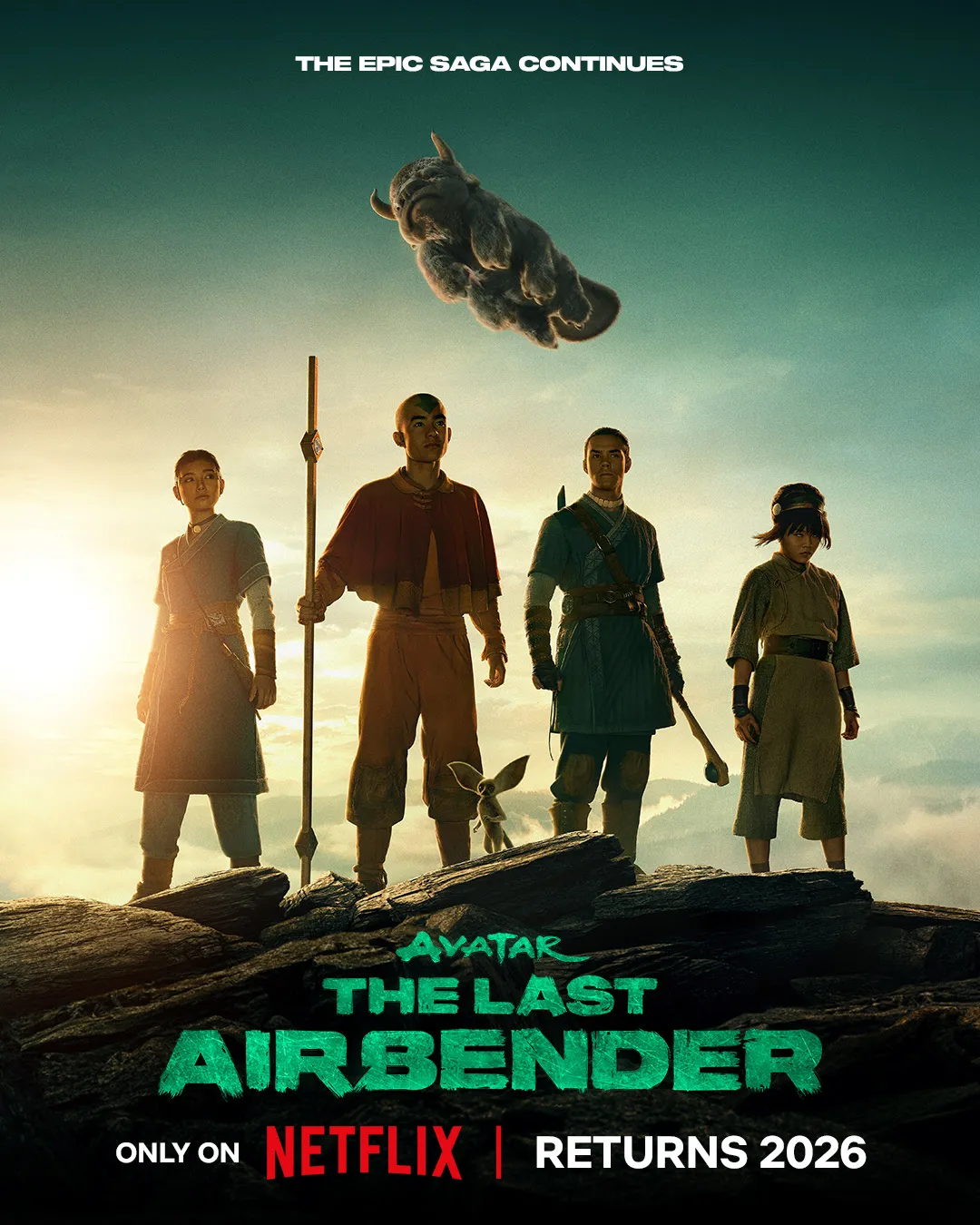
Netflix's live-action Avatar: The Last Airbender returns this week, and its new lead is a blind teenager who can out-fight anyone in the Earth Kingdom without seeing a single one of them coming.
LOS ANGELES
Three days from now, Netflix will release all seven episodes of Avatar: The Last Airbender Season 2 at once, the same all-at-midnight strategy that turned the live-action reboot's first season into one of the platform's most-watched series of last year. But the real premiere happens tomorrow night, when Netflix's TUDUM live event gives the world its first full episode early and, with it, its first extended look at the character fans have been waiting two seasons to meet: Toph Beifong, the blind earthbending prodigy who, in the animated original, remains one of the most beloved characters the franchise has ever produced.
Casting her was never going to be simple. Executive producers have said they reviewed “thousands upon thousands” of audition tapes before settling on newcomer Miya Cech, and the moment they saw her, the search ended. “Miya is our Toph,” one producer said flatly. Gordon Cormier, who plays Aang and has now spent two seasons opposite the character, put it more personally: “She's playing Toph the way I pictured it.”
Building a Character Who Can't See, On a Set Built to Be Seen
What sets this casting apart from ordinary fan-casting anxiety is the production's approach to authenticity. Cech wore vision-blocking contact lenses throughout filming, sacrificing her own sight on set in order to physically inhabit Toph's. Working alongside her for every scene, every rehearsal, every blocking session, was Joe Strechay, a blindness consultant who previously consulted on Marvel's Daredevil and who effectively became Cech's shadow throughout production. Strechay's job was not simply to advise from the sidelines; producers have described him as present at literally every moment Toph appears on set, helping Cech work out how the character touches surfaces, plants her feet, and reads a room through vibration and sound rather than sight.
“Even with all the science fiction and super powers, we want children who are blind or low vision to watch this show and see themselves in the character,” Strechay has said of the approach. It is a notably different mandate than simply making a blind character look cool on screen — and one that threads through the rest of the season's marketing, which has leaned hard into Toph's seismic sense, the ability to read vibrations through the earth, as both a superpower and a literal extension of how blind people navigate physical space. One widely shared piece of trailer-adjacent commentary even drew comparisons between Toph's ability and documented research into Pacinian corpuscles, the real nerve receptors responsible for detecting vibration through touch — the kind of detail that suggests the writers' room did its homework rather than treating blindness as a plot device.
A War That Gets Bigger Before It Gets Better
Plot-wise, Season 2 pushes Aang, Katara, and Sokka deeper into the Earth Kingdom, widening the show's geography and its stakes as the war against the Fire Nation escalates. Toph's introduction isn't incidental to that expansion; in both the animated original and, by all early indications, this adaptation, she becomes essential to Aang's training, the character who forces him to confront the parts of earthbending — patience, groundedness, a willingness to be still — that don't come naturally to an air nomad. Strechay has compared her fighting style to “doing a no-look pass in basketball,” a description that captures both her combat instincts and the show's larger interest in turning a disability into a genuinely distinct way of perceiving the world, rather than an obstacle the character simply overcomes.
Cast members have previewed the season in suitably dramatic terms, teasing “action-packed” episodes that will leave longtime fans in tears — a promise that should be read in the context of a fan base that has spent two decades attached to these characters across the original animated series, an anime-adjacent comic expansion, and now two separate live-action attempts, including a 2010 feature film that is, by near-universal consensus, best left unmentioned in front of devoted fans.
Why This Casting Decision Matters Beyond the Show
Hollywood's track record with disability representation remains uneven at best: able-bodied actors are still regularly cast in disabled roles, and the industry's authentic-casting wins tend to get outsized attention precisely because they remain exceptions rather than the rule. A tentpole Netflix production casting a young actor who, by all accounts, treated the production's blindness consulting as a genuine creative collaboration rather than a box to check, gives the show a chance to be remembered for something more than nostalgia bait, however well-loved the source material already is.
What This Means for You
If you have a Netflix subscription and any affection for the animated original — or simply a kid in the house who has watched all three animated seasons more times than you can count — the calendar is straightforward: catch the early first-episode debut during Tuesday's TUDUM livestream if you want a head start, or wait for the full seven-episode drop at 12:00 a.m. Pacific on Thursday, June 25, when the whole season becomes available at once. For parents of blind or low-vision children specifically, this is shaping up to be a rare case worth watching together regardless of franchise loyalty, given the unusual care the production has reportedly taken with Toph's portrayal.
Conclusion
Live-action adaptations of beloved animation live or die on a handful of casting decisions, and franchises rarely get two chances to get the most important one right. Avatar: The Last Airbender's first season proved the format could work; its second is staking real credibility on whether Toph Beifong, blind, brilliant, and utterly unbothered by what anyone thinks of her, can be brought to the screen with the same integrity she's always had on the page. Early signs, and a great deal of behind-the-scenes care, suggest the show is taking that responsibility seriously.



