HEALTH
Background
An Ebola outbreak in the eastern Democratic Republic of Congo has become one of the deadliest and fastest-moving in the disease's history, killing more than 1,700 people since it was declared just under three months ago. The Democratic Republic of Congo's Ministry of Health formally declared the outbreak on May 15, 2026, after the country's National Institute of Biomedical Research confirmed the presence of Bundibugyo ebolavirus in samples collected in Ituri province, a conflict-scarred region in the country's northeast. The outbreak is centered in Ituri, which has accounted for roughly 90 percent of all confirmed cases.
What makes this outbreak especially dangerous is the strain itself. Unlike the Zaire ebolavirus species responsible for the 2014-2016 West African epidemic and the 2018-2020 Kivu outbreak in eastern Congo, for which the approved vaccine Ervebo has been used effectively for years, Bundibugyo ebolavirus has never before triggered an outbreak large enough to justify commercial vaccine development. The strain's only two prior outbreaks, in Uganda in 2007 and Congo's Orientale province in 2012, were small enough that pharmaceutical companies never invested in bringing a Bundibugyo-specific vaccine or treatment through clinical trials to licensure. As a result, responders are fighting this outbreak with none of the vaccine tools that helped bring earlier Ebola epidemics under control.
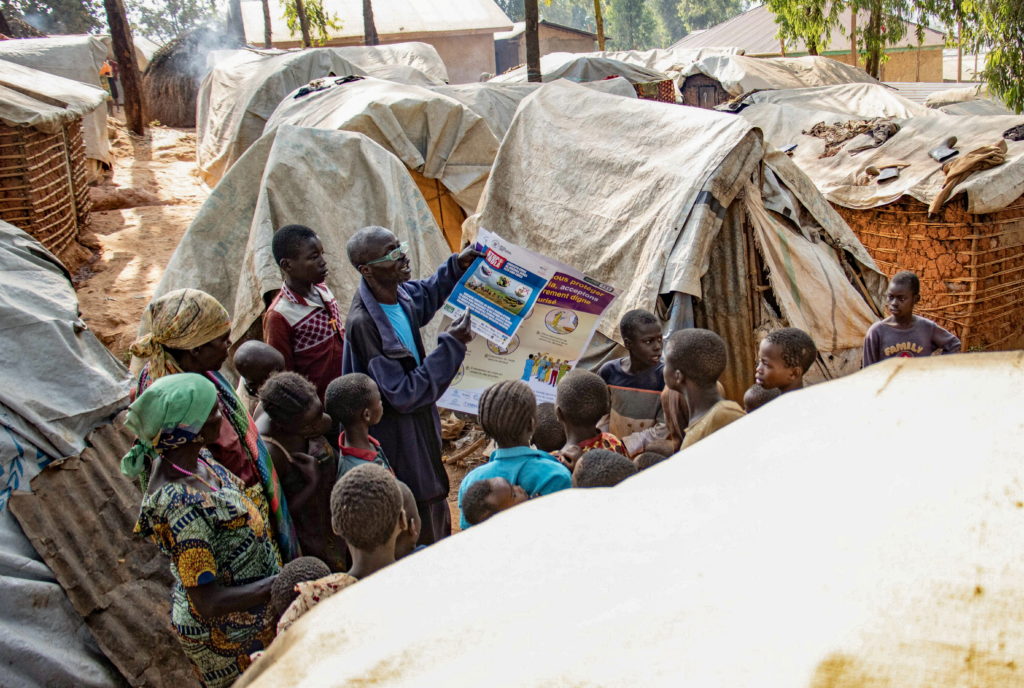
Ituri province adds further difficulty. The region has been gripped for years by conflict involving the Allied Democratic Forces (ADF) and other armed militia groups, which restricts humanitarian access, limits the movement of health workers, and has fostered deep community mistrust of outside responders, including public health teams. Poor roads and weak health infrastructure compound the problem, making it difficult for surveillance and treatment teams to reach affected communities quickly.
The World Health Organization designated the outbreak a Public Health Emergency of International Concern (PHEIC), its highest level of alert, within days of the DRC's declaration. From its earliest weeks, the outbreak has moved at an unprecedented pace: it surpassed 1,000 confirmed cases within roughly 40 days of the response beginning, compared with about 235 days for the 2018 Kivu outbreak to reach the same milestone.
Key Developments
As of August 4, 2026, the World Health Organization and Congolese health authorities have recorded 3,802 confirmed cases and 1,707 deaths, according to reporting from Al Jazeera and other outlets tracking the outbreak. The death toll has climbed sharply in a matter of weeks: it stood at roughly 930 in mid-July, reached 1,556 by July 31, and has continued rising since, at a pace outbreak specialists describe as unmatched by any prior Ebola epidemic in its opening months. Some case counts already place this outbreak among the largest in recorded Ebola history, and public health officials say it is, by growth rate, the fastest-expanding outbreak of the disease ever documented.
Central to the outbreak's rapid spread is a breakdown in contact tracing. WHO guidance holds that successfully identifying and monitoring 90 to 95 percent of an infected person's contacts is generally the minimum needed to bring an Ebola outbreak under control. In the DRC, that figure has been estimated at around 78 percent, but the underlying numbers are starker still: with roughly 3,400-plus cases recorded at the point of one recent assessment, the contact-tracing list should theoretically include around 135,000 people, yet response teams had identified fewer than 18,000. More than 80 percent of new cases are now being detected in people who were never on a contact-tracing list in the first place, meaning the virus is spreading faster through communities than health teams can track it.
Africa CDC Director-General Dr. Jean Kaseya has attributed the tracing breakdown to a combination of structural failures: delays in identifying and following up with contacts, poor road infrastructure that slows response teams, active armed conflict that blocks access to parts of Ituri, and long-standing community mistrust of health authorities. Compounding the crisis, health workers in the affected region have reportedly gone unpaid for extended periods, contributing to a strike in late July that further strained an already stretched response system.
On the treatment front, the World Health Organization and Africa CDC jointly launched a $518 million, six-month emergency response plan in early June to fund surveillance, treatment centers, and community engagement in the DRC and neighboring Uganda. Because no licensed vaccine exists for the Bundibugyo strain, the Coalition for Epidemic Preparedness Innovations (CEPI) is now funding production of the first clinical-trial doses of an experimental Bundibugyo vaccine, describing the gap as a market failure rather than a scientific one. An Oxford-led vaccine trial began around July 27, and manufacturers expect enough doses for human studies to be available by the end of 2026, though a licensed, widely deployable vaccine remains a distant prospect. Separately, Africa CDC has issued urgent appeals for $16 million to $18 million to close funding gaps that are holding up further clinical research and expanded response operations.

Reactions and Response
The international response has centered heavily on containment at the border rather than large-scale intervention inside Congo. The U.S. Centers for Disease Control and Prevention, working with the Department of Homeland Security, imposed entry screening and travel restrictions on travelers arriving from the DRC beginning May 18, with additional case-by-case measures applied to travelers from Uganda and South Sudan. In mid-July, those measures were tightened further with a "Do Not Board" order barring anyone who had been in the DRC within the previous 21 days from boarding a commercial flight to the United States; that order has been extended and currently runs through August 12.
WHO Director-General Tedros Adhanom Ghebreyesus's decision to declare a PHEIC unlocked additional international funding and coordination mechanisms, but humanitarian organizations, including groups operating on the ground in Ituri, have continued to warn that the response remains under-resourced relative to the outbreak's scale and speed. Rights organizations have separately flagged how the ADF insurgency and broader instability in eastern Congo are choking off humanitarian access to the same communities most affected by the virus, echoing warnings raised throughout the year about the broader security crisis in the region. Some public health specialists have drawn comparisons to the early, criticized international response to the 2014-2016 West African Ebola epidemic, which killed more than 11,000 people after outside aid was slow to scale up.
What's Next
Africa CDC's Kaseya has said it remains unclear when the outbreak will peak, and with nearly 80 percent of new infections now arising from undetected community transmission rather than known contacts, the trajectory in the coming weeks is difficult to predict. The most immediate tests will be whether international donors close the funding gap Africa CDC has flagged, whether security conditions in Ituri allow response teams broader access, and whether contact-tracing capacity can be rebuilt quickly enough to catch up with the virus's spread.
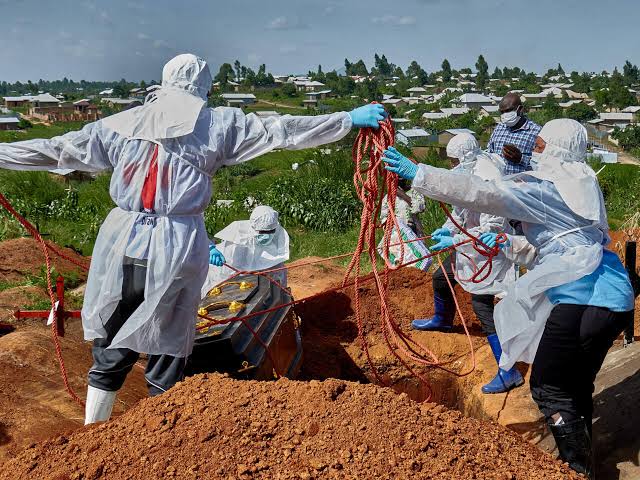
On the vaccine front, even the most optimistic timelines point to human clinical trials beginning only in the coming months, with a licensed and widely available vaccine realistically a year or more away. That means the outbreak's course in the near term will depend almost entirely on traditional public health measures: case isolation, safe burial practices, and community engagement, all of which have so far struggled to keep pace with the outbreak's growth. Public health officials will also be watching closely for signs of spread beyond Ituri province and into neighboring Uganda or South Sudan, both of which remain subject to U.S. travel measures because of their proximity to the outbreak's epicenter.
Published By | Features Editor