Written By | International News Agencies
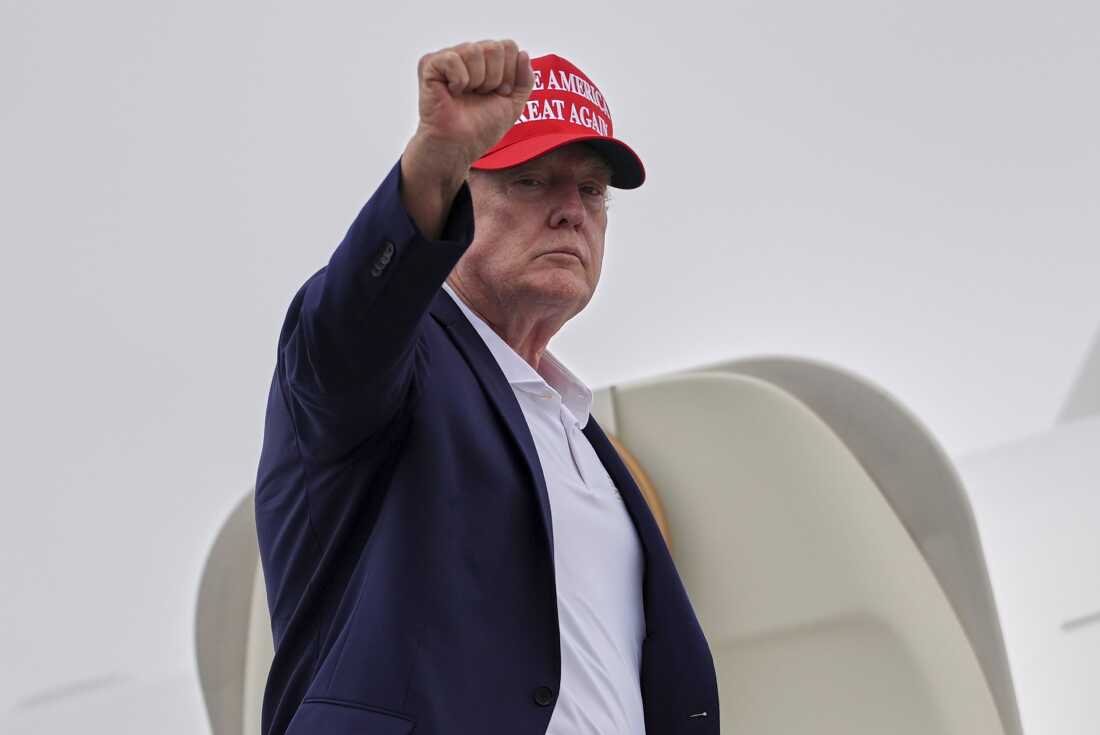
Trump's interest in a renewed relationship with Kim has resurfaced repeatedly since he returned to office in 2025
Seoul to Tokyo
Background
The United States and South Korea have conducted large-scale joint military exercises for decades as the backbone of a mutual defense treaty dating to 1953, intended both to maintain interoperability between the roughly 28,500 American troops stationed on the peninsula and South Korea's own armed forces, and to deter North Korea. The drills — including the twice-yearly Freedom Shield and Ulchi Freedom Shield exercises — have long been a point of friction with Pyongyang, which routinely denounces them as rehearsals for invasion and has in the past used them as a pretext for missile tests and other provocations. Previous administrations have occasionally scaled back or suspended the exercises, most notably after Trump's first-term summitry with Kim Jong Un in Singapore in 2018, when he unilaterally canceled major drills as a goodwill gesture — a move that surprised the Pentagon and South Korean officials at the time and was later partly reversed when the Biden administration restored full-scale exercises.
Trump's interest in a renewed relationship with Kim has resurfaced repeatedly since he returned to office in 2025. He has told South Korean officials, including President Lee Jae-myung at G7 meetings in France in June, that he wants to restart diplomacy with Pyongyang, and has publicized past personal encounters with Kim, including a widely shared photo of the two men strolling together in Singapore. North Korea's own response has been mixed: Kim Yo Jong, the North Korean leader's influential sister, has said the Trump-Kim relationship is "not bad" but has rejected any resumption of denuclearization talks, arguing that Pyongyang — which has deepened military and economic ties with both Russia and China amid the former's continuing war in Ukraine — is far less dependent on Washington's goodwill than it was during Trump's first term. Kim has instead signaled that he wants any U.S. engagement to proceed on the basis of North Korea's permanent status as a nuclear-armed state, not as a prelude to disarmament.
Key Developments
On August 17, Trump directed Secretary of War Pete Hegseth — the title now used for the defense secretary post — to "substantially reduce" the joint military exercises with South Korea that had begun that same week. In a social media post explaining the decision, Trump said the drills were costly and "send a signal that is totally inappropriate and hostile" toward North Korea, which he described as having "been unthreatening and respectful" during his time in office. He also cited South Korea's decision not to assist the United States militarily during its war with Iran as a factor, linking a Pacific alliance relationship to an unrelated Middle Eastern conflict in a way that struck many observers as unusual.
The order came without advance consultation with Seoul, according to reporting from multiple outlets, catching South Korean officials off guard just as this year's drills were getting underway. It also arrived days ahead of a scheduled Trump-Lee summit in Washington, adding to confusion about how the reduction would be implemented and what it might mean for the broader defense relationship, including the tens of thousands of U.S. troops still based in South Korea. The Pentagon did not immediately detail which specific exercises would be affected or by how much, leaving allies and analysts to interpret the scope of the "substantial reduction" from
Trump's social media post alone.
The move drew a notable backdrop from Pyongyang even before it was announced: North Korea had, just days earlier, threatened unspecified "stern steps" against the United States and South Korea over this year's drills, which it called "a rehearsal for an aggressive war." Some regional security analysts noted the awkward timing — that Trump's announcement arrived almost as if in direct response to that North Korean threat, reinforcing a perception that Pyongyang's objections, rather than any strategic reassessment inside the Pentagon, had driven the decision.
Reactions
South Korean President Lee Jae-myung, addressing the decision at a cabinet meeting, avoided direct criticism of Trump but emphasized the importance of the alliance, saying that "national security will be further strengthened when the alliance is solid" and that building up South Korea's own capabilities would increase "our value and importance as an ally." Behind that carefully calibrated public statement, Lee's government moved quickly on two fronts it has pursued for years with only partial success: accelerating the long-stalled transfer of wartime operational control of South Korean forces from the United States to Seoul, and pushing for faster progress on South Korea's program to build nuclear-powered — though not nuclear-armed — attack submarines, both widely read as steps toward reducing reliance on the U.S. security guarantee that Trump's move had just called into question.
The reaction from the broader foreign-policy community was pointed, with The Hill describing the decision as having "rattled" the foreign-policy world. Analysts and former officials, some speaking anonymously, said the framing — trading a decades-old alliance commitment for an unverified diplomatic opening with a North Korea that has shown no willingness to discuss denuclearization — drew skepticism from capitals well beyond Seoul, including Tokyo and Brussels, where officials have periodically voiced concern about the durability of U.S. security commitments under the current administration. Japan, itself a target of North Korean criticism this summer over its own expanded missile capabilities, joined South Korea in publicly stressing that the U.S. alliance remains "critical," a diplomatic signal read by many as an attempt to paper over private unease.
North Korea's own reaction was comparatively muted given the scale of the concession, with state media continuing a pattern of criticizing trilateral U.S.-Japan-South Korea security cooperation even as the exercise reduction was announced; North Korea's KCNA news agency had published at least six commentaries denouncing joint drills since July. Kim Yo Jong, in a statement issued before Trump's order, had already characterized her brother's relationship with Trump as "not bad" while separately warning of unspecified new military options in response to Japan's own defense buildup — suggesting Pyongyang was not treating the exercise reduction, on its own, as sufficient grounds to return to the negotiating table.
What's Next
The practical scope of the exercise reduction remains to be clarified; the Pentagon had not, as of this week, detailed which specific drills would be curtailed, postponed or eliminated, and South Korean defense officials were still seeking clarity on the decision's implementation. Seoul's push to accelerate its wartime operational control transfer and submarine program is likely to become a more prominent feature of the alliance relationship regardless of how the exercise question resolves, as South Korean officials weather what many now describe as a pattern of unpredictability from Washington on security commitments. The decision is also expected to feature heavily in the upcoming Trump-Lee summit in Washington, where South Korean officials will likely seek reassurances about the substance, rather than just the symbolism, of the U.S. commitment to the peninsula.
Whether the gesture succeeds in drawing North Korea back to talks is far from certain. Kim's demand that any renewed dialogue proceed on the basis of North Korea's permanent nuclear status, rather than toward denuclearization, remains a fundamental gap with declared U.S. policy, and Pyongyang's deepening ties with Moscow and Beijing — including reported troop deployments supporting Russia's war in Ukraine — have reduced its historic economic dependence on any opening with Washington. Regional analysts will be watching for whether North Korea reciprocates with any pause in its own missile-testing activity, and for how Japan, which has faced its own escalating rhetorical exchanges with Pyongyang this summer, recalibrates its defense posture if it judges the reduced U.S.-South Korea drills as a sign of diminished collective deterrence.



