Written By | Health News Agencies

Dr. Reddy's generic of lenacapavir gets a tentative green light just 16 months after the brand launched, at a price of $28,000 less than the US list price
JOHANNESBURG
It is being hailed as one of the biggest leaps in the fight against HIV since the first antiretroviral pill: a shot, taken just twice a year, that nearly wipes out the risk of catching the virus — now available as a cut-price generic for the price of a few coffees.
On Monday, the US Food and Drug Administration granted tentative approval to a generic version of lenacapavir, the long-acting HIV prevention injection, made by India's Dr. Reddy's Laboratories. The price tag in 120 low- and middle-income countries: just $40 per person per year — the same as the daily prevention pills now used in much of the world.
There is a twist that will sting in America. The brand-name version, Gilead Sciences' Yeztugo, lists at $28,218 a year before insurance in the United States. And because Gilead's patents are still in force, the cheap generic cannot legally be sold on US shelves. Its life-saving potential lies thousands of miles away.
What Just Happened
The FDA decision came 16 months after the agency approved Gilead's original product in June 2025, a startlingly fast turnaround for a generic of a new injectable drug. Unitaid, the global health agency that helped fund the effort, announced the news on 2 November alongside the Clinton Health Access Initiative (CHAI) and Wits RHI, the research institute at South Africa's University of the Witwatersrand.
The word "tentative" matters. In FDA language it is the standard label for a generic that meets the agency's standards but cannot be marketed in the US while the originator's patents or exclusivity remain. In practice, it also opens the door for US government programmes, such as PEPFAR, to buy the product for use overseas. Dr. Reddy's plans to begin shipping in December, and CHAI expects first supplies to reach countries by the end of 2026, with broader availability through 2027.
The company's strategy was clever. Lenacapavir has both prevention and treatment uses, and Dr. Reddy's combined both in a single application under the FDA's 505(b)(2) pathway. That allowed a priority review — a process that aims for a decision within six months.
The Science: Nearly 100 Per Cent Protection
Lenacapavir works differently from older preventive drugs. It targets the HIV capsid, the protein shell of the virus, and one injection under the skin protects for six months. No daily pill to remember, no clinic visit every two months.
The results in clinical trials were remarkable. Two studies of high-risk people found the shots nearly eliminated new infections. When Yeztugo was approved in the US, CBS News reported that 99.9 per cent of trial participants who received lenacapavir remained HIV-negative. CHAI chief executive Dr. Neil Buddy Shah calls the shot "almost 100% effective at preventing HIV."
That level of protection is a major improvement on daily pre-exposure prophylaxis (PrEP), which works extremely well when taken every day but often fails in real life because people forget, run out, or fear stigma from carrying pills. A twice-a-year jab removes much of that burden and can be given discreetly in a clinic.
The Price Revolution
For years, the grim pattern in HIV was that breakthroughs reached rich countries first, and poor countries waited a decade or more. This time, the gap has been squeezed dramatically.
In October 2024, Gilead signed royalty-free voluntary licences with six generic makers — Dr. Reddy's, Emcure, Eva Pharma, Ferozsons, Hetero and Mylan — covering supply to 120 low- and middle-income countries across sub-Saharan Africa, Asia and Latin America. In September 2025, Unitaid backed Dr. Reddy's and the Gates Foundation backed Hetero in separate funding deals that set the $40 price.
Compare that to the US list price of $28,218 for the same active ingredient. That is a gap of roughly 700 to one. Even allowing for the very different costs of delivering care, testing and insurance in the US, the contrast is jaw-dropping — and has already fuelled debate about drug pricing in wealthy countries.
Dr. Philippe Duneton, Unitaid's executive director, said the project shows how "early risk-taking is helping shorten the time between a scientific breakthrough and real access in countries." Deepak Sapra, CEO for API and services at Dr. Reddy's, said the FDA's decision "validates that work," and thanked Gilead, Unitaid, Wits RHI and CHAI.
The Need Is Enormous
The scale of the HIV epidemic explains why this matters. According to the World Health Organization, 41 million people were living with HIV last year and 570,000 died from HIV-related causes. Carolyn Amole of CHAI says around 20 million people worldwide could benefit from PrEP.
Early signs of demand are strong. More than 125,000 people in ten early-adopter African countries have already started Gilead's branded lenacapavir. The generic is expected to widen that access dramatically once countries approve it and procurement begins.
Carmen Pérez Casas of Unitaid summed up the moment: "Now, we have the tools." But she also warned that the shot only works if people use it: "If you do not take it, you cannot get protected against HIV."
Not So Fast: The Hurdles
For all the excitement, the road from FDA tentative approval to a needle in an arm is long. Each licensed country still needs its own regulatory sign-off before clinics can offer the generic, and some places may move faster than others. Other manufacturers' generics have not yet been approved by the FDA, and buyers such as PEPFAR and the Global Fund must make purchasing decisions.
Professor Saiqa Mullick of Wits RHI put it plainly: "an affordable drug alone is not enough." Health systems, trained and confident providers, and engaged communities are all needed. CHAI's Amole said: "The work is not done."
There are also coverage gaps. The licence covers 120 countries, but upper-middle-income nations such as Malaysia are not included. They would have to negotiate directly with Gilead or pursue a compulsory licence.
And there are medical cautions. People must test negative for HIV before starting and before each injection. Drug-resistant HIV has been identified in people who had undiagnosed infections when they received the shot, because a single drug in the body at low levels can allow resistant virus to emerge. Common side effects include injection-site reactions, headache and nausea.
Why Americans Can't Buy It
The sting for US readers is simple: patents. Gilead's Yeztugo remains protected, and the generic cannot be sold in America until those protections expire. No date has been given for a US generic.
That leaves American patients with the same choices they had last week: daily pills, an injection every two months, or the twice-yearly Yeztugo shot. Insurance coverage varies by plan and product, although federal rules require many plans to cover PrEP without cost-sharing. People without insurance may be able to get help through manufacturer assistance programmes, community health centres and local health departments.
The contrast is likely to feed a growing political argument about why the same medicine can cost $40 in one place and more than $28,000 in another.
A Race Against the Clock
Behind the regulatory language is a simple fact: every month of delay means new infections. With 41 million people already living with HIV worldwide, even small gains in speed matter. That is why the partners have stressed how quickly this approval came, just 16 months after the brand launched, compared with the many years it has historically taken for new HIV medicines to become affordable in poorer countries.
Advocates also note that the first shipments, due from December, will be only the start. Ministries of health must decide which groups to prioritise, train nurses and community health workers to give the injections, and set up the testing that must come before every dose. Supply chains must keep a cold, steady flow of product to remote clinics. None of that is glamorous, but all of it decides whether a $40 shot becomes a real-world drop in infections or simply a good headline.
The partners say they are working with governments, communities and funders on exactly these challenges. If they succeed, the twice-yearly jab could become a cornerstone of prevention in the places hit hardest by the epidemic.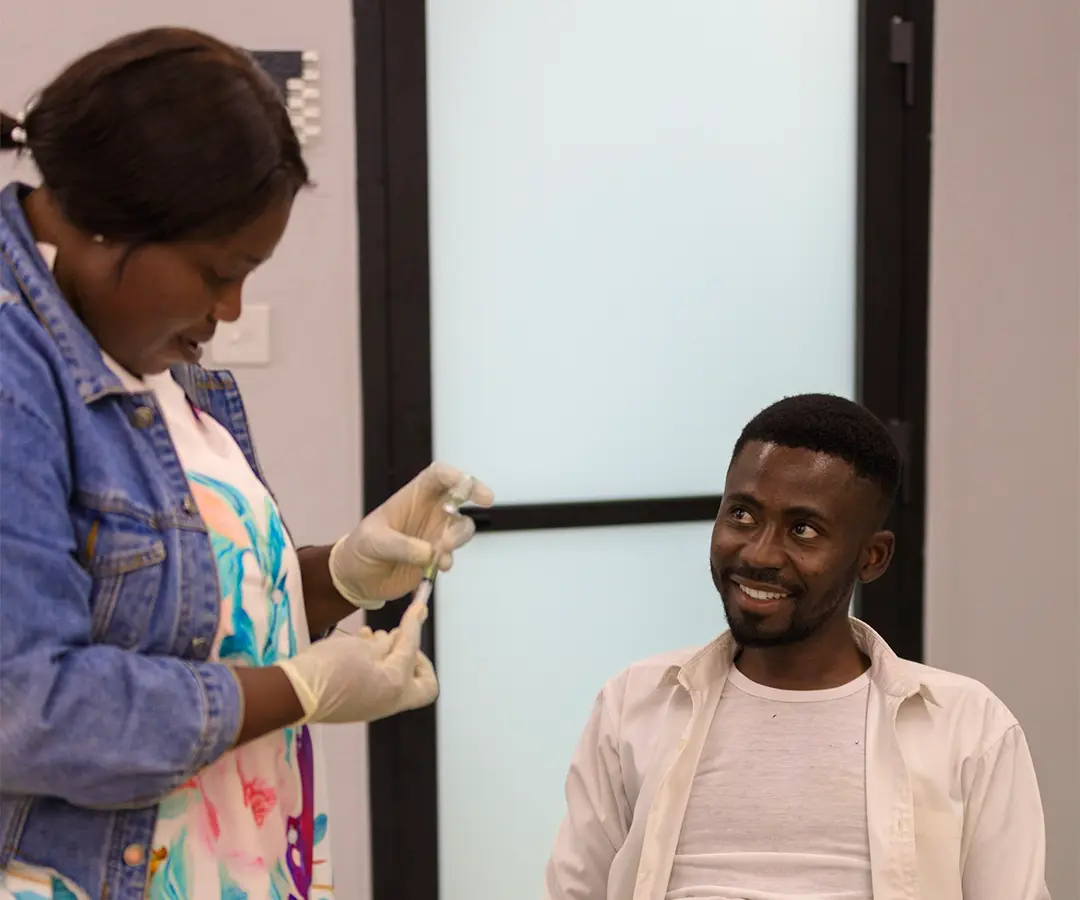
Expert Perspective
Global health leaders see the approval as proof that a different model is possible. Unitaid, CHAI and Wits RHI provided financial, technical and regulatory support to Dr. Reddy's, working with governments, communities, the Global Fund, the US Bureau of Global Health Security and Diplomacy and the Gates Foundation.
CHAI's Shah says the difference between a pill taken every day and "two injections a year" of a near-perfectly protective product "changes that entirely" for people who struggle with daily adherence. The challenge, as Wits RHI's Mullick stresses, is to make sure the shot reaches the people who need it most — young women in high-burden regions, men who have sex with men, sex workers and others at highest risk — without judgment or barriers.
What This Means for You
If you live in the US and are worried about HIV exposure, nothing changes this week: the generic isn't available to you, but effective prevention is. Talk to a doctor or sexual health clinic about all the options, including daily pills, the two-monthly injection and twice-yearly Yeztugo. If you think you may have been exposed in the last 72 hours, seek post-exposure prophylaxis (PEP) as soon as possible.
If you live in or travel to one of the 120 licensed countries, ask your local clinic or health ministry about when the generic will arrive; first supplies are expected by the end of the year. And wherever you live, regular HIV testing remains essential — it is required before starting the shot, and early diagnosis saves lives.
The Bottom Line
Not every medical breakthrough arrives with a price tag that can match the scale of the problem. This one just might. A shot that protects almost completely for six months, available for $40 a year, could change the shape of the HIV epidemic if health systems can deliver it.
The cautions are real: country approvals, testing, supply chains and the gap between brand and generic prices. But for the first time, the tool and the price are both on the table. As Unitaid's Pérez Casas said, "Now, we have the tools." The question is how fast the world can use them.



