SCIENCE & HEALTH
There's a reason 19th-century parents dreaded the word diphtheria more than almost any other. They called it the "strangling angel of children" — a bacterial infection so vicious it forms a thick, greyish membrane across the back of a child's throat, swelling their neck into what doctors of the era called a "bull neck," and slowly choking them to death as they gasped for air their own body was sealing shut. Before vaccines, it was one of the leading killers of children and teenagers on the planet, claiming roughly 150,000 lives a year in the United States alone at its historical peak.
Then came the vaccine. By the 1950s, diphtheria was considered functionally eliminated in wealthy nations like Australia. Parents stopped fearing it. Doctors stopped expecting to see it. It became a disease you read about in old medical textbooks, not one you diagnosed in a modern hospital.
That changed this year. As of the most recent government tally, Australia has recorded 538 confirmed cases of diphtheria in 2026 — the largest outbreak the country has documented since national records began. To put that number in perspective: the previous worst year on record, 2022, saw just 31 cases. This year's outbreak is more than seventeen times larger than that supposed record-breaker, and public health experts are warning the real number could be even higher, because testing rates in the hardest-hit communities have dropped even as the outbreak has raged.
A DISEASE THAT FORGOT HOW TO STAY GONE
The numbers tell a story of a health system caught almost completely off guard. Notifications of diphtheria began creeping upward as far back as October 2025, but the surge that alarmed authorities didn't hit until February 2026, and it kept climbing through the following months. Cases peaked in the window between late May and early June, with the Australian Centre for Disease Control recording nearly 80 new infections in a single fortnight at the outbreak's worst point.
Leaked internal health data later revealed that Northern Territory case numbers had actually spiked a full month before the government issued any public health alert — a delay that has since become its own controversy, with critics questioning why residents in affected communities weren't warned sooner.
Geographically, this outbreak has overwhelmingly concentrated in two places: the Northern Territory, which has recorded the majority of cases, and Western Australia, particularly the remote Kimberley region, where an outbreak was first identified among Aboriginal communities in late December 2025. Smaller clusters have also popped up in South Australia and Queensland, showing the bacteria has crossed state borders as infected people traveled or came into contact with others.
The demographic pattern is impossible to ignore and impossible to separate from Australia's long, painful history of health inequity. More than 90% of this year's cases — by some counts as high as 94% since January — have occurred among Aboriginal or Torres Strait Islander people. The vast majority of patients, more than 80%, live in areas classified as remote or very remote.
At least one death has been confirmed, in a remote part of the Northern Territory, according to Dr. John Boffa of the Central Australian Aboriginal Congress, though public health officials caution that undertesting in some regions makes it difficult to say with confidence how many cases — or deaths — have gone officially unrecorded.

WHY YOUR SKIN CAN GIVE YOU DIPHTHERIA TOO
Here's a detail that surprises most people, because it doesn't match the throat-clutching image from old textbooks: the dominant form of diphtheria in this outbreak isn't respiratory at all. It's cutaneous — meaning it infects the skin rather than the throat and airways. Of this year's cases, roughly 69% have presented as skin infections, while about 30% have been the classic, more dangerous respiratory form that attacks the throat and can obstruct breathing.
Cutaneous diphtheria typically causes ulcers or sores that can look deceptively like ordinary skin infections, insect bites, or scabies — which experts say is part of why it has been able to spread undetected in some communities. Professor Adrian Esterman, an epidemiologist at the University of Adelaide, explained that Aboriginal children and adults are disproportionately prone to skin lesions in the first place, particularly in crowded housing conditions, which creates ample opportunity for the bacteria to find an entry point and then pass to others through direct contact with infected wounds or through respiratory droplets from coughing and sneezing.
"Unfortunately Aboriginal children and adults are prone to skin lesions, especially in crowded housing," Esterman said, noting that untreated scabies or insect bites can significantly raise the risk of diphtheria taking hold and spreading further.
Even the milder skin-based form is not something to shrug off. Health officials say the hospitalization rate across this outbreak has run at roughly 20% — meaning one in five confirmed cases has required inpatient care, a sobering figure for a disease many Australians assumed belonged to history.
THE VACCINE PARADOX NOBODY WANTED TO TALK ABOUT
Here's where this outbreak gets uncomfortable for the standard public health narrative. Investigators found that a high proportion of people infected in 2026 had actually already received at least three valid doses of a diphtheria-containing vaccine. That is not evidence the vaccine doesn't work — it's evidence of something more mundane and more solvable: waning immunity.
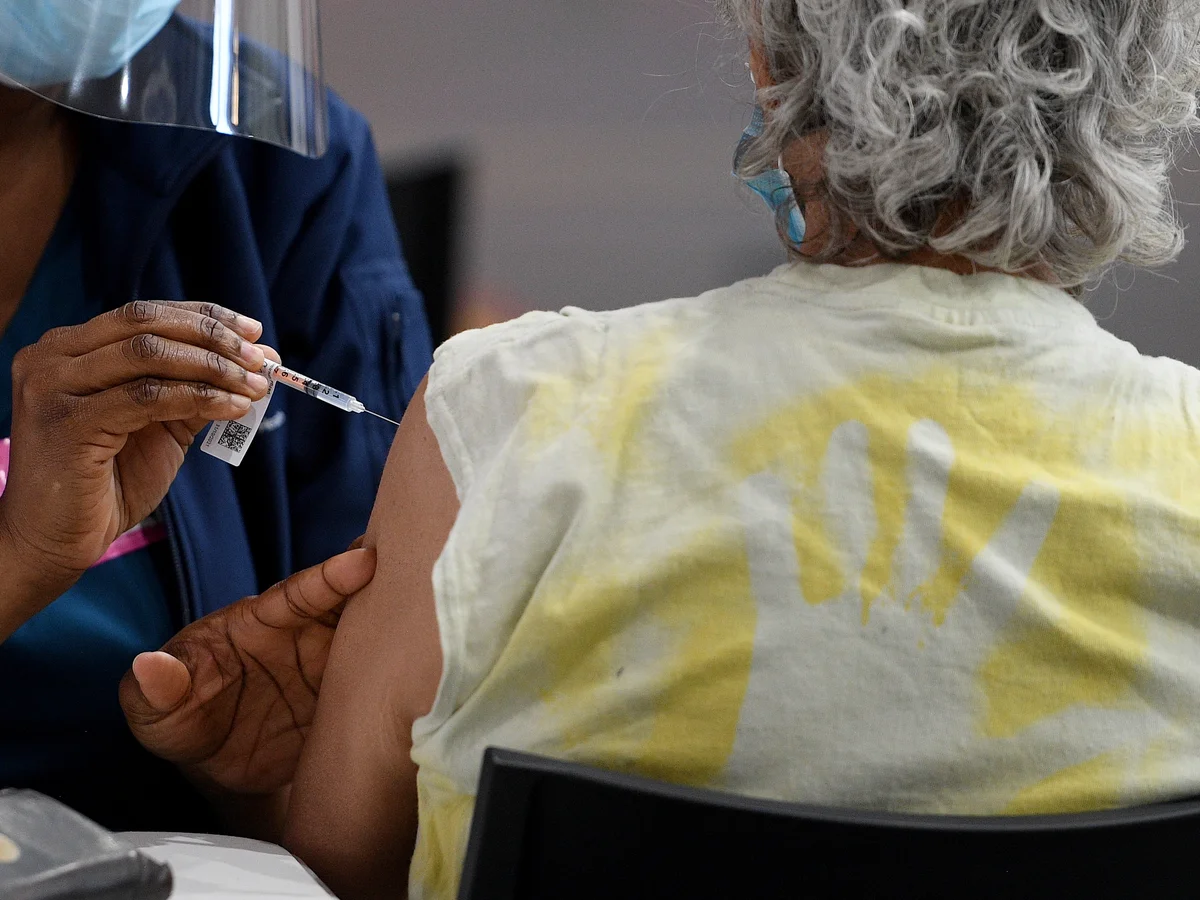
Stephanie Williams, an epidemiologist with the Australian Centre for Disease Control, explained that antibody protection from childhood diphtheria vaccination fades over time, which is precisely why booster shots are recommended roughly every ten years for adults. Crucially, she noted that even in cases where vaccinated individuals became infected, the disease presented as "mostly mild" — evidence that prior vaccination, even if it waned, still blunted the severity of illness.
That nuance has been getting lost online. According to public health reporting, misinformation about the outbreak has been spreading nearly as fast as the bacteria itself, muddying public understanding of exactly why previously vaccinated people are still showing up in case counts. Health officials have been explicit in pushing back: this is not a story about vaccines failing. It's a story about boosters being skipped, and about a bacterium finding fertile ground in communities where housing conditions make transmission easy regardless of vaccination status.
Compounding the immunity problem, Australia's overall childhood immunization rate has fallen to a five-year low since the COVID-19 pandemic disrupted routine healthcare access and, in some populations, hardened vaccine hesitancy — a trend health authorities across multiple countries have been sounding alarms about for several years now.
HOUSING, NOT JUST NEEDLES, IS THE FIX
Ask the experts working directly with affected communities what actually needs to change, and the answer isn't simply "more vaccines." It's housing.
Dr. Megan Campbell, a public health physician and medical adviser with the National Aboriginal Community Controlled Health Organisation (NACCHO), has been blunt about the structural conditions fueling transmission: overcrowded housing that wasn't designed or maintained for large families, inconsistent access to clean water and soap, and a shortage of basic "health hardware" — enough beds, enough bedding, enough towels — to allow people to maintain the kind of hygiene that stops skin infections from spreading household to household.
"What I'm talking about is overcrowded housing, housing that's not been designed or maintained for large families and where there's inadequate health hardware in the home," Campbell said, adding that ensuring adequate space and consistent access to water and sanitation supplies needs to be treated as seriously as the vaccination response.
Professor Esterman put it even more starkly: "We can vaccinate until the cows come home, but it won't help unless they do something about housing and sanitation."
THE RESPONSE — AND WHETHER IT'S WORKING
The federal government has now committed $13 million to fight the outbreak, funding a surge workforce to deliver booster vaccinations and antibiotic treatment in affected regions, along with procurement of additional vaccine and antibiotic supplies. Of that package, $3 million has been earmarked specifically for NACCHO to provide community liaison and on-the-ground health support — an acknowledgment that community-controlled health services, run by and for Aboriginal people, are often best positioned to reach the populations hit hardest.
There are early signs the surge may be past its peak. In the most recent two-week reporting period, just 26 new cases were logged, down sharply from nearly 80 at the height of the crisis in May and June. But health officials are cautious about declaring victory. Dr. Campbell said testing rates have not remained consistently high across all affected areas, raising the real possibility that the apparent decline partly reflects fewer people being tested rather than fewer people being infected.
"We're just a little bit cautious about how we interpret that data when we're hearing that testing is quite low in some parts of Australia," Campbell said. "So we do worry with that drop in numbers that part of that may be due to a lack of testing in some areas."
She's urging residents in affected regions not to let their guard down: "We still really want people to be coming in early for testing if they've got skin infections or skin sores or a sore throat. Serious illness can occur from diphtheria, and the hospitalisation rate for this outbreak has been around 20 per cent … we really do want people to keep thinking about diphtheria and keep talking to their health professionals and coming in to get their vaccination."
WHAT EXPERTS SAY COMES NEXT
Both Esterman and Campbell believe Australia can drive diphtheria back down to elimination-level numbers, but only if the current outbreak response evolves into something more permanent: sustained investment in the environmental health of remote Aboriginal communities, not just an emergency vaccination surge that winds down once headlines move on. Campbell described existing "proactive partnerships" between government and community-controlled health services as encouraging, but said far more investment in long-term environmental health programs is still needed.
A spokesperson for the Australian Centre for Disease Control reiterated that the public health response continues to focus on identifying and treating cases, tracing close contacts, and delivering vaccination and antibiotic treatment to at-risk populations, while urging residents in affected areas to keep following guidance from local public health authorities and Aboriginal Community Controlled Health Services.
WHAT THIS MEANS FOR YOU
If you live in Australia, particularly in the Northern Territory, Western Australia, South Australia, or Queensland, this is your cue to check when you last had a diphtheria-containing booster. Adults are generally advised to get a Td or Tdap booster roughly every ten years — and if you can't remember your last one, that's a good sign it's overdue. This applies even more urgently if you live in or are traveling to an affected region, work in healthcare, or live in close contact with young children.
If you or a family member develops a sore throat accompanied by visible white or grey patches at the back of the throat, or any skin sore that isn't healing normally, especially after recent travel to an affected region, doctors are urging people not to dismiss it as "just a cold" or "just a bite." Early testing and antibiotic treatment are highly effective, but delays can allow the disease to progress to its more dangerous, airway-obstructing form.
For readers outside Australia, this outbreak is a reminder that "eliminated" diseases are not the same as "extinct" diseases. Diphtheria bacteria haven't gone anywhere; only sustained, well-maintained population immunity has kept it at bay for seventy years. Wherever vaccination coverage slips and living conditions allow bacteria to spread, an eliminated disease can find its way back into hospital wards. Public health officials in the U.S., U.K., and Europe have all separately flagged declining childhood immunization rates in the years following the pandemic — meaning what's happening in the Australian outback is being watched closely as a warning sign, not dismissed as a uniquely Australian problem.
THE BOTTOM LINE
Diphtheria was never actually eradicated worldwide — it was suppressed, community by community, dose by dose, for seven decades. Australia's 2026 outbreak, seventeen times larger than its previous worst year, is what happens when waning immunity, an under-boosted adult population, and severe housing inequity collide in the same communities at the same time. The $13 million emergency response and the recent dip in new cases offer real reason for cautious optimism. But as the doctors on the ground keep repeating: a needle alone won't finish this. It will take housing, sanitation, and sustained investment in the communities the "strangling angel" has found again — because it never actually left.
Published By | Features Editor