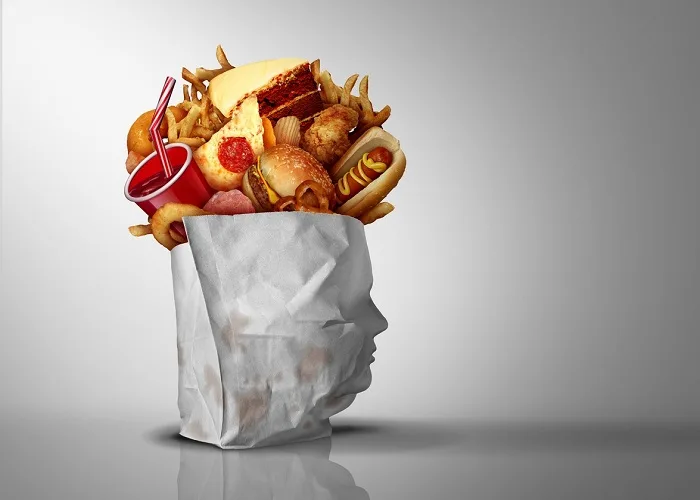
The biggest review of its kind pooled 51 studies from four continents. It found that the more ultra-processed food people ate, the higher their risk of heart attacks, strokes, diabetes, depression, gut disease, cancer and early death. Here's what the numbers really mean, and how to cut back without emptying your wallet.
HEALTH
It's in the cereal bowl at breakfast, the meal deal at lunch, the fizzy drink at the desk and the microwave dinner at night. For many people, ultra-processed food isn't a treat. It's most of what they eat.
Now one of the largest pieces of research ever carried out on the subject has put a number on what that habit may be costing us, and the answer is a long list of the diseases that fill hospital wards.
The study, a pooled analysis of 51 long-term studies covering 8,819,894 adults, was published this week in the journal Family Medicine and Community Health, part of the BMJ Group. It found that people who ate the most ultra-processed food had higher risks of eight separate health problems, from heart disease and diabetes to depression, digestive disease and death from any cause.
And crucially, the risks went up step by step as people ate more. Every extra 100 grams a day, about the weight of two standard chocolate bars, was linked to a measurable rise in danger.
"Ultra-processed food is one of the major problems in public health," the study's lead author, Dr Xiao Liu, a physician at Sun Yat-sen Memorial Hospital in China and a research fellow at Duke-NUS Medical School in Singapore, told ABC News.
THE NUMBERS THAT MATTER
The researchers searched medical databases for every suitable study published up to the end of April 2026. They found 51 "prospective cohort" studies, meaning studies that recorded what people ate and then followed them forward in time to see who got sick. The studies came from the Americas, Europe, Asia and Oceania. Participants' average ages ranged from 23 to 77, and they were followed for anywhere between 2 and 32 years.
When the researchers compared people who ate the most ultra-processed food with those who ate the least, the heavy eaters had higher risks of:
- Digestive diseases: 31% higher
- Depression and anxiety: 27% higher
- Cardiovascular events, including heart attacks, strokes, mini-strokes and cardiovascular death: 24% higher
- Metabolic syndrome and diabetes: 24% higher
- Obesity and overweight: 23% higher
- Death from any cause: 18% higher
- Cancer, including cancer death: 12% higher
- High blood pressure: 11% higher
Then the team did something that makes the study stand out: they looked at "dose-response", how risk changes with each extra portion. They found that each additional 100 grams of ultra-processed food a day was linked to:
- A 14% higher risk of cardiovascular events
- A 4% higher risk of cancer
- A 3% higher risk of death from any cause
- A 2% higher risk of metabolic syndrome or diabetes
And every 10% increase in the share of the diet made up of ultra-processed food was linked to a 16% greater risk of metabolic syndrome or diabetes.
The researchers set out to answer a simple question: is there a "safe" amount? Their answer, in effect, is that risk climbs steadily with intake, so less is better.
![]()
SO WHAT COUNTS AS "ULTRA-PROCESSED"?
This is where many people get confused, and it matters.
Almost all food is processed in some way. Washing, chopping, freezing, pasteurising and tinning are all forms of processing. They are not what the scientists are worried about.
Ultra-processed foods are, in the researchers' words, "ready-to-eat or heat-and-serve products that have undergone extensive industrial processing." They typically contain a range of additives, such as emulsifiers, sweeteners, colours, flavourings and preservatives, and they tend to be high in energy, sugar and salt, but low in fibre, protein, vitamins and minerals.
Think: fizzy drinks, packaged snacks and crisps, biscuits, cakes and pastries, sweetened breakfast cereals, chicken nuggets, hot dogs and processed meats, instant noodles, flavoured yoghurts and many ready meals.
Registered dietitian Maya Feller explained the spectrum to ABC News using an apple. Picking it off the tree is a step of processing. Slicing it is another. Pureeing it is another. None of that adds anything. As more ingredients get added, the food moves further along the scale.
Her shopping tip is simple: "Flip the package over, and if the front says blueberries, then the ingredient list should say blueberries."
HOW COULD FOOD DO THIS?
The study cannot prove that ultra-processed food directly causes disease. But the authors point to several ways it might.
First, the obvious one: these foods are often packed with calories, sugar, salt and unhealthy fats while being low in fibre, so they're easy to overeat. Many are engineered to be "hyper-palatable", tasting so appealing it's hard to stop.
Second, the additives. The researchers say emerging evidence suggests combinations of additives may have a "cocktail effect" on health.
Third, the physical structure. Laboratory studies suggest that the heavily altered texture and makeup of ultra-processed foods may disturb the gut microbiome, the trillions of bacteria living in our intestines, and promote inflammation and insulin resistance. That could help explain the strong link with digestive disease and diabetes.
Fourth, compounds created during manufacturing and cooking. The authors highlight acrylamide, which forms in starchy foods heated to high temperatures, and acrolein, produced when fats are heated. Both have been associated with higher rates of cardiovascular disease.
THE HEALTH WARNING ON THE HEALTH WARNING
Before anyone throws out their entire kitchen cupboard, there are important limits to this research, and the authors are upfront about them.
It's observational. Pooling 51 studies gives huge statistical power, but these studies can only show links, not prove cause and effect. People who eat lots of ultra-processed food may also smoke more, exercise less, sleep worse, have lower incomes or face more stress. Researchers try to adjust for these factors, but, as the authors acknowledge, UPF intake "often happens in the context of broader lifestyle and behavioural patterns that are difficult to fully adjust for."
Diet was self-reported. Every study relied on people's memories of what they ate, through food questionnaires, 24-hour recall or diet histories. Those methods are known to be imprecise.
No children. The analysis excluded anyone under 18, so it says nothing directly about kids, who are among the biggest consumers of ultra-processed food.
Some of the increases are modest. A 3% higher risk of death for every extra 100 grams a day is a small change for any one person. But spread across whole populations eating large amounts every day, small risks add up to a lot of illness.
It's also worth knowing that the findings were first presented at the American College of Cardiology Asia meeting in 2025 before being published in full this week, and that the research was funded by the Natural Science Foundation of China and provincial funding bodies in Jiangxi.
EXPERT PERSPECTIVE
This new analysis adds to a steadily growing pile of evidence. In one well-known 2019 experiment at the US National Institutes of Health, volunteers who lived in a research unit and were offered an ultra-processed diet ate about 500 more calories a day than when they were offered an unprocessed diet, and gained weight, even though the two diets were matched for sugar, fat, fibre and salt on offer. That study, led by Kevin Hall, was small, but it was a rare controlled trial showing that ultra-processed food itself seems to drive overeating.
Last year, a major series of papers in The Lancet argued that ultra-processed food was displacing traditional diets around the world and called for government action, from front-of-pack warning labels to limits on marketing to children.
Critics of the ultra-processed label say it lumps very different foods together. A wholemeal supermarket loaf and a sugary fizzy drink can both count as ultra-processed, yet they are clearly not equally harmful. Some nutrition scientists argue that the problem lies mainly in the nutrients, such as excess sugar, salt and saturated fat, rather than processing itself. The debate is still running.
The study's authors take a practical line. "Given that UPF related chronic diseases often cluster as multimorbidity," they write, "reducing consumption of UPFs and replacing them with minimally processed alternatives may be relevant for chronic disease prevention and primary care management."
In other words: this isn't just about one disease. The same foods may be feeding several at once, and people with several chronic conditions at once are the hardest and most expensive patients to treat.
Dr Liu put it more bluntly: "We should eat more vegetables and reduce the ultra-processed food to make us healthier."
HOW MUCH ARE WE EATING?
In the United States, federal health data show the average American gets more than half of their daily calories from ultra-processed foods, and the share is even higher among children and teenagers. The UK is similar, with ultra-processed food making up more than half of calories in the typical diet. Consumption has also risen sharply in middle-income countries in Asia, Africa and Latin America as supermarkets and fast food spread.
More than 100 million Americans are living with obesity, according to the Centers for Disease Control and Prevention, and more than 22 million have severe obesity. Heart disease remains the leading cause of death in the US.
WHAT THIS MEANS FOR YOU
You don't have to overhaul your diet overnight, and experts say you shouldn't try. Here are practical, affordable steps:
- Start small. Feller's advice: pick "two or three things that you eat on a regular basis that are ultra-processed" and swap those for whole or minimally processed versions.
- Hit the freezer aisle. Frozen vegetables, fruit and plain grains with nothing added are cheap, last for weeks and are just as nutritious as fresh.
- Use tins wisely. Canned beans, lentils, tomatoes and fish are processed, but not ultra-processed, as long as they aren't loaded with added sugar or salt. Choose lower-sodium options.
- Lean on staples. Rice, pasta, oats, beans, eggs and potatoes are affordable building blocks for home-cooked meals.
- Read the ingredients list, not the front of the pack. A long list of ingredients you wouldn't find in a home kitchen is a red flag.
- Watch the drinks. Sugary and diet fizzy drinks are among the most common ultra-processed products, and water, milk or plain tea and coffee are easy swaps.
- Cook once, eat twice. Batch-cooking a simple stew, soup or curry at the weekend beats a week of ready meals.
- For families: Feller notes that parents can't control everything their children eat outside the home, so education, positive role-modelling and shared family meals matter more than strict rules.
THE BOTTOM LINE
This study doesn't mean one chocolate bar or a packet of crisps will make you ill. What it shows is a consistent pattern across nearly nine million people on four continents: the more ultra-processed food in the diet, the higher the risk of a whole cluster of the conditions that shorten lives.
The science on why is still being worked out, and the ultra-processed label has its critics. But the practical message is simple, cheap and unlikely to do any harm: cook a bit more, eat more vegetables, fruit, beans and whole grains, and let ultra-processed food be the occasional extra rather than the main event.
Every 100 grams, it turns out, may count.
Published By | Features Editor