Written By | Fashion and Design Desk
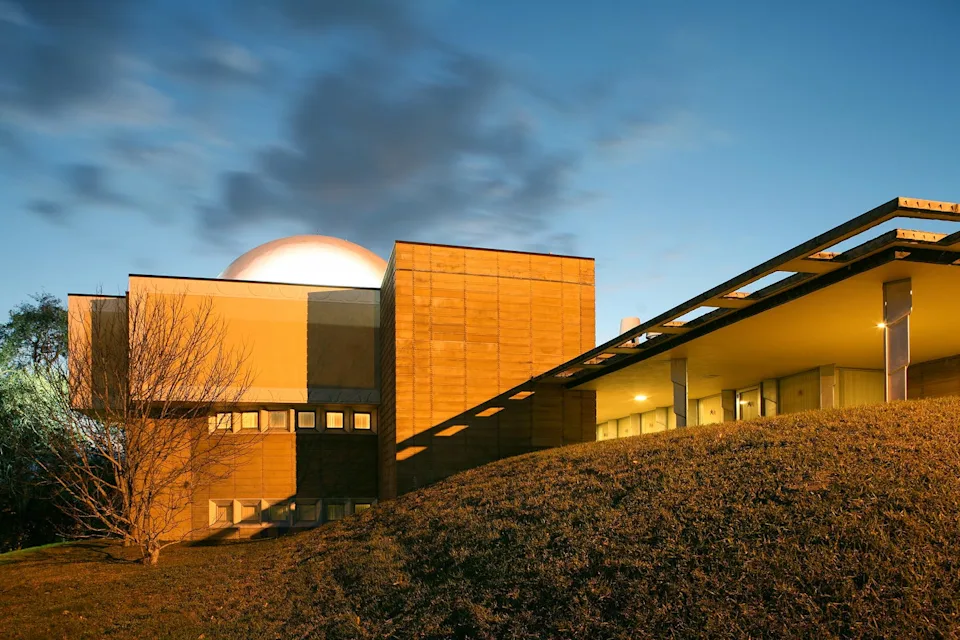
Florida Southern College has restored the Miller Planetarium, with 3D-printed molds for hand-cast blocks and a new projection system, and it is open to the public again.
LAKELAND, Fla.
There is only one planetarium in the world designed by Frank Lloyd Wright, and for most of this century it sat dark. This autumn that changed. Florida Southern College in Lakeland reopened the Miller Planetarium to the public on September 26, 2026, after a restoration that Designboom profiled this week, putting a rare piece of Wright's work back into the service it was built for.
A late Wright, finished after his death
The planetarium occupies the southern end of the Polk Science Building, one of 13 Wright-designed structures on the Florida Southern campus, which college president Ludd Spivey commissioned in 1938. Construction ran from 1954 to 1958, and the first show took place in April 1960, a year after Wright's death. Early programs ran on eight-track technology, which later became obsolete, and regular operation had stopped by 2004.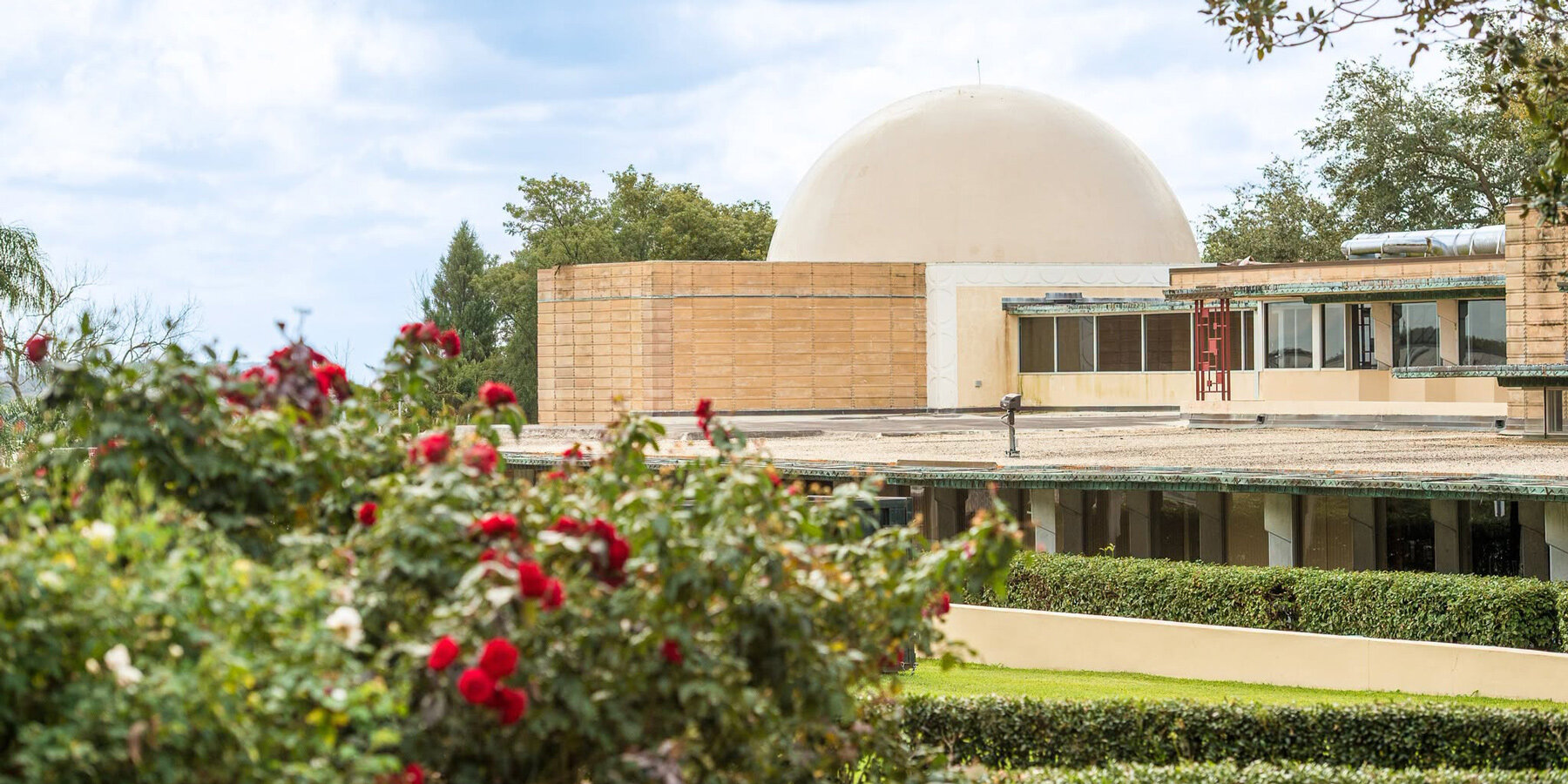
Restoring the shell
Jeff Baker of MCWB Architects led the restoration. Exterior work began in 2021: the team replaced sections of roofing, repaired failing stucco and replaced more than 280 hand-cast textile blocks around the perimeter. To match the originals, they used 3D printing to make the molds for the new blocks, a pairing of digital fabrication and Wright's hand-built block system that is as apt as it is practical.
Behind the upper walls, crews found steel framing and open cavities, which gave them the chance to add insulation, a quiet improvement that matters for a building meant to hold a dark, controlled interior.
Inside the dome
Inside, a 1980s computer closet that interrupted the circular seating was removed. Wright's plywood benches were returned to two concentric rings and repaired by local craftspeople, with their colored vinyl upholstery retained. The deep-blue walls were repainted in a lighter scheme, damaged plaster was repaired and the floor was refinished in Cherokee Red, Wright's signature hue.
A COSM digital projection system and a Bowen sound system replaced equipment that had prevented regular operation since 2004. The room can again host presentations on the solar system and distant planets, including programs for students and school groups.
Who paid, and what leaders say
Fox 13 reports that the multi-million-dollar renovation used state grant funding for new video, audio and acoustic equipment, while private donations paid for the structural restoration. College president Jeremy Martin told the station: 'It used to be, "Have you seen this in IMAX?" I think people will now be asking, "Have you seen the planetarium?"' Martin was also quoted as saying that 'we exceeded even his wildest dreams with this restoration and new equipment.' (Designboom's account does not report the project's cost.)
Why preservation of a working building is different
Restoring a Wright building as a museum piece is one challenge. Restoring it so that a modern audience can sit in it and watch a digital sky is another. The team had to reconcile original seating geometry, acoustics and finishes with contemporary projection and sound, and to keep the visible character, the benches, the color, the block, intact. The choice to retain the original upholstery and to return the seats to their concentric rings suggests a philosophy of using the architecture, not working around it.
It also reflects a wider preservation trend: rather than freezing mid-century buildings as relics, owners are investing in making them work again, with discreet new technology hidden inside historic shells.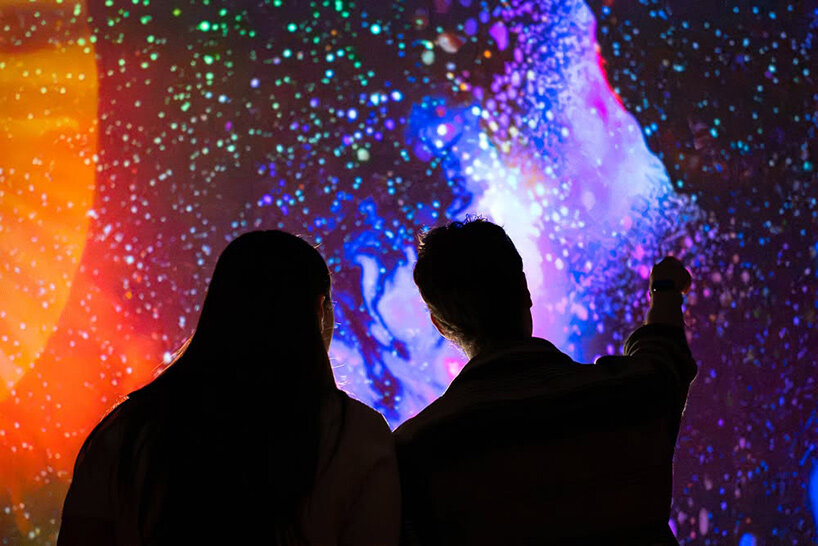
What this means for you
Public shows cost $20 per person, or $15 per person for families and groups of four or more, and planetarium admission is sold separately from the college's standard Wright architectural tours, according to Fox 13. The planetarium will also serve K-12 students in Polk County public schools and community groups. If you are planning a trip to central Florida, pairing the planetarium with a campus tour gives you one of the densest concentrations of Wright's work anywhere. Check the college's website for hours and booking, which the reports did not list.
The bottom line
After more than two decades of silence, a Wright-designed dome once again holds an audience under a simulated night sky. The restoration shows how 3D printing, careful craft and modern projection can be woven into a historic building without erasing it, and it offers a template for the many mid-century landmarks still waiting for their second act.



