The FDA has approved Atebrioz for one of the rarest and cruellest diseases known to medicine, a condition that slowly locks people inside their own bones. The trial numbers are striking, but the study's main goal fell short of statistical proof, and nobody yet knows the price.
HEALTH
A disease that punishes you for getting hurt
Imagine a bump on the head that never heals, but hardens. Imagine a jab at the doctor's surgery that leaves behind a knot of new bone. Imagine surgeons who cannot cut the extra bone out, because the cutting itself makes the body grow more.
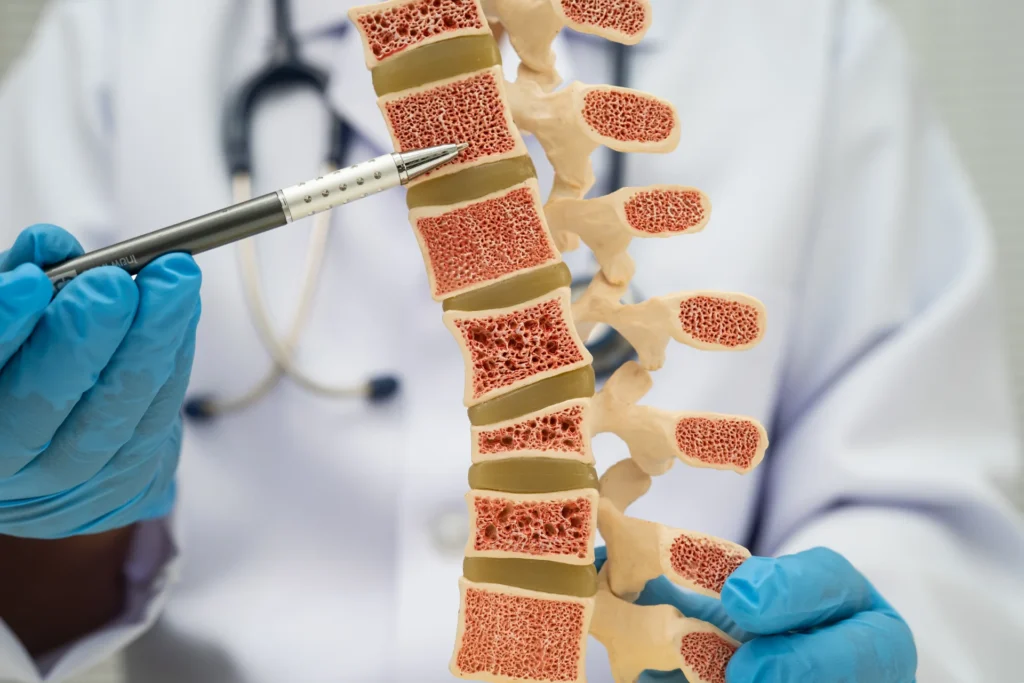
That is daily life for people with fibrodysplasia ossificans progressiva, or FOP. Doctors have called it "stone man syndrome" for generations. Muscles, tendons and ligaments slowly turn into bone. Over years, a second skeleton forms on top of the first, welding shoulders in place, freezing the jaw, stiffening the spine and squeezing the chest until breathing gets harder.
On Friday, 25 September, the US Food and Drug Administration approved a new weapon against it. Atebrioz (zilurgisertib) is a small tablet, taken once a day, made by Mirum Pharmaceuticals under licence from Incyte. It is approved for people aged 12 and over, "to reduce the volume of total new heterotopic ossification", the medical term for bone growing where it should not be.
The approval landed a day ahead of the FDA's own 26 September deadline. For the roughly 300 Americans and 900 people worldwide living with FOP, it means a third treatment option in three years, and the first one designed to shut down the faulty switch at the root of the disease in a pill.
One broken switch, one letter wrong
FOP is caused by a tiny spelling mistake in a single gene called ACVR1. That gene makes a receptor, a kind of molecular switch, called ALK2. In healthy people, ALK2 helps guide normal bone development and then quietens down. In people with FOP, the mutation leaves the switch jammed in the "on" position.
The result is that ordinary signals the body uses to repair damaged muscle get misread as instructions to build bone. A fall, a bruise, a dental injection, even a viral infection can trigger a painful "flare-up": a hot, swollen lump that, over weeks, can harden into solid bone.
Children with FOP usually look normal at birth, except for one tell-tale clue: short, malformed big toes. The first flare-ups tend to strike in early childhood, often on the neck, back and shoulders. Many children are first misdiagnosed with cancer, and some undergo biopsies that make the disease worse.
The most famous FOP patient in history, Harry Eastlack, died in 1973 at the age of 39. His fully fused skeleton, bridged with sheets of extra bone, is still on display at the Mütter Museum in Philadelphia. It is a haunting picture of what the disease does when nothing stops it.
Zilurgisertib is built to jam that stuck switch. It blocks ALK2 directly, aiming to stop the false "build bone" signal before it starts.
The trial: 63 patients, one big number and one uncomfortable one
The approval rests on a single study called PROGRESS. Its first group, Cohort 1, enrolled 63 adolescents and adults with FOP, with an average age of about 21. Thirty-two got zilurgisertib; 31 got a dummy pill. Everyone was scanned from head to toe with CT imaging to measure every lump of stray bone. After 24 weeks, the placebo group was switched onto the real drug.
The headline figures, first shown at the Endocrine Society's ENDO 2026 meeting in June, are dramatic:
- The total volume of brand-new bone lesions was more than 99% lower on the drug. Patients on zilurgisertib grew an average of 0.003 cubic centimetres of new lesion bone, against 6.57 cubic centimetres on placebo.
- Overall bone burden actually fell on the drug, by an average of 3.2 cubic centimetres, while it rose by 24.6 cubic centimetres on placebo.
- Flare-ups ran at roughly half the rate: an annualised 2.34 per patient on the drug versus 4.55 on placebo.
- Between weeks 24 and 48, not one new bone lesion was seen among the 61 patients with scans, including those who had crossed over from placebo.
But here is the catch that every patient and family deserves to hear. The study's official main goal, known as the primary endpoint, was the share of patients who developed any new bone lesion at week 24. One patient on zilurgisertib (3.1%) did so, against five on placebo (16.7%). That is an 81% relative reduction, but with so few patients the difference did not reach statistical significance (p = 0.0986). Most of the eye-catching results above are what statisticians call "nominal" findings: promising, but not formally proven in the way the trial's design required.
The FDA still judged the evidence strong enough, basing its label on the bone-volume measure. In an ultra-rare disease, where finding even 63 patients means searching the globe, regulators often weigh the size and consistency of an effect alongside strict statistical thresholds. Still, it is fair to say the case for Atebrioz rests on how big the effect looks, not on a clean statistical win.
Side effects: mostly mild, with one serious warning
On safety, the picture is reassuring so far. During the placebo-controlled period, most side effects were mild or moderate, and nobody stopped treatment or cut their dose because of one. The most common complaints among patients on the drug were FOP flare-ups or FOP-related pain (25%), headache (21.9%), upper respiratory infections (21.9%), joint pain (18.8%), nosebleeds (12.5%) and nausea (12.5%).
The one formal warning on the label is about pregnancy. Animal studies suggest the drug can harm an unborn baby, so people who could become pregnant must use effective contraception and stop the drug immediately if they conceive.
That profile matters because of what came before.
A crowded field, suddenly
For decades, FOP patients had nothing but steroids for flare-ups, painkillers, and careful avoidance of bumps and needles. That changed in August 2023, when the FDA approved Ipsen's Sohonos (palovarotene), a daily capsule. Sohonos carries a boxed warning, the FDA's strongest, because it can cause premature closure of growth plates in children who are still growing, stunting their height.
Then, just last month, the FDA approved Regeneron's Pasatru (garetosmab), an antibody given as a monthly infusion into a vein. It works differently, by mopping up a protein called activin A that feeds the rogue ALK2 signal. Its OPTIMA trial showed a reduction of 90% or more in new bone lesions, but it is approved for adults only.
Atebrioz slips into the gap between them: a pill rather than a drip, cleared for teenagers as well as adults, and without a growth-plate warning. Jonathan Wolleben, an analyst at Citizens, told Reuters he thinks it could become a preferred treatment, because it pairs oral dosing with strong efficacy and a favourable safety profile.
Expert perspective
Dr Robert Pignolo, professor of geriatric medicine at the Mayo Clinic College of Medicine and the lead investigator for PROGRESS, stressed what a new option means in a disease that only ever moves in one direction. He said having another treatment is meaningful in a progressive disease like FOP, "particularly for adolescents who may be earlier in the course of their disease."
That point about timing is crucial. Bone that has already formed does not melt away easily, and surgery to remove it tends to trigger more growth. So the real prize in FOP is prevention: catching patients young and stopping the second skeleton before it locks joints for good.
Michelle Davis, executive director of the International Fibrodysplasia Ossificans Progressiva Association (IFOPA), the main patient group, struck a careful, patient-first note, saying every person's experience with FOP is different and more choices let families and doctors decide what suits each individual.
Mirum's chief executive, Chris Peetz, was less restrained. Speaking to Reuters, he called the drug "a game-changer for patients," saying it can "really stop that progressive, endless accumulation of bone."
Independent observers will want to see whether that holds up over years, not weeks. FOP unfolds across a lifetime; PROGRESS has reported results only through 48 weeks. Longer follow-up, and results from younger children, will be the real test.
The money question
Mirum has not yet announced a price. Peetz told Reuters the price will be revealed at launch, expected in October. Wolleben estimates Atebrioz could cost around $750,000 a year and generate about $150 million in peak worldwide sales.
The company says eligible patients could pay "as little as $0 per month" through its support scheme, Mirum Access Plus, which helps with insurance and financial aid. As with most ultra-rare disease drugs, the true cost will largely fall on insurers and health systems.
The deal behind the drug is a reminder of how the rare-disease business works. Incyte, better known for cancer and skin drugs, discovered zilurgisertib but licensed it to Mirum earlier this year for $16 million up front, plus possible milestone payments and royalties. With the approval, the FDA also handed Incyte a rare pediatric disease priority review voucher, a tradeable coupon that lets a company fast-track a future drug review. Such vouchers have sold for well over $100 million in recent years.

What this means for you
If you or your child has FOP:
- Ask your specialist whether Atebrioz is appropriate. It is approved for patients aged 12 and older. It is not yet approved for younger children.
- Understand the trade-offs. Atebrioz is a daily tablet; Pasatru is a monthly infusion for adults; Sohonos is a daily capsule with a growth-plate warning for children who are still growing. Each has different evidence behind it.
- Take the pregnancy warning seriously. Effective contraception is required for anyone who could become pregnant.
- Keep avoiding triggers. No FOP drug makes injections, falls or surgery safe. The old rules still apply: avoid intramuscular injections, protect against falls, and tell every doctor and dentist about the diagnosis.
- Children under 12 may have trial options. The PROGRESS programme has finished enrolling a cohort of children aged 6 to under 12 and is enrolling children aged 2 to under 12. Families can ask their FOP centre or IFOPA about eligibility.
If you do not have FOP, the story still matters. It is a vivid example of how cracking one gene, ACVR1, identified by researchers at the University of Pennsylvania in 2006, can turn a medical curiosity into a treatable disease within two decades. And the ALK2 pathway zilurgisertib targets is also being studied in more common problems, including the stray bone that can form after hip replacements, war wounds and spinal injuries.
The bottom line
For most of medical history, FOP had one ending: a body slowly set in stone. In just over three years, patients have gone from zero approved treatments to three.
Atebrioz is the most convenient of them yet, a single daily pill that, in a small trial, all but stopped new bone from forming. But it arrives with honest caveats: a main trial goal that missed statistical proof, less than a year of controlled data, and a price tag still under wraps.
Mirum expects the drug to reach American pharmacies next month, and a decision from European regulators is pending. For families who have spent years dreading every bump and bruise, the hope is simple: that a daily pill can keep the second skeleton from ever being built.
Published By | Features Editor