Written By | Staff Writer
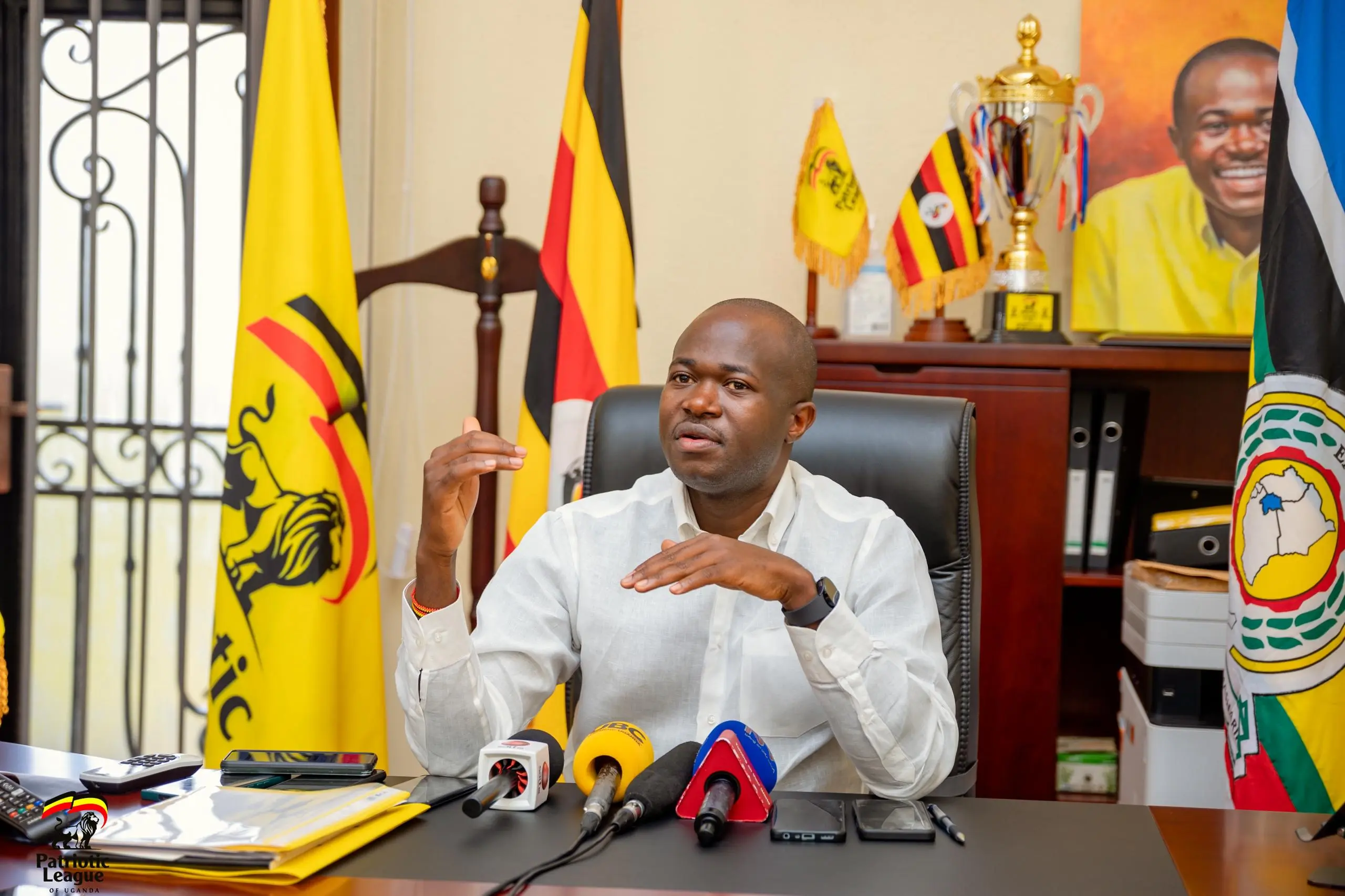
Daudi Kabanda of PLU
Politics
Kampala, August 13, 2026 — A quiet but consequential power shift is under way inside Uganda's ruling National Resistance Movement (NRM), as the Patriotic League of Uganda (PLU), the political vehicle chaired by General Muhoozi Kainerugaba, tightens its grip on party structures across the country. In recent weeks PLU-aligned candidates have won a string of internal NRM leadership contests, most notably the party chairmanship in Masaka district, while a pointed public exchange between veteran NRM figure Ofwono Opondo and the PLU's executive secretary has crystallised what many Ugandan commentators are now calling a de facto takeover of the ruling party from within.
The episode that triggered the latest round of speculation was small in form but large in implication. Opondo, a long-time NRM stalwart and former government spokesperson, publicly asked whether "the NRM that Ugandans elected on 15 January 2026 is no more." The PLU's executive secretary replied, in effect, that this was indeed the case — a message that was swiftly deleted but not before it had been screenshotted and circulated widely on Ugandan social media and picked up by local outlets including Monitor and The Observer. For a party that has dominated Ugandan politics for four decades, a senior insider publicly conceding that its identity has been superseded by a movement built around the president's son is a striking admission.
From MK Movement to a Parallel Power Centre
The PLU's rise has been gradual but deliberate. It began life in 2023 as the "MK Movement" — MK standing for Muhoozi Kainerugaba — a loose pressure group that promoted the general as a future presidential candidate. In September 2024 it was formally relaunched as the Patriotic League of Uganda, and shortly afterwards Muhoozi announced he would not contest the January 2026 presidential election himself, instead throwing his weight behind his father, President Yoweri Museveni, for a seventh term. Crucially, Muhoozi did not stand down his movement; he redirected it, urging PLU members to contest NRM primaries and internal party positions at every level, from village councils up to district chairmanships.
That strategy is now paying off. Reporting from Ugandan outlets including The Observer and the Monitor describes PLU-aligned figures winning NRM leadership posts in multiple districts, with Masaka's new NRM chairmanship — won unopposed by a Muhoozi ally — cited as a particularly clear example. The Observer has gone as far as to describe the PLU's project as "the NRM's final attempt to address change of president," framing the movement not as a rival to the ruling party but as the mechanism through which a leadership transition to Muhoozi is being engineered from the inside, without the need for a contested succession battle at a party congress.
Who Is Driving the Shift
At the centre of the story is General Muhoozi Kainerugaba, 52, Uganda's Chief of Defence Forces and President Museveni's eldest son. Long a subject of speculation as his father's likely successor, Muhoozi has in the past year moved from what analysts describe as strategic ambiguity — hinting at ambition without committing to it — to direct, public assertions of political intent, including social media posts in which he has spoken of succeeding his father. His formal military role as head of the armed forces, combined with his chairmanship of the PLU and growing informal authority inside the NRM, has led researchers at outlets such as Democracy in Africa and African Affairs to argue that decision-making power in Kampala has become increasingly personalised and has been migrating away from the traditional NRM secretariat toward Muhoozi's orbit.
Ofwono Opondo, for his part, represents an older generation of NRM cadres who built the party's institutional machinery over decades of Museveni's rule. His willingness to publicly needle the PLU — in one widely shared remark telling Muhoozi to "know your place" — signals that the shift is not going unopposed within the party's ranks, even if that opposition has so far been limited to sharp words rather than organised resistance. President Museveni himself has said little in public to either endorse or restrain his son's expanding political footprint, a silence that Ugandan commentators have read variously as tacit approval, strategic distance, or an inability to rein in a process that has taken on its own momentum.
The Backdrop: A Contested January Election
The current jostling cannot be separated from the general election held on January 15, 2026, in which Museveni secured another term amid what Chatham House and other observers described as growing frustration among Uganda's youthful electorate and sporadic unrest that has since been catalogued by researchers as the "2026 Ugandan protests." Rights groups, including Human Rights Watch, have documented a parallel tightening of space for dissent over the past year, with courts convicting government critics — students and ordinary social media users among them — under Uganda's Computer Misuse Act for posts critical of Museveni, parliamentary speaker Anita Among, and Muhoozi himself. That climate of restricted expression forms the wider context in which the PLU's internal party manoeuvring is unfolding: a ruling establishment simultaneously managing succession politics at the top and dissent from below.
Why It Matters
For ordinary Ugandans and outside observers alike, the PLU's advance inside the NRM matters because it offers the clearest signal yet of how a transition of power in Kampala might actually happen — not through a contested party primary or a dramatic public rupture, but through the steady replacement of local and district party officials with figures loyal to Muhoozi. Should that trend continue, the general could find himself in command of the party machinery itself well before any question of a future presidential contest arises, giving him a institutional base independent of, though nominally still part of, his father's NRM. That has significant implications for Uganda's political stability, for the cohesion of the security services under a leader who already commands the armed forces, and for how opposition figures — including long-time Museveni challenger Robert Kyagulanyi, better known as Bobi Wine, and his National Unity Platform — position themselves against what increasingly looks like a family-controlled transition rather than an open contest.
What to Watch
Several developments in the coming weeks and months will indicate how far the shift has gone. Ugandans should watch for further PLU wins, or losses, in ongoing district-level NRM leadership contests; whether President Museveni makes any public statement addressing his son's expanding role, either to endorse it or to check it; whether Ofwono Opondo and other old-guard NRM figures escalate their public pushback or are sidelined; and whether the Ugandan government's tolerance for criticism of Muhoozi and the PLU — already thin, based on recent Computer Misuse Act prosecutions — tightens further as the general's public profile grows. Regional and international observers, including the African Union and Uganda's Western development partners, are also likely to watch closely for any signs that the informal transition inside the NRM translates into changes in Uganda's foreign and security posture, given Muhoozi's own history of blunt, sometimes controversial public commentary on regional affairs.



