Written By | International News Desk
The war's newest and gravest turn came on July 17-18, when Iranian ballistic missiles struck the Muwaffaq Salti Air Base in Jordan, which hosts US troops and fighter jets
Background
The war between the United States, Israel and Iran that began on February 28, 2026 has entered its most dangerous phase yet. That conflict opened with a coordinated US-Israeli strike campaign that killed Iran's Supreme Leader Ali Khamenei along with dozens of senior officials, including the defense minister, top intelligence officers and nuclear-program scientists, in what Washington and Jerusalem described as a decapitation operation meant to end Iran's nuclear ambitions and force regime change. Mojtaba Khamenei, one of the late leader's sons, was subsequently named Supreme Leader, though he has made only limited public appearances since taking the position.
A ceasefire memorandum of understanding, brokered largely through Qatari and Omani mediation and finalized around June 17, briefly halted the fighting after roughly four months of strikes that killed thousands across Iran, Lebanon and Israel and dozens of US personnel. That truce proved fragile from the start. Iranian forces and the US military have traded blame and fire repeatedly since late June, with each side accusing the other of violating the agreement's terms, particularly around freedom of navigation through the Strait of Hormuz, the narrow waterway between Iran and Oman through which roughly a fifth of the world's oil supply normally passes.
By mid-July the ceasefire had effectively collapsed. The US reinstated a naval blockade of Iranian ports, CENTCOM has carried out nightly rounds of airstrikes against Iranian targets for over a week, and Iran's Islamic Revolutionary Guard Corps (IRGC) has struck shipping and infrastructure across the Gulf, drawing US allies Bahrain, Qatar, Kuwait, the UAE and Jordan directly into the line of fire.
The uncertain succession at the top of Iran's clerical hierarchy has added an additional layer of instability to the crisis. Mojtaba Khamenei's rare public appearances and unclear command authority have fed persistent speculation, unconfirmed by Western intelligence services, about power struggles within the IRGC and clerical establishment. A message attributed to the new Supreme Leader over the July 18-19 weekend praised what he called an unprecedented public turnout at his father's Tehran funeral as a display of national unity — rhetoric widely read as an attempt to project stability and consolidate authority even as the military situation on the ground continues to deteriorate.
Key Developments
The war's newest and gravest turn came on July 17-18, when Iranian ballistic missiles struck the Muwaffaq Salti Air Base in Jordan, which hosts US troops and fighter jets. CENTCOM confirmed two US service members were killed in action — the first American combat deaths from Iranian fire since March — with a third reported missing. President Trump, asked about the deaths, called them "a very sad thing" and the Pentagon said retaliatory strikes were launched to "swiftly punish" Iran and further degrade its capacity to threaten shipping.
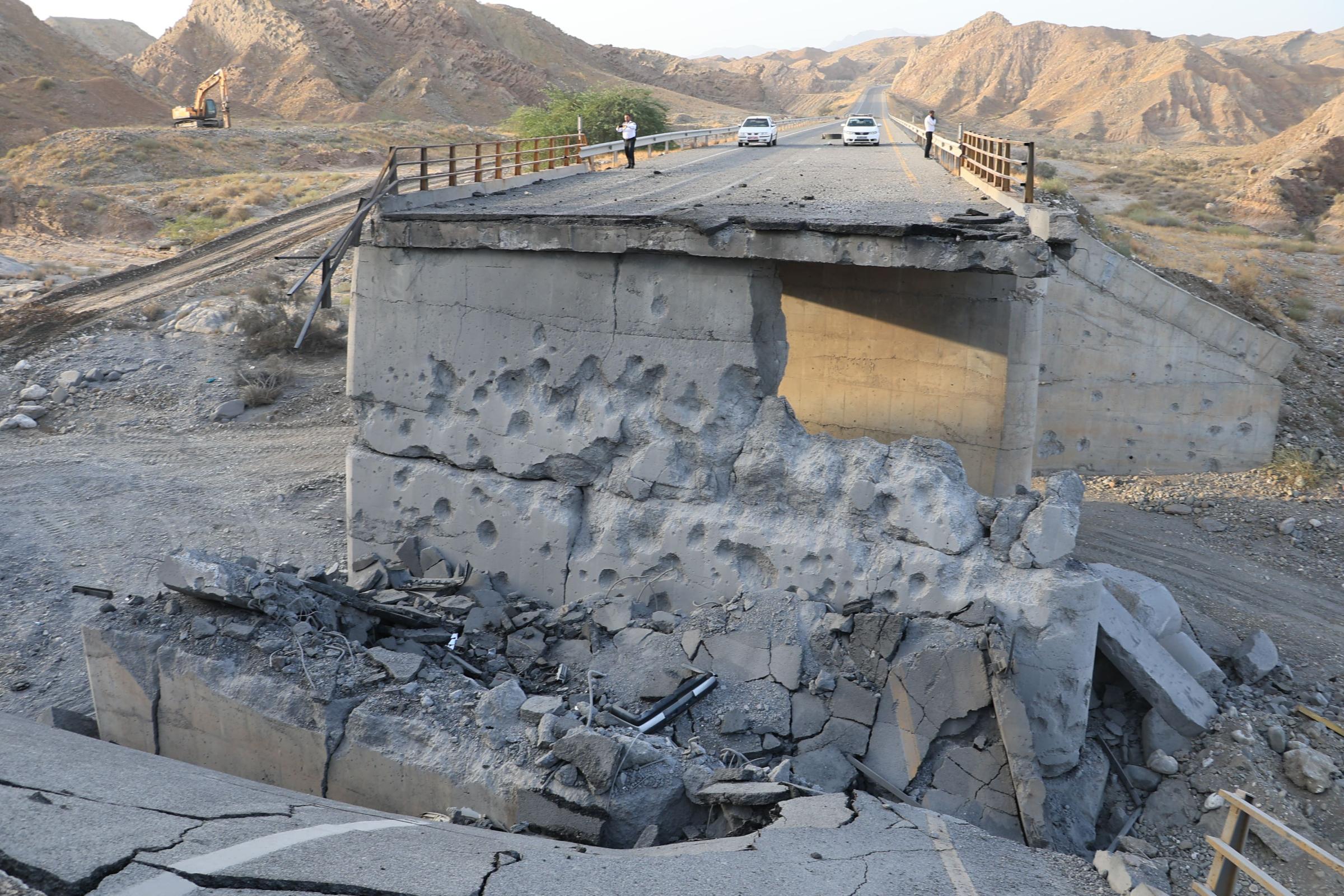
That retaliation extended a bombing campaign that, as of this weekend, has run for eight consecutive nights, hitting bridges, railways, power infrastructure and military sites near Bandar Abbas and Chabahar. Iranian officials say at least 12 people were killed in the latest 24-hour period alone, part of a toll that has reportedly reached roughly 50 deaths in Iran since the ceasefire began unraveling around June 27; independent trackers put the war's cumulative death toll, across all sides and fronts since February, in the thousands, though figures vary widely by source and are difficult to verify independently.
Early Sunday, Iran's IRGC navy escalated further, declaring the Strait of Hormuz closed "until the end of US interference in the region" after firing on a vessel attempting an unauthorized crossing. The practical effect has been severe: shipping traffic through the strait, which averaged roughly 110 to 130 vessels a day before the war, has collapsed to a handful of transits daily, with some tracking services reporting virtually no large vessels broadcasting their location on the standard shipping lane in recent days. The US, for its part, has maintained its own blockade of Iranian ports, with CENTCOM saying it has redirected five commercial vessels and disabled one since reimposing the measure.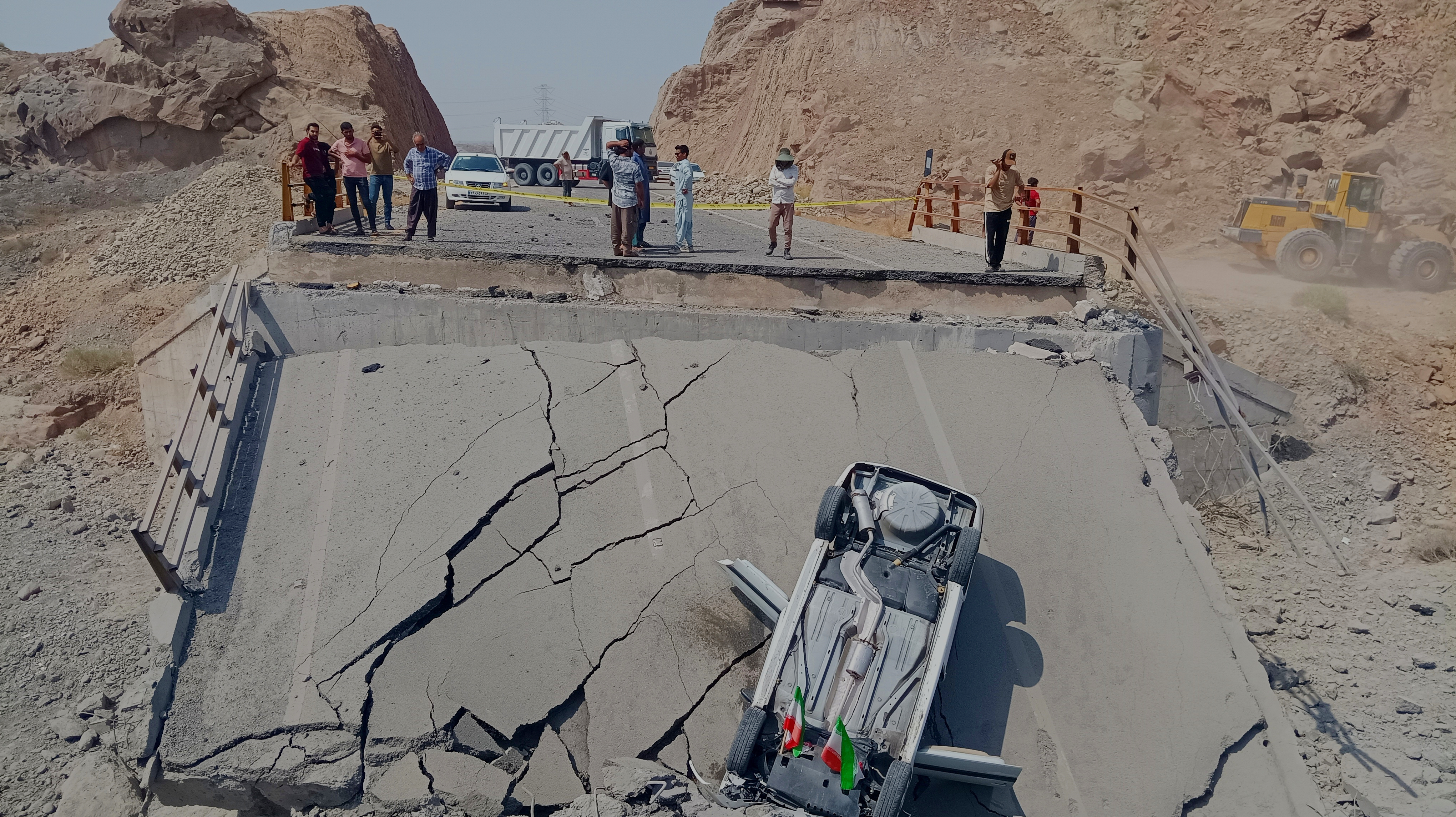
The economic knock-on effects are becoming visible but remain contained for now. Brent crude has traded in the mid-$70s to just over $100 a barrel at different points in the past two weeks depending on the day's news, and US gasoline prices have ticked up toward the $4-a-gallon mark. Analysts caution that a full, sustained closure of Hormuz — historically responsible for a fifth of global oil flows — could push prices meaningfully higher if it persists, even though markets have so far absorbed the disruption better than many feared.
Iran's supreme leader's office has meanwhile disavowed the earlier truce outright, with a statement dismissing President Trump's signature on the ceasefire memorandum as "worthless" and declaring Tehran was suspending its commitments under the original agreement. Iranian state media used the funeral events for the elder Khamenei, held in early July and drawing large crowds in Tehran, to reinforce a defiant, anti-American message.
Reactions
Financial and shipping-industry reaction has been one of the more closely watched barometers of how seriously markets are taking the closure threat. Major tanker operators and insurers have already sharply curtailed voyages through the strait's standard corridor, war-risk insurance premiums for Gulf transits have risen, and several shipping lines have begun quietly rerouting or delaying cargo rather than test Iranian warnings directly, even before any confirmed attack on a vessel flying under a neutral flag this week.
The renewed fighting has scrambled the diplomatic and domestic political picture. At the United Nations, the Security Council has remained deadlocked: Russia and China have blocked or watered down resolutions aimed at pressuring Iran, while the UK and France have separately pushed unsuccessfully for ceasefire-enforcement resolutions that Washington has resisted or that have failed to gain consensus support.
Domestically, the conflict has bled into an unrelated but symbolically charged fight in the US Senate. On July 14, senators voted 50-46 to block a motion to proceed on the roughly $1.15 trillion defense authorization bill, with Democrats citing the unauthorized nature of Trump's continued Iran operations — Congress never voted to authorize this round of hostilities — as well as objections to a contested provision expanding US-Israel defense-technology cooperation. That vote broke with decades of largely bipartisan tradition on the defense bill and signals growing unease in Congress over the war's open-ended nature, even though Majority Leader John Thune has preserved a procedural path to bring the bill back.
Gulf allies directly hit by Iranian strikes — Bahrain, Qatar, Kuwait, the UAE and now Jordan — have condemned the attacks while continuing to serve, awkwardly, as the main channels for what diplomacy remains. Regional publics and some Western commentators have also voiced alarm at the humanitarian toll inside Iran itself, where reporting describes damaged housing, strained hospitals and rising civilian casualties, even as verified figures remain contested between Iranian state sources, Western governments and independent monitors.
What's Next
Diplomatically, Qatari and Omani mediators who brokered the original truce and led subsequent rounds of indirect talks in Doha and Muscat are reportedly still trying to reopen a channel between Washington and Tehran, with a persistent sticking point being Iran's demand for access to roughly $6 billion in frozen assets and disagreement over who controls navigation terms in the Strait of Hormuz. Oman has floated a proposal under which shipping companies would pay service fees to transit the strait, an idea the US and Gulf partners have so far resisted if it implies Iranian authority over the waterway.
Militarily, the trajectory of the past week — nightly US strikes, Iranian attacks spreading to more US-aligned states, and now direct American combat deaths — suggests further escalation is more likely than a near-term de-escalation, absent a diplomatic breakthrough. A full and sustained closure of Hormuz would be an unprecedented test of global energy markets and could force firmer international intervention, whether through added US naval deployments, an international shipping-escort coalition, or renewed multilateral pressure on Tehran. Congress's fight over the defense bill and war authorization is also likely to intensify if American casualties continue, raising the prospect of a formal war-powers debate that has so far been deferred. For now, the immediate flashpoints to watch are whether Iran follows through on a full, indefinite Hormuz closure, whether the US expands strikes beyond degrading Iran's shipping-related capabilities, and whether Qatari or Omani channels can produce even a partial, temporary halt in the fighting.



