Written By | Health News Agencies
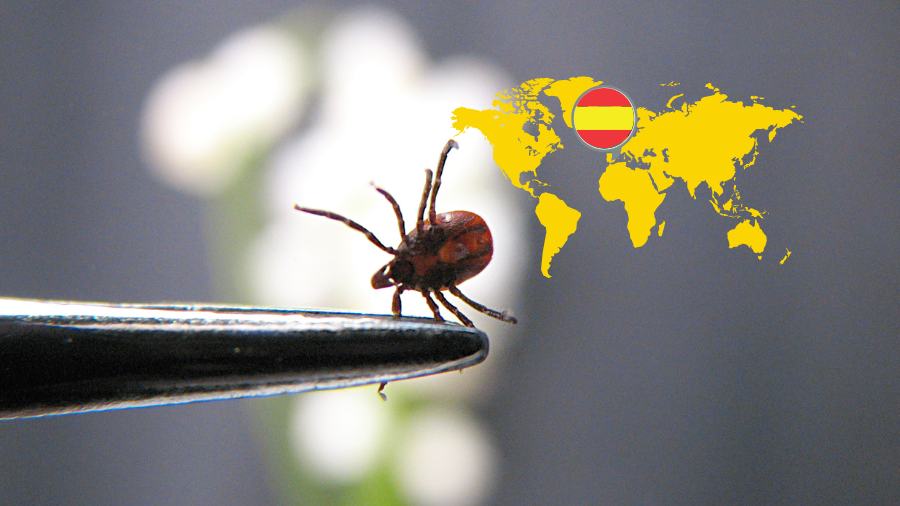
A mystery fever with a 30% kill rate just claimed its second victim in Salamanca this year — and now doctors in Barcelona are racing to find out if it's jumped 400 miles to the coast
SALAMANCA, Spain
Somewhere in the sun-baked pastures outside Salamanca, in the shadow of grazing cattle and wild boar, a tick the size of a sesame seed bit an 84-year-old man. Within days he was fighting for his life in an isolation ward. By last Friday, he was dead.
His death, confirmed by Spain's Ministry of Health, makes him the second person in Salamanca province to be diagnosed this year with Crimean-Congo hemorrhagic fever — a disease so dangerous that patients who catch it are wheeled into negative-pressure isolation rooms, and the doctors who treat them suit up like they're walking onto a movie set about a plague. Now, as the man's death makes headlines across Spain, health officials 400 miles away in Barcelona are scrambling to find out whether a hospitalized patient with matching symptoms represents Catalonia's very first case of the disease ever recorded.
It is, in the driest possible terms, a tick-borne virus. In practice, it is one of the most frightening pathogens circulating in Europe today — a disease that can turn a hiking trip or a farming afternoon into a fight for survival, with a death rate in Spain hovering around 30%, and for which there is no approved vaccine and no guaranteed cure.
A DEADLY REPEAT VISITOR
This is not Spain's first brush with Crimean-Congo hemorrhagic fever (CCHF), and that is precisely what has infectious disease specialists worried. The virus first appeared on Spanish soil in ticks collected from deer in 2010, then jumped to a human host for the first time in 2013. Since then, the country has logged somewhere between 16 and 18 confirmed autochthonous cases — meaning cases contracted on Spanish soil, not brought in from abroad — making Spain the only country in Western Europe with a sustained, self-sustaining transmission cycle of the virus.
The 84-year-old man who died last week was Salamanca's second confirmed case of 2026. The first, diagnosed in June, also involved a man bitten by a tick while working or spending time outdoors in the rural Castilla y León countryside — Spain's vast, sparsely populated agricultural heartland, and ground zero for the country's CCHF cases. Salamanca in particular has earned an unwelcome distinction among Spanish epidemiologists: thanks to a resident population of deer, wild boar and free-range livestock that keep the virus circulating in local tick populations year after year, it's become the country's most reliable CCHF hotspot.
The man's case followed a textbook — and terrifying — course. He first sought care at the University Health Complex of Salamanca (known locally as CAUSA) after developing fever and malaise days after a tick bite in the surrounding countryside. Once CCHF was suspected, he was transferred to the Central Defense Hospital Gómez Ulla in Madrid — one of the small number of Spanish hospitals equipped with the specialized biocontainment isolation units needed to safely treat the country's most dangerous viral hemorrhagic fevers. He died there on Friday, according to Spanish health authorities, with organ failure cited as a contributing factor.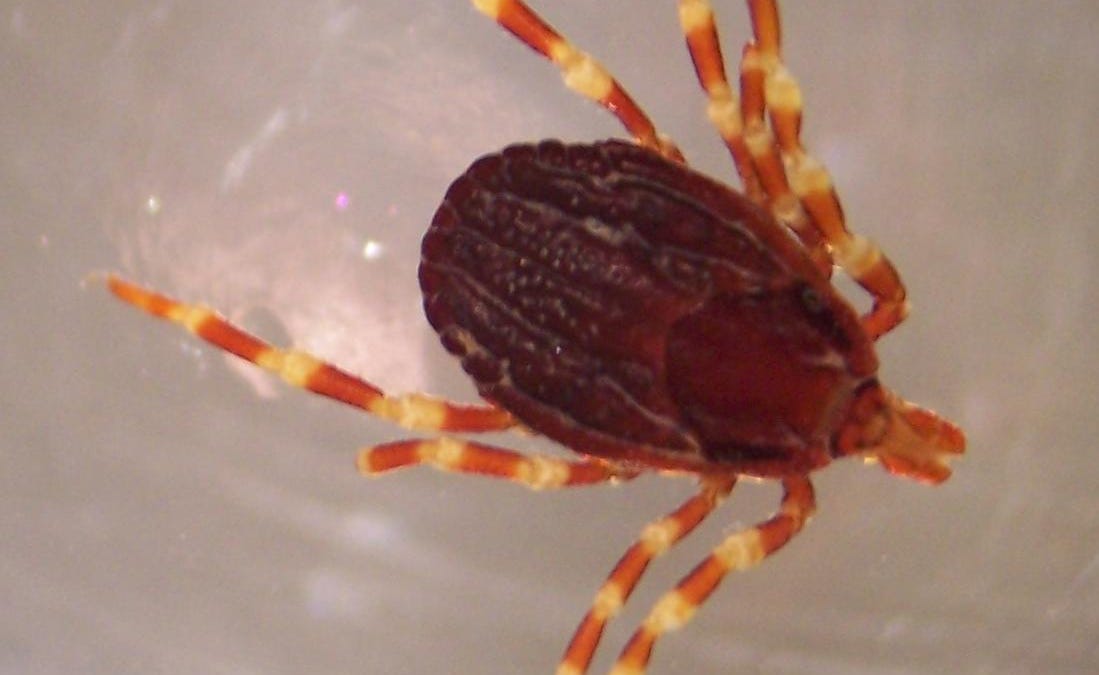
THE VIRUS THAT HIDES IN PLAIN SIGHT
What makes CCHF so unsettling is how ordinary its opening act looks. The World Health Organization describes the onset as sudden: high fever, muscle aches, dizziness, neck pain and stiffness, backache, headache, sore eyes and sensitivity to light. Some patients report nausea, vomiting, diarrhea and abdominal pain — a cluster of symptoms easily mistaken, in the first 48 hours, for a nasty case of the flu or food poisoning.
It's what comes next that separates CCHF from almost anything else a rural doctor in Castilla y León might see. As the disease progresses, patients can develop mood swings and confusion, then — in the disease's most feared turn — large, spreading bruises, uncontrolled bleeding from the nose and gums, and hemorrhaging that can affect internal organs. Blood pressure crashes. The liver and kidneys begin to fail. Death, when it comes, typically arrives in the second week of illness, according to the WHO, and it comes for roughly 30% of patients diagnosed in Spain — a fatality rate that, globally, can run as high as 40% depending on the strain and how quickly treatment begins.
There is no FDA- or EMA-approved vaccine for CCHF. Treatment is almost entirely supportive: fluids, blood products, and close monitoring in an intensive care unit, sometimes alongside the antiviral drug ribavirin, though its effectiveness against CCHF remains a subject of ongoing debate among infectious disease specialists. In short: if you catch it, doctors can try to keep your body functioning while your immune system fights — but they can't reliably stop the virus itself.
THE BARCELONA QUESTION MARK
The news that rattled Spanish health officials this week wasn't just the Salamanca death — it was what happened roughly 400 miles away, in Barcelona, almost simultaneously. Catalonia's regional health department confirmed it is investigating a suspected CCHF case: a patient hospitalized in the isolation unit of Barcelona's Hospital Clínic, presenting with symptoms consistent with the disease, now awaiting confirmatory lab results.
If confirmed, it would mark the first-ever suspected case of Crimean-Congo hemorrhagic fever in Catalonia — a region that, unlike Castilla y León, has not historically been considered a CCHF hotspot. Spanish health reporters have noted the significance bluntly: in a country where the disease has been almost exclusively confined to the rural interior for more than a decade, a case appearing on the Mediterranean coast would represent new territory, literally.
Public health officials have not yet confirmed how — or whether — the Catalonia patient was exposed to a tick, and it remains entirely possible the case will turn out to be something else entirely. But the timing, arriving within days of Salamanca's second fatality of the year, has been enough to put regional health departments across Spain on alert and reactivate the country's CCHF surveillance protocols, which call for rapid case reporting to Spain's Coordination Center for Health Alerts and Emergencies.
WHY THIS KEEPS HAPPENING
Scientists who study CCHF's spread across Europe point to a familiar and uncomfortable culprit: a warming climate. The virus is carried almost exclusively by Hyalomma ticks — a genus of unusually large, unusually aggressive ticks that, unlike many of their cousins, will actively hunt down a host by sight and scent rather than passively waiting on a blade of grass. Hyalomma marginatum and Hyalomma lusitanicum, the two species most implicated in Spain's outbreaks, have historically thrived in hot, dry Mediterranean and North African climates.
As average temperatures rise across southern and central Europe, researchers tracking the ticks' range have found that the zones of "ecological suitability" for Hyalomma survival are creeping steadily northward — a pattern that has already produced isolated CCHF virus detections in ticks as far afield as southern France and Corsica in recent years, even before those regions have recorded confirmed human cases. Migratory birds, which can carry infected ticks vast distances during seasonal flights, are believed to accelerate the spread even further, seeding new tick populations in areas that were previously too cool for Hyalomma to establish itself.
Layered on top of that is Spain's own ecology: a large and growing population of deer and wild boar, both of which serve as key blood-meal hosts that allow Hyalomma ticks — and the virus living inside them — to multiply and persist across generations, according to researchers studying host-community dynamics in Iberian ecosystems. In effect, rural Castilla y León has become an ideal breeding ground where climate, wildlife and tick biology intersect.
WHAT EXPERTS ARE SAYING
Public health authorities in Castilla y León have moved to reassure residents that CCHF, while serious, is not spread casually — it requires either a tick bite or direct contact with the blood or bodily fluids of an infected person or animal, meaning there is no risk of casual transmission through the air or routine contact. Spain's regional health service, Sacyl, maintains active clinical guidance for frontline doctors on recognizing and reporting suspected cases, reflecting how the disease — while still statistically rare — is now treated as a recurring seasonal threat rather than a one-off anomaly.
Infectious disease researchers writing in Spanish scientific outlets this week have described CCHF as an "emerging disease" whose growing foothold in Spain reflects broader shifts in vector-borne illness across Europe, alongside diseases like West Nile virus and dengue, both of which have also expanded their European range in step with warming temperatures and shifting mosquito and tick habitats.
WHAT THIS MEANS FOR YOU
If you're planning to travel to rural Spain this summer — particularly the Castilla y León region, which includes Salamanca, or other parts of central and southern Spain with dense tick populations — health officials recommend straightforward precautions: wear long sleeves and pants when walking through grass, scrub or pasture land; use tick repellent containing DEET or similar approved compounds; check your entire body for ticks after any time outdoors, paying particular attention to the scalp, armpits, groin and behind the knees; and if you find an attached tick, remove it promptly with fine-tipped tweezers, pulling straight up without twisting or crushing it.
Anyone who develops a sudden high fever, severe headache or muscle pain within two weeks of a tick bite in an at-risk area — especially with any bruising, bleeding gums or nosebleeds — should seek medical attention immediately and tell the treating physician about the tick exposure, since early recognition dramatically improves the odds of surviving the disease's later, more dangerous phase. Farmers, hunters, veterinarians and slaughterhouse workers, who have the highest occupational exposure to tick bites and to the blood of potentially infected livestock, are considered the highest-risk group and are urged to use gloves and protective clothing when handling animals in endemic areas.
THE BOTTOM LINE
For most travelers and most Spaniards, Crimean-Congo hemorrhagic fever remains a vanishingly rare event — Spain has recorded fewer than 20 confirmed cases in over a decade, against a population of 48 million. But the death of a second Salamanca resident within a single year, paired with a suspected case investigation breaking new geographic ground in Barcelona, is a reminder that some of the world's deadliest viruses don't arrive on airplanes or in bat caves. Sometimes they're already here, quietly circulating in the ticks living in the grass a few feet from a hiking trail, waiting for a warmer summer and an unlucky bite.
As Spanish health authorities await the Barcelona test results, one thing is already clear: the disease that used to be confined to a handful of rural provinces is no longer staying so neatly inside the lines drawn around it.