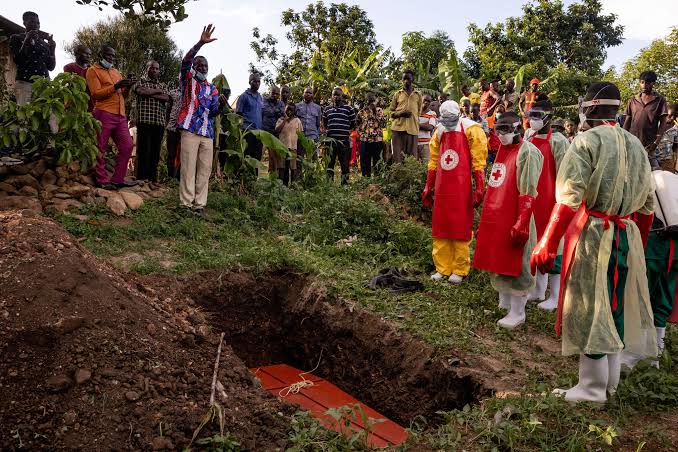
As exhausted health workers battle a record-breaking Ebola epidemic that has already killed more than 300 people, officials have confirmed a second, equally lethal filovirus — Marburg — has surfaced in the very same corner of Uganda. Doctors now fear a two-front war against diseases with no approved cure and no room to spare.
KAMPALA, Uganda
The phone call every outbreak responder dreads came into the World Health Organization’s Geneva command center this week, and it delivered the worst possible news: a second hemorrhagic fever virus has broken out in the exact patch of Uganda already fighting for its life against Ebola. On June 30, 2026, Ugandan health authorities formally notified the WHO that they had detected a case of Marburg virus disease in the western part of the country — the same volatile border region where the Bundibugyo strain of Ebola has spent the last six weeks tearing through villages, hospitals and family compounds. A well-placed source told STAT News that Uganda had actually identified two cases by the time the alert went out, even though the official notification to WHO listed only one. Either way, the message landed with the force of a gut-punch: Uganda may now be simultaneously battling two of the deadliest viruses known to science, in the same towns, with the same overstretched doctors, and the same paper-thin supply of protective gear.
The U.S. Embassy in Kampala didn’t wait for confirmation to sound the alarm. On June 29, it issued a health alert warning American citizens in Uganda that it had been made aware of a possible Marburg case in the country — a full day before Uganda’s government formally reported anything to the WHO. That kind of urgency from a diplomatic mission is rare, and it reflects just how seriously international health authorities are treating the possibility of a second filovirus gaining a foothold in a region already stretched to its breaking point.
A Second Virus Enters an Already Overwhelmed Battlefield
To understand why this news is so alarming, you have to understand what Uganda was already dealing with before Marburg ever entered the picture. In mid-May 2026, an outbreak of Ebola disease caused by the Bundibugyo virus species was confirmed straddling the border between Uganda and the Democratic Republic of the Congo. By late June, that outbreak had ballooned into the third-largest Ebola epidemic ever recorded in Central Africa, with more than 1,176 confirmed cases and at least 306 deaths. Unlike the Zaire strain of Ebola, which now has two licensed vaccines and an approved monoclonal antibody treatment, Bundibugyo virus has no vaccine and no specific treatment approved anywhere in the world. Every case is being managed with supportive care alone — IV fluids, oxygen, and prayer.
It is into that exact landscape — overwhelmed treatment units, exhausted contact tracers, a population already terrified of body bags and quarantine tents — that Marburg has now arrived. Marburg and Ebola are cousins in the filovirus family, and doctors on the ground say they can look almost identical at first presentation, which means health workers now face the nightmare scenario of not knowing, in real time, which of two equally lethal viruses a feverish patient is actually carrying.
What Is Marburg, and Why Does It Terrify Even Seasoned Epidemiologists?
Marburg virus disease was first identified in 1967, after laboratory workers in Marburg and Frankfurt, Germany, and in Belgrade, in what was then Yugoslavia, fell ill after handling African green monkeys imported from Uganda. It has haunted Central and East Africa ever since, with Uganda alone recording outbreaks in 2007, 2012, 2014 and 2017, and case fatality rates in those outbreaks ranging from a relatively ‘mild’ 27% up to a horrifying 100%. The worst Marburg outbreak in history struck Angola in 2005, killing 329 of 374 confirmed cases — an 88% fatality rate that remains one of the deadliest tolls of any single outbreak of any disease in modern times.
According to WHO fact sheets and CDC historical data, the average case fatality rate across all known Marburg outbreaks sits at roughly 50%, meaning a coin flip separates survival from death once symptoms take hold. Early signs are deceptively mundane: fever (present in nearly 79% of cases), fatigue (64%) and headache (58%) dominate the first days, which is exactly why Marburg is so dangerous — it looks like malaria, like the flu, like nothing at all, right up until it doesn’t. Only about 3% of patients show the classic hemorrhagic bleeding most people associate with these diseases, and by the time more severe symptoms appear — unexplained bleeding, jaundice, multi-organ failure — death often follows within eight or nine days, typically from catastrophic blood loss and shock.
The virus is believed to originate in Egyptian fruit bats that roost in caves and mines, and humans typically contract it either through direct exposure to bat colonies or, far more commonly during outbreaks, through contact with the bodily fluids of an infected person — including through the traditional burial practices common across the region, where mourners wash and touch the bodies of the dead. That single detail explains why funerals, not hospitals, have historically been the epicenter of Marburg’s deadliest chains of transmission.

Two Filoviruses, One Region, Zero Approved Treatments
What makes the current moment uniquely dangerous is not just that Marburg has appeared, but where and when it has appeared. Uganda’s Ministry of Health, WHO field teams, and international partners like CEPI (the Coalition for Epidemic Preparedness Innovations) have spent the last six weeks pouring nearly every available resource — personnel, lab capacity, isolation beds, vaccine trial infrastructure — into containing the Bundibugyo Ebola outbreak, which is severe enough that WHO has already classified it as a Public Health Emergency. Every one of those resources is now needed twice over.
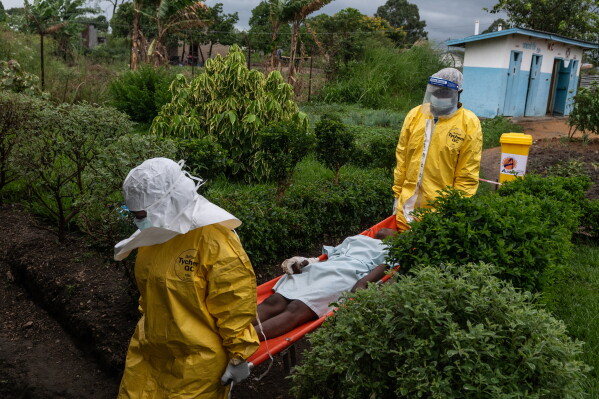
Diagnostic labs that were already running at capacity testing Ebola samples must now also screen for Marburg, using different reagents and different confirmatory protocols. Contact tracers who have spent weeks building trust with communities wary of yet another mysterious illness must now explain that this is, in fact, a different virus, with different transmission dynamics, arriving from an unrelated source. And treatment centers that were stretched thin housing Ebola patients under strict isolation must now find separate wards, staff and protective equipment for suspected Marburg cases — because mixing the two inside one ward risks a patient with one virus catching the other.
Neither disease currently has an approved vaccine or drug treatment, though for Ebola, three candidate vaccines from Moderna, IAVI and Oxford are racing through emergency trials with CEPI backing. Marburg vaccine research is further behind; several candidates exist in early trials, but none has reached the kind of large-scale emergency deployment that Ebola vaccines saw during the West Africa outbreak of 2014–2016. For now, patients infected with either virus receive only supportive care.
The Expert View: A Region at a Breaking Point
Public health specialists tracking the region describe the emergence of Marburg inside an active Ebola zone as one of the scenarios outbreak planners fear most but rarely see realized: two unrelated filovirus introductions colliding in the same overstretched health system at the same time. WHO officials have not publicly confirmed a direct epidemiological link between the two outbreaks — there is no evidence the viruses are related or that one caused the other — but the practical result is the same regardless of cause: responders on the ground now must run two emergency operations simultaneously with a single, exhausted workforce.
International health security experts note that western Uganda has long been considered a filovirus hotspot precisely because of its ecology — dense forest, cave systems inhabited by fruit bats, and cross-border movement with the Democratic Republic of the Congo, where Ebola and Marburg have both circulated for decades. What’s unusual this time is the timing: rarely have two separate filovirus disease events been reported active in the same country within weeks of each other.
What This Means for You
For the vast majority of readers outside Central Africa, the immediate personal risk from either outbreak remains very low. Both Ebola and Marburg spread through direct contact with the bodily fluids of a symptomatic person — not through the air, and not through casual contact like sharing a room or a meal with someone who feels fine. There is no indication of community transmission outside the affected districts of Uganda and the DRC, and no cases have been confirmed in the United States, Europe, or elsewhere outside the outbreak zone as of this writing, aside from a handful of patients previously evacuated to specialized biocontainment units in Germany and France for advanced Ebola care.
If you are planning travel to Uganda, the Democratic Republic of the Congo, or neighboring countries, the CDC and WHO both recommend checking the latest travel health notices before departure, avoiding contact with wildlife (particularly bats and primates), and avoiding funerals or burial rituals in affected areas. Anyone who has traveled from an affected region and develops fever, fatigue, headache, or unexplained bleeding within 21 days of return should seek medical attention immediately and inform providers of their travel history so appropriate isolation precautions can be taken from the first point of contact.
The Bottom Line
Uganda now finds itself fighting on two fronts against two of the deadliest viruses on Earth, in the same towns, with the same doctors, and the same dwindling supplies. The Ebola outbreak alone has already claimed more than 300 lives and earned a formal WHO emergency declaration; the Marburg cases, while still small in number, carry a historical fatality rate that can run as high as 90%. Whether these two outbreaks stay contained to the districts where they emerged or spread further will depend on how quickly international responders can double their footprint in a region that was already operating at the edge of its capacity. For now, the world watches a corner of East Africa fighting a war it never should have had to fight twice at once.
Published By | Features Editor