Written By | Entertainment Desk
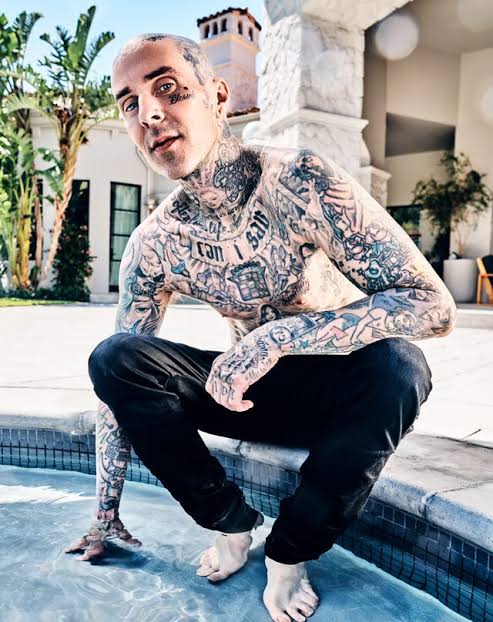
Ahead of its August 13 Hulu debut, "Louder Than Fear" traces the Blink-182 drummer's path from a Learjet crash that killed four people to becoming one of rock's most visible survivors
LOS ANGELES
There's a particular kind of celebrity documentary that exists mostly to flatter its subject: the victory-lap film, assembled from career highlights and warm testimonials, engineered to remind audiences why they loved someone in the first place. "Travis Barker: Louder Than Fear," which drops its official trailer this week ahead of an August 13 premiere on Hulu, is not that film — or at least, it isn't only that film. At its center is something far harder to package: a plane crash that Travis Barker should not have walked away from, and nearly two decades of reckoning with the fact that he did.
The documentary, directed by Justin Krook and Michael Dwyer, had its world premiere in June at the Tribeca Festival, where it screened followed by a live conversation with Barker himself. Now, with its streaming release days away, the film is having its second moment — this time reaching an audience far larger than a festival crowd, and arriving with a trailer that leans directly into the crash Barker has spent years processing in public, in therapy, and, evidently, on camera.
The Crash That Split a Life in Two
On September 19, 2008, a Learjet 60 carrying Barker and fellow musician Adam "DJ AM" Goldstein overran the runway at Columbia Metropolitan Airport in South Carolina, burst into flames, and killed four people: pilot Sarah Lemmon, co-pilot James Bland, and Barker's assistant Chris "Lil Chris" Baker and bodyguard Charles "Che" Still. Barker suffered burns over a significant portion of his body and required multiple surgeries and skin grafts. He has said publicly, in the years since, that he did not fly again for over six years, and that the crash reordered not just his physical life but his entire relationship to mortality.
"Louder Than Fear" doesn't treat that event as a single dramatic chapter to be dispensed with early and moved past. According to descriptions of the film, it structures Barker's entire biography — his childhood in Laguna Beach, his early work as a trash collector before drumming professionally, his rise with Blink-182 into one of the defining acts of pop-punk — around the before-and-after logic the crash imposed on his life. The film's own title makes the thesis explicit: fear as a constant, and the question of what it takes to make something, anything, louder than it.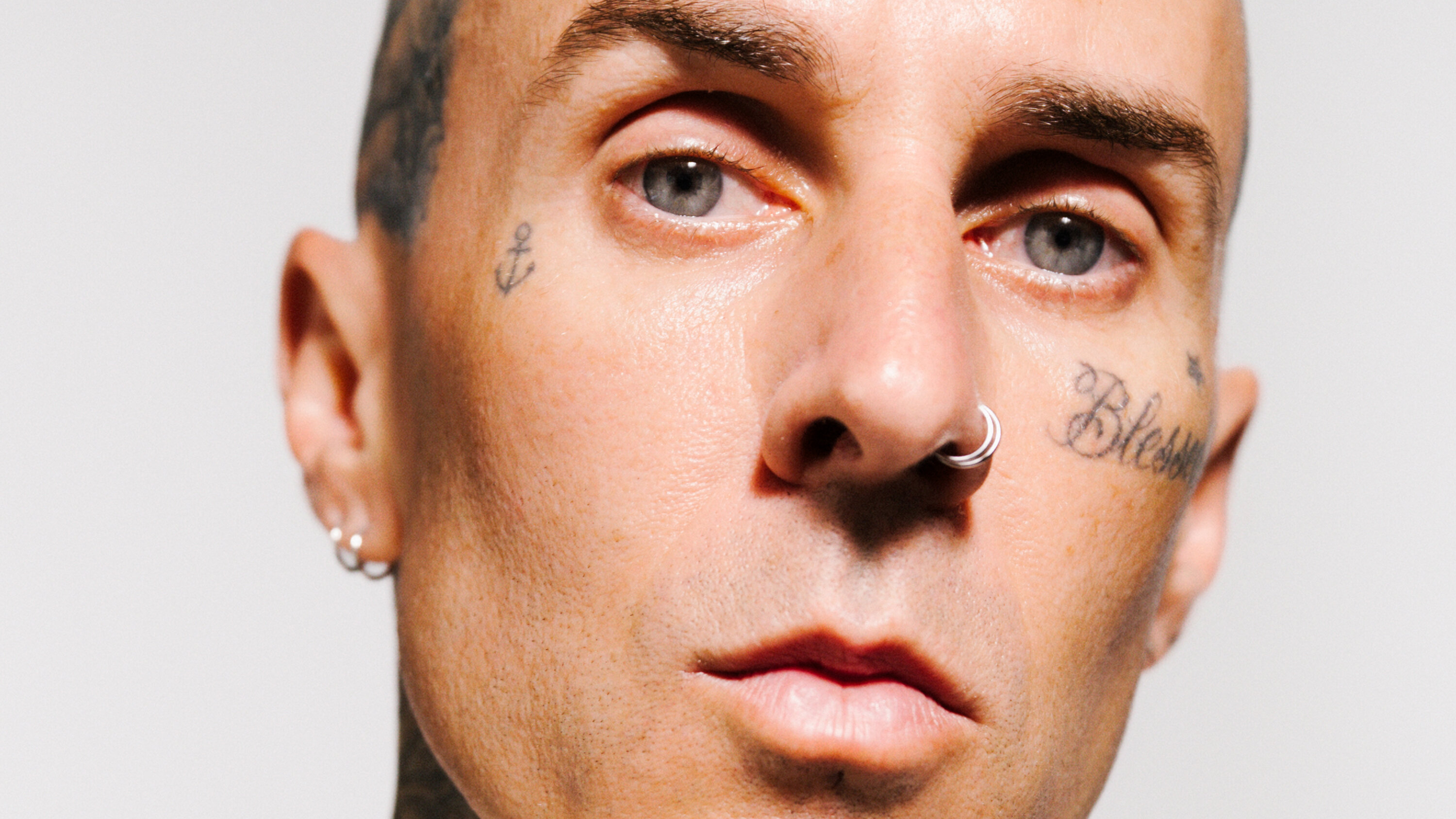
Who Shows Up to Tell It
Part of what distinguishes the documentary from a standard music-career retrospective is the specificity of who was willing to sit down for it. Barker's Blink-182 bandmates Mark Hoppus and Tom DeLonge both appear, offering perspective on a member of their band whose survival directly altered the trajectory of one of the most commercially successful punk acts in American history — Blink-182's later reunion era is difficult to imagine without Barker in it. Mötley Crüe's Tommy Lee, a peer with his own complicated relationship to rock excess and mortality, also appears. So does the late Foo Fighters drummer Taylor Hawkins, whose presence in the film — recorded before his own death in 2022 — adds an unplanned layer of poignancy to a documentary already preoccupied with how quickly a life in music can end.
The film's producers, Matthew Weaver and Nick Stern, have positioned it less as a music documentary in the conventional sense — chronicling albums and tours — and more as a survival narrative that happens to be set inside a music career. That distinction matters for how the film is likely to land with audiences who may know Barker primarily through his marriage to Kourtney Kardashian, his reality-television ubiquity, or his drumming, but who have never heard him talk at length about the crash itself.
Why Now
The timing of the film's wide release is notable. Barker, now in his late 40s, has spent the better part of two decades as one of the most recognizable figures in American celebrity culture — a drummer who became a fixture of reality TV, a father whose family life has played out largely in public, and, more recently, a survivor whose openness about panic attacks, flight anxiety, and PTSD has made him something of an unlikely mental-health messenger for a genre of music not historically associated with emotional transparency.
That openness is very much the film's selling point. Where an earlier generation of rock documentaries might have treated a near-death experience as backstory to a triumphant comeback tour, "Louder Than Fear" appears to sit inside the discomfort for longer than audiences might expect from a Hulu streaming release timed for late-summer viewing. The trailer, released this week, leans into raw, unpolished footage of Barker discussing the crash directly — a choice that suggests the film is aiming for something closer to a confessional than a highlight reel.
What This Means for Readers
For longtime Blink-182 fans, "Louder Than Fear" offers something the band's music has only gestured toward obliquely for years: a direct, sustained account of the event that shaped nearly two decades of Barker's public persona, from his post-crash sobriety and renewed relationship with his children to his eventual return to flying. For a broader audience, the film taps into a wider cultural moment in which celebrities — particularly men in traditionally stoic entertainment industries like rock music — are increasingly willing to narrate trauma and mental health struggles in first person, rather than leaving that work to biographers or tabloids.
There's also a simpler, more universal hook: survival stories resonate regardless of celebrity. Barker's crash, and his decision now to finally examine it at length on camera, taps into questions many people have faced in smaller ways — how do you keep living, and working, and showing up, after something nearly ends everything? The specificity of his fame is almost beside the point.
The Bottom Line
"Travis Barker: Louder Than Fear" premieres August 13 on Hulu (and via Hulu on Disney+ for bundle subscribers) in the U.S., with international availability on Disney+. Coming just over a week after its trailer generated fresh attention, the film arrives positioned not as a celebratory victory lap but as a reckoning nearly 18 years in the making — a rock star finally narrating, on his own terms, the day that could have ended everything, and the long, imperfect work of living loudly afterward anyway.



