Written By | International News Agencies
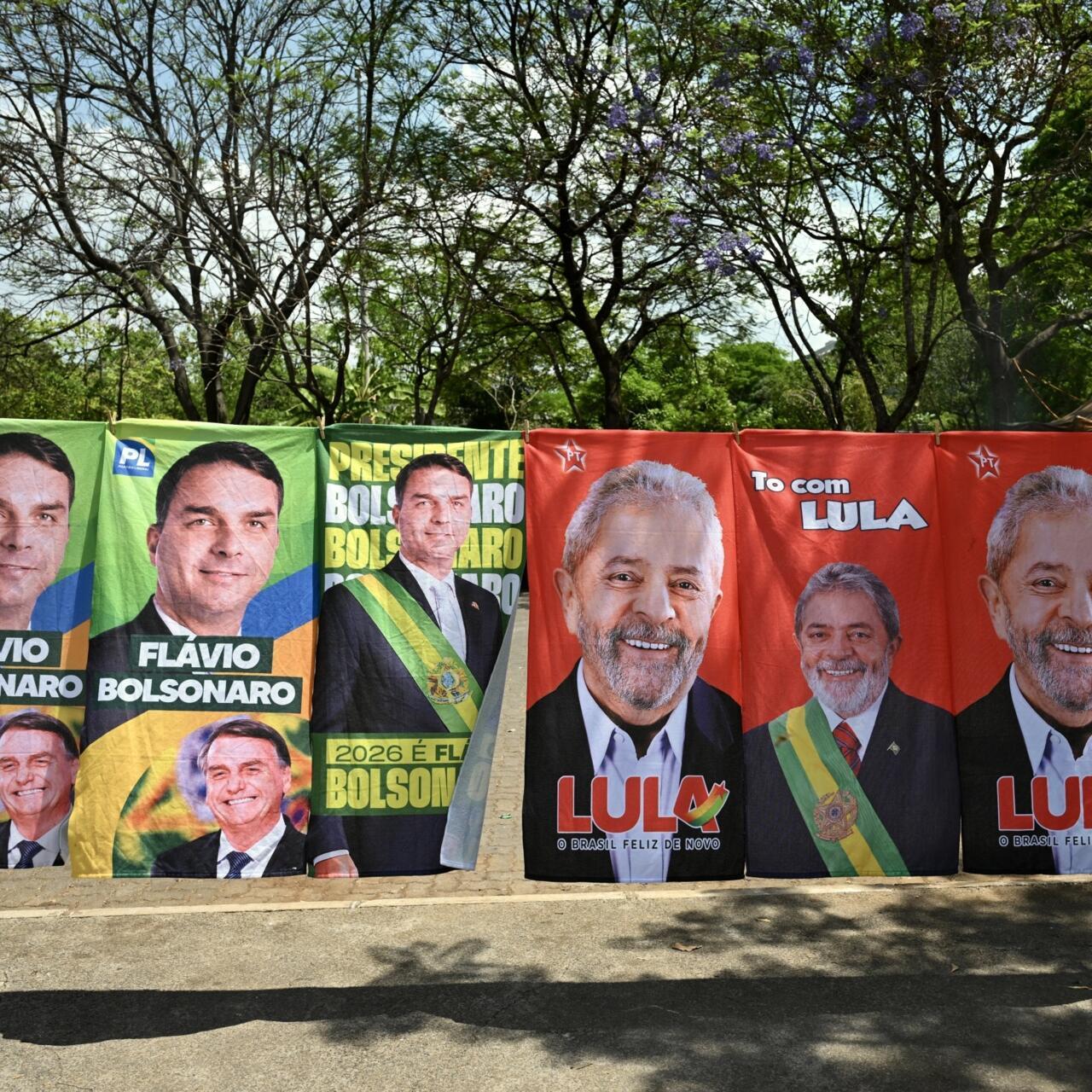
With the October 25 vote too close to call, the contest between the president and the son of the jailed ex-president may come down to who gets the country’s abstainers to the polls.
World Politics
Ten Days to Go
Brazil’s presidential runoff, scheduled for October 25, has settled into a statistical tie. Two major polls released on Thursday, October 15, put Senator Flávio Bolsonaro of the Liberal Party narrowly ahead of President Luiz Inácio Lula da Silva. Quaest, commissioned by Globo and O Globo, had Bolsonaro at 46 percent and Lula at 44 percent. Datafolha had Bolsonaro at 47 percent and Lula at 45 percent. In both cases the two-point gap sits at or inside the margin of error, and many analysts regard the race as too close to call. A Bloomberg headline the day before described Bolsonaro as holding a narrow lead.
The numbers carry a trend as well as a snapshot. According to Al Jazeera’s account of the Datafolha survey, Bolsonaro’s lead had shrunk from four points to two over the previous week, when he stood at 49 percent. Lula, who is 80, has therefore recovered some ground since the first round. Neither man, however, has opened a gap that would let his campaign relax, and the Quaest poll captures why: more than half of voters say they would never vote for either candidate.
Background: A First Round That Defied the Polls
The first round took place on October 4. Flávio Bolsonaro finished first with about 47 percent of valid votes against about 45 percent for Lula, according to MercoPress’s account of the Superior Electoral Court count, with four other candidates, Ronaldo Caiado, Renan Santos, Augusto Cury and Romeu Zema, sharing roughly 8 percent. Neither cleared the 50 percent threshold, so the two will meet again. The result contradicted the final surveys: Datafolha had shown Lula ahead by three points, 45 to 42, and Quaest had him five points clear. Another report summarised the final polls as Lula 45, Flávio 42. Most polls had Lula marginally ahead, and Bolsonaro’s victory by under two points was a genuine upset, even if narrow.
That miss colours how Brazilians read the current numbers. If pollsters understated Bolsonaro’s support once, there is an obvious question about whether they are doing so again, though there is no evidence yet either way. The first-round miss may also partly reflect abstention. MercoPress notes that Lula’s base is concentrated among lower-income voters, who tend to abstain more often, and Lula’s campaign has said it is focused on the roughly 33 million Brazilians who did not vote in the first round.
Flávio Bolsonaro, a senator, is the son of former president Jair Bolsonaro, who is serving a 27-year sentence under house arrest for attempting a coup. Flávio has promised an amnesty for his father if elected, though in his first-round victory speech he did not mention him. Instead he declared that Brazil wants change and said that the end of the PT era, a reference to Lula’s Workers’ Party, was “hereby decreed.” Lula answered that the second round is the real test, and criticised what he called the Bolsonaro family’s truculent biographies, citing alleged links to militias and the Banco Master case, in which Flávio is under investigation without formal charges.
What the Quaest Poll Shows
The Quaest survey, based on 2,154 interviews with Brazilians aged 16 and over conducted October 10 to 13, offers the most detail about where the race stands. In the stimulated question, Bolsonaro leads 46 to 44. In the unprompted version, he leads 43 to 42, with 8 percent saying they would vote blank or spoil their ballot and 7 percent undecided. Some 91 percent say their choice is final and 9 percent say they could still change it. Nine percent overall say they will cast a blank or spoiled ballot or stay home.
Rejection figures are the most striking. Fifty-four percent say they would never vote for Flávio and 53 percent say they would never vote for Lula, which suggests a ceiling on both candidates and an electorate that is choosing against someone as much as for someone. Approval of Lula’s government stands at 45 percent, with 48 percent disapproving, a one-point improvement on Quaest’s previous survey.
The transfer of first-round votes favours Bolsonaro, but modestly. Among Caiado supporters, 42 percent now back Flávio and 23 percent Lula. Among supporters of Renan Santos, 40 percent back Flávio and 14 percent Lula, with many planning a blank vote. Backers of Augusto Cury split slightly toward Lula, 34 to 30. Those who skipped the first round or spoiled their ballots lean toward Lula, 43 to 38. Each of those eliminated-candidate groups is only about 2 percent of the sample, so the swing available is small. Al Jazeera adds that analysts see Bolsonaro as having gained less than expected from the conservative candidates who dropped out, even as he collects endorsements from right and centre-right parties and courts business and investors.
The Campaign Playing Out
Lula’s message has leaned on pocketbook issues. This week the Senate approved a constitutional amendment cutting the maximum working week from 44 to 40 hours with no reduction in pay, which Lula called a key priority and described as a historic achievement for millions of workers. The 6x1 schedule, one rest day after six working days, is the arrangement the change targets, and in Quaest’s testing of nine policy proposals, ending it ranked among the most popular, alongside banning betting sites and lowering the age of criminal liability. Lula has banned sports betting, a step Al Jazeera ties to concern about gambling addiction and household debt, and has promised a constitutional amendment guaranteeing free public transport in all Brazilian cities on weekends. His rallies have drawn very large crowds, though crowds have not translated into a lead.
Bolsonaro’s pitch is change. He has also pledged to bring Brazil into the Washington-backed Americas Shield security coalition, which Brazil has stayed out of, and MercoPress ties a possible Bolsonaro win to recent right-wing victories in Chile, Colombia and Peru. His is an alignment with Donald Trump’s administration that Lula’s side is likely to highlight. Cost of living worries, which Al Jazeera describes as making voters anxious, cut both ways: they hurt an incumbent, but Lula’s workweek and welfare moves are aimed squarely at them.
The Eduardo Bolsonaro Factor
Complicating the family’s campaign, Brazil’s Supreme Court ordered the arrest of Flávio’s brother, Eduardo Bolsonaro, on October 9, according to UPI. Eduardo is a figure in Brazilian right-wing politics who has been active in the United States. The detail on the court’s reasoning was not available from the sources used for this article, and the recent polls do not isolate any effect from the warrant. Its political impact is uncertain: it may energise Lula’s argument about the family’s legal troubles, or reinforce the Bolsonaro narrative of judicial persecution among supporters who already believe it.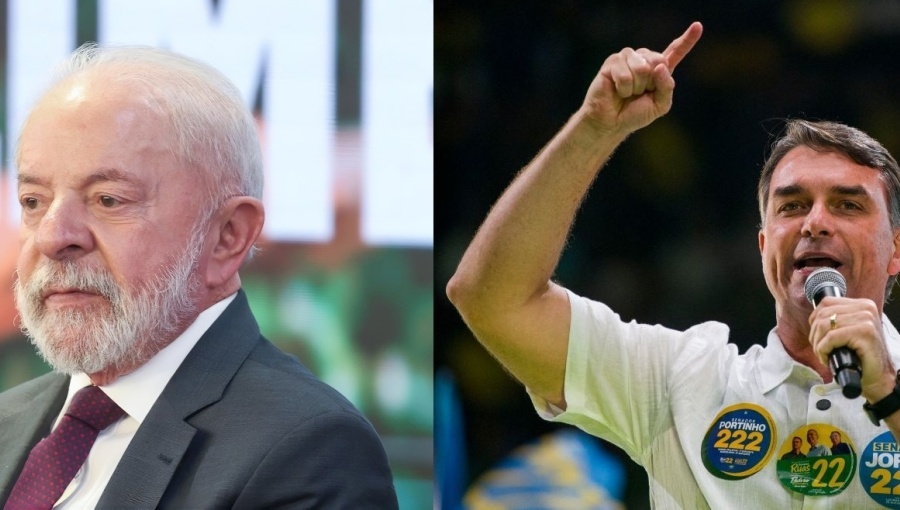
Why Abstention May Decide It
The Quaest data point to turnout as the largest unknown. People who skipped the first round or spoiled ballots lean slightly to Lula, and the pollster’s analysis says non-voters and blank voters tilt his way. In Brazil, where voting is compulsory but penalties are light, abstention was about 21 percent in 2022, and lower-income voters abstain the most. If Lula’s campaign can draw even a fraction of the roughly 33 million people who stayed home, a two-point deficit could vanish. Conversely, if first-round abstainers stay home again, a poll tied within error becomes a narrow Bolsonaro win, much as the first round unfolded.
There is also the question of how reliable the polling is after the first-round miss. The polls were conducted by established firms with large samples, and both show similar results, which adds some confidence. But Datafolha and Quaest also both overstated Lula in the first round, and no one yet knows whether they have corrected.
Implications and What to Watch
The stakes extend beyond Brazil. The country is Latin America’s largest economy, and a Bolsonaro presidency would pull it toward alignment with Washington on security, a point his campaign has already made through the Americas Shield pledge. It would also revive the question of amnesty for Jair Bolsonaro and the fate of the 2022-23 coup prosecutions, which Flávio has linked to his candidacy. A Lula victory would extend the Workers’ Party’s time in power and carry forward its labour and social agenda, including the shorter workweek now moving through the legislature. Markets are watching closely, and Bloomberg has framed the race in terms of investor concern, though the detail of that coverage was not accessible for this article.
In the coming days, watch for fresh surveys, the final debates, further endorsements from the eliminated candidates and their parties, and any new legal developments involving the Bolsonaro family. Above all, watch turnout on October 25. With both candidates rejected by more than half the electorate, and the poll gap at two points, the outcome may rest on the choices of a few million people who did not vote the first time.



