Written By | Fashion and Design Desk
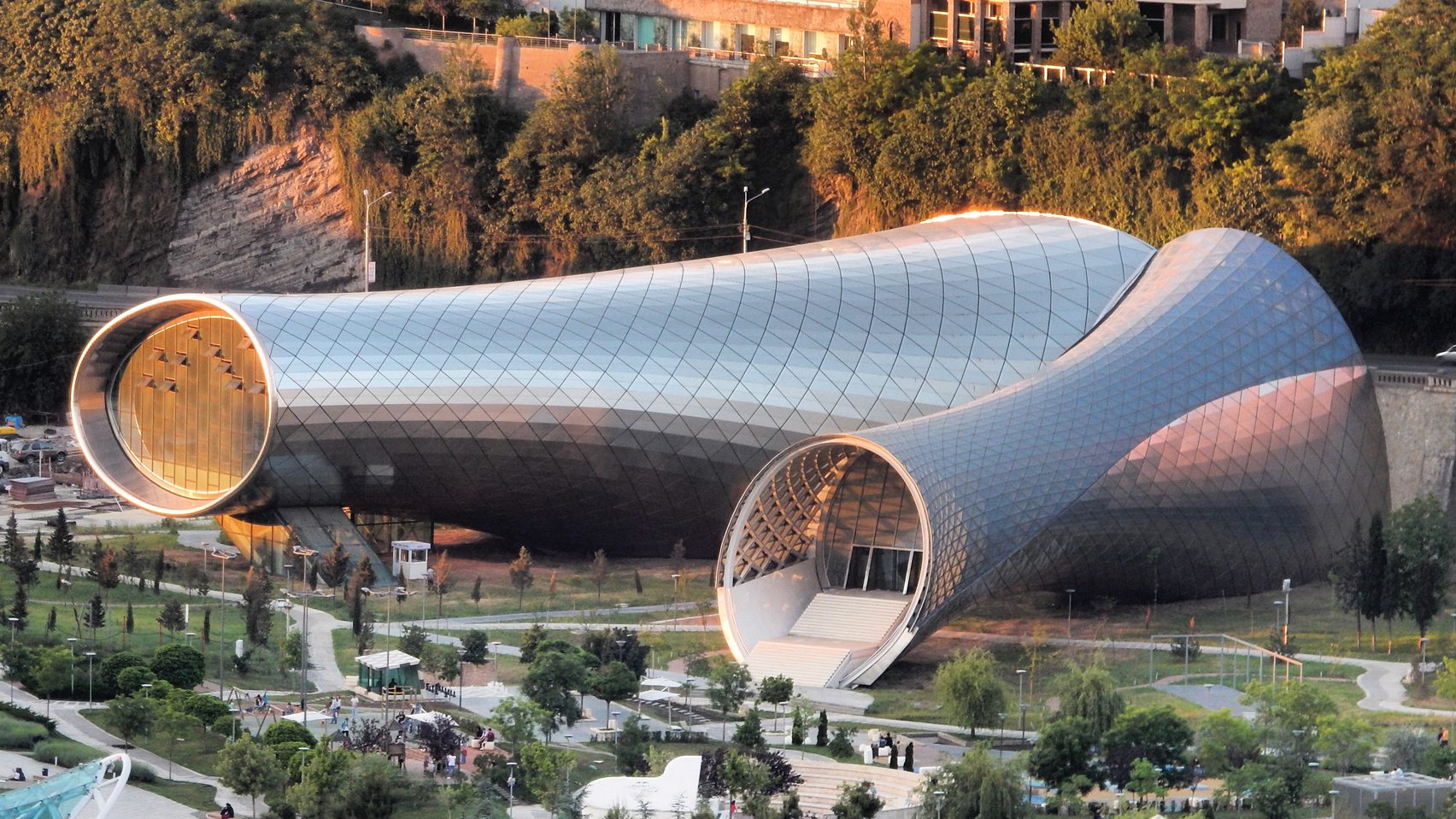
After 14 years standing empty, Studio Fuksas' futuristic Rike Concert Hall in Tbilisi is being demolished — and the architects who designed it are watching helplessly from Italy
TBILISI,
Some buildings become landmarks the moment they're finished. Others become landmarks precisely because they never got the chance to be used at all. The Rike Concert Hall, a pair of gleaming, scale-clad steel tubes rising from a riverside park in Tbilisi, belongs firmly to the second category — and this week, after fourteen years of standing empty, silent, and closed to the public, demolition crews began tearing it down.
Designed by the internationally celebrated Italian firm Studio Fuksas, led by Massimiliano and Doriana Fuksas, the concert hall was conceived as a centerpiece of a broader riverside redevelopment plan enacted under former Georgian president Mikheil Saakashvili in the early 2010s. Its two tube-shaped volumes, wrapped in thousands of stainless-steel panels that ripple like fish scales when the light hits them, were meant to open out toward the Kura River and signal a modernizing, internationally ambitious Georgia to the world. Construction reached near-completion by 2012. Then, almost overnight, the political ground shifted — and the building's fate shifted with it.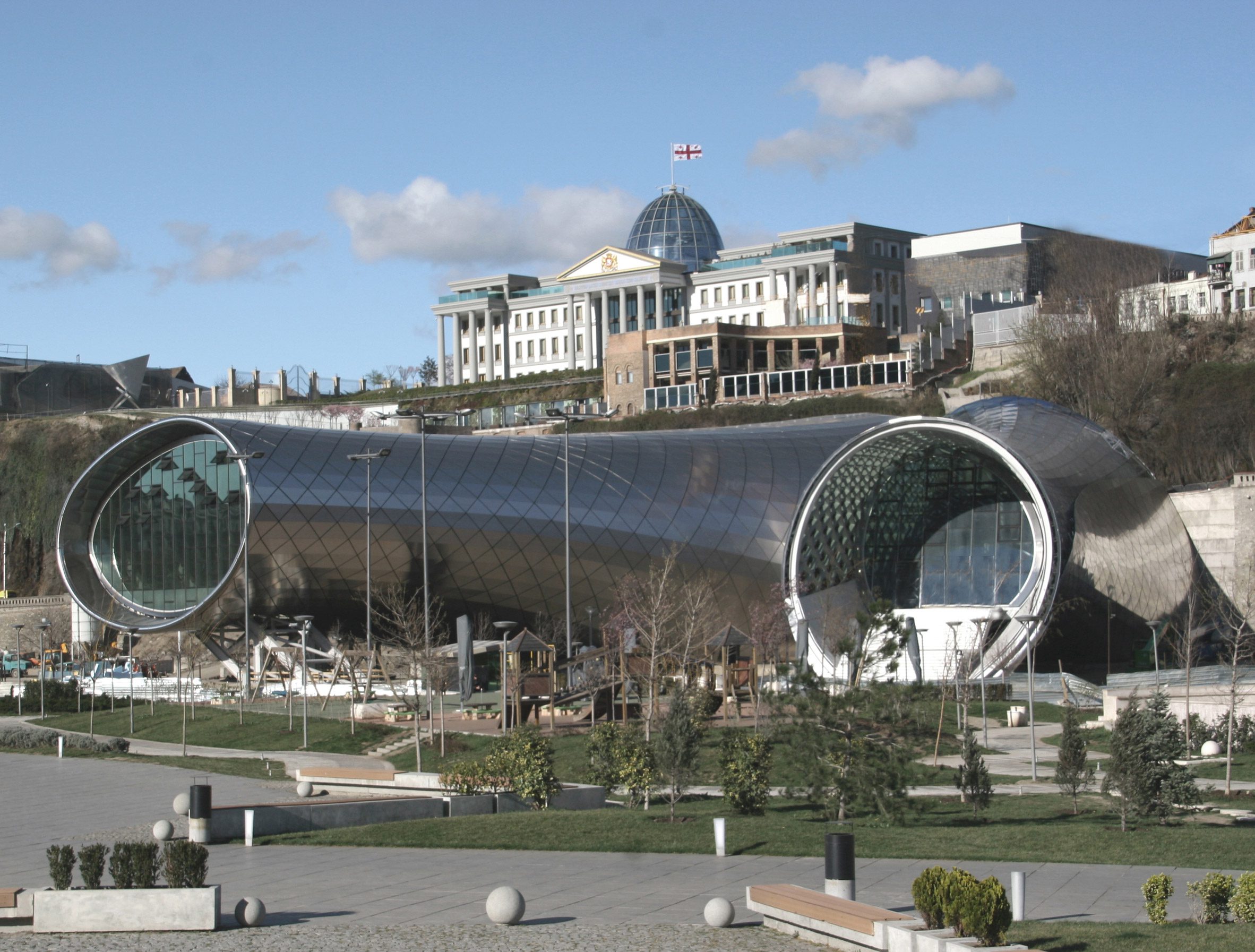
A Building Caught in a Regime Change
Georgia's 2012 change of government is widely seen as the reason the Rike Concert Hall was abandoned before it ever welcomed an audience. Because the project was so closely associated with the previous administration, the incoming government had little political incentive to finish or open it, and the building has sat vacant and unused ever since — a strange, silvery ghost in the middle of a public park, visible to every Tbilisi resident who's ever walked along the riverside but experienced from the inside by almost no one.
Ownership of the site changed hands twice in recent years: the long-dormant structure was sold to a property developer in 2022, who then sold it to its current owner, Makro Constructions, in 2025. It's under that most recent ownership that demolition plans finally moved forward, with Tbilisi City Hall approving the building's removal and a completion deadline set for December 25, 2026.
The Architects Fight Back — From a Distance
Studio Fuksas has not gone quietly. In a formal statement released as demolition plans firmed up, the studio called the decision "a significant cultural setback" and made clear it had repeatedly tried to intervene: "Over the past months, the studio repeatedly offered to work with the Georgian authorities to explore alternative solutions that could preserve and repurpose this iconic building, avoiding what we believe would be a premature and irreversible demolition."
According to the firm, those offers went nowhere. "Neither the public authorities nor any other stakeholder has engaged with the studio despite our repeated willingness to cooperate," the statement continued. "Studio Fuksas firmly opposes both the demolition of the building and the absence of an open dialogue regarding its future." The studio's closing appeal was almost wistful in tone: "Tbilisi still has the opportunity to transform an unfinished project into a symbol of regeneration, innovation and international openness — let this opportunity not be wasted."
Founder Massimiliano Fuksas struck a similarly frustrated note in comments to The Architect's Newspaper, describing how little formal communication his firm received before the demolition process began: "We have been given very little information," he said, adding, somewhat ruefully, that his studio learned much of what was happening secondhand — "You cannot imagine how many people sent us notices" of the demolition, he noted, describing a wave of concerned messages from journalists, former colleagues, and architecture watchers around the world rather than any direct notification from Georgian officials.
Why an Empty Building Still Matters
It would be easy to dismiss the Rike Concert Hall as a footnote — an unfinished vanity project from a bygone political era, unused for so long that its disappearance barely registers as a loss. But architecture critics and preservationists covering the story have pushed back on that framing. The building represents a rare, fully realized example of Studio Fuksas' distinctive late-2000s design language at a genuinely public, civic scale, and its abandonment has long stood as a kind of accidental case study in how architecture gets entangled with politics in ways that outlast any single administration.
There's also a symbolic weight to the timing. Georgia's current government has faced sustained criticism, both domestically and internationally, over its perceived drift toward closer alignment with Moscow and away from the European Union accession path the country's population has repeatedly signaled it wants. Coverage of the demolition in both Italian and Georgian press has explicitly framed the building's fate — built as a symbol of a Western-facing, modernizing Georgia, now being erased under a government widely characterized as more Russia-aligned — as a kind of physical metaphor for the country's broader political trajectory over the past decade and a half.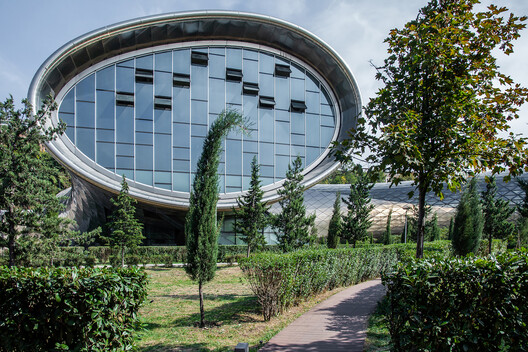
What Happens Next
Demolition work is now underway, with the site's current owner targeting a completion date before the end of 2026. What replaces the Rike Concert Hall remains unclear; no public redevelopment plan has been formally announced alongside the demolition approval, leaving open the possibility that the riverside site could sit as a construction zone, or worse, an empty lot, for some time after the tubes finally come down.
For architecture enthusiasts and cultural heritage advocates, the story is a sobering reminder of how fragile even ambitious, internationally significant buildings can be when they become tied to a single political moment rather than an enduring civic purpose. A structure designed to project confidence and openness to the world instead spent its entire existence as a monument to bureaucratic paralysis — visible, photographed, written about, but never actually lived in.
The Takeaway for Readers
The Rike Concert Hall's demolition offers a quiet lesson for anyone who cares about cities, architecture, or public investment: a building's design brilliance is no guarantee of its survival, particularly when it becomes entangled with politics beyond its architects' control. As Tbilisi's skyline loses one of its most distinctive — if tragically underused — landmarks, the episode leaves behind a case study that architecture schools and preservation advocates will likely be citing for years: proof that even the most striking design can be undone not by structural failure or public rejection, but by the simple, quiet passage of political time.



