Written By |
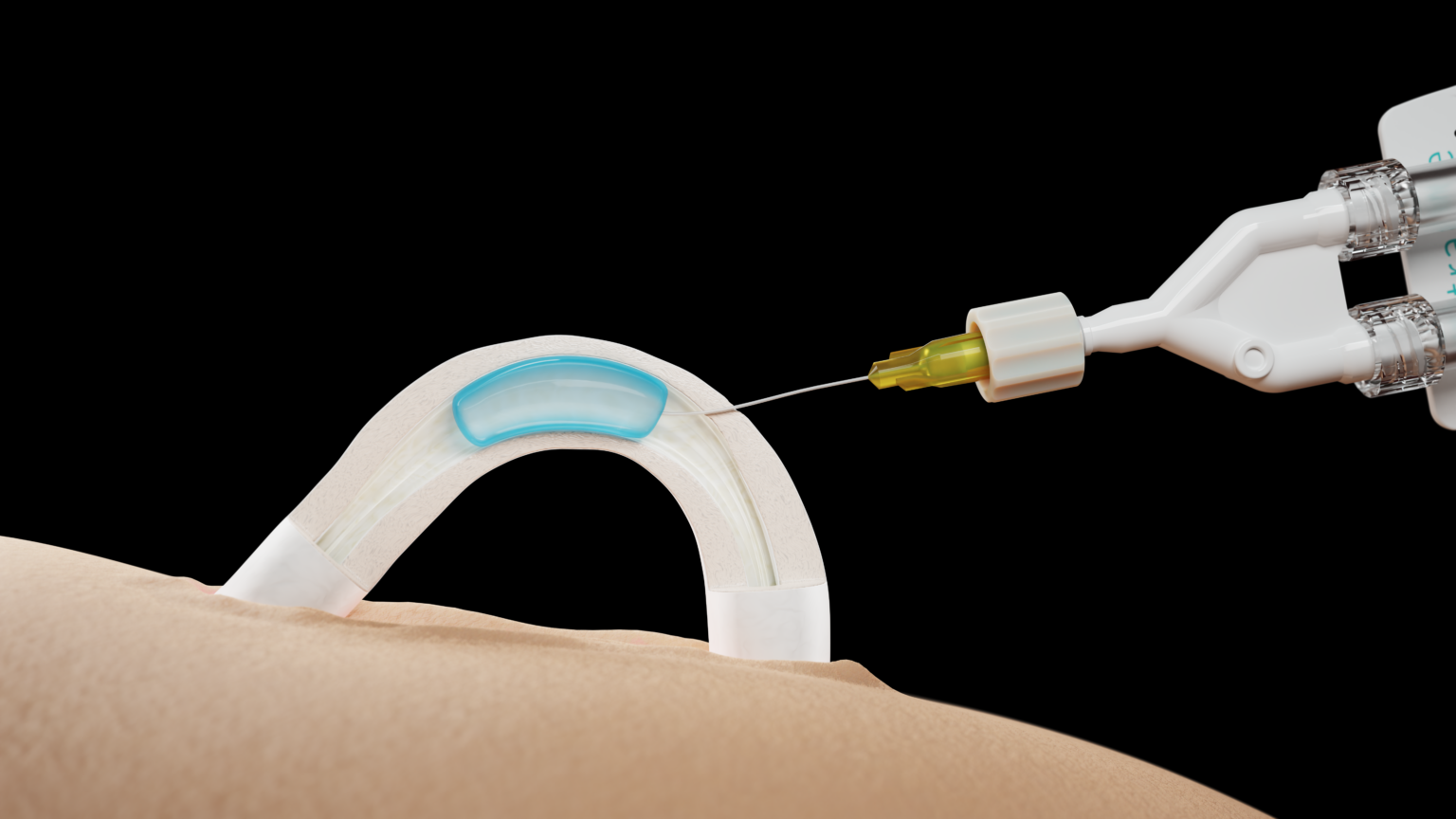
Contraline’s custom, handheld delivery device injecting the Adam hydrogel into the vas deferens. (Courtesy Photo)
HEALTH:
A groundbreaking non-hormonal male contraceptive that prevents sperm from leaving the body has been shown to remain effective for at least two years, according to new research.
The implantable contraceptive, known as Adam, is a hydrogel injected underneath the scrotum. Developed by Virginia-based company Contraline, Adam offers a potential alternative to traditional methods such as condoms and vasectomies. The hydrogel is designed to block sperm from exiting the body and naturally breaks down after a set period, allowing fertility to be restored.
Contraline recently shared early findings from a study involving 25 men. In the two participants who completed the full two-year trial, the gel successfully blocked sperm without any serious adverse side effects. However, the study did not yet include data on the reversibility of the implant. “This is really exciting because our goal from day one has been to create a two-year-long male contraceptive — and we now have the first data to show that's possible," said Kevin Eisenfrats, founder of Contraline, in an interview with The Guardian.
READ MORE DETAILS HERE: Trial Data Looks Promising for ‘IUD For Men’
How it works
Researchers recruited 25 men over the course of the two-year trial and administered the contraceptive via a minimally invasive procedure. Under local anesthetic, doctors made a small incision beneath the scrotum to expose the vas deferens — the tube that carries sperm from the testes. They injected the tube with the hydrogel before repositioning it and stitching the incision closed.
Participants were monitored post-procedure, and all experienced a significant drop in sperm count, confirming the effectiveness of the gel in preventing sperm release. No serious adverse events were reported.
Eisenfrats hailed the results as "great proof of concept," with more extensive results expected to follow.
Not the first of its kind
Adam is not the first male contraceptive to attempt blocking sperm ducts. What sets it apart is that the hydrogel is designed to biodegrade naturally, unlike other experimental products that use materials that can result in permanent infertility. While men using Adam can still experience ejaculation — as the seminal fluid is produced elsewhere — some concerns remain about potential scarring of the sperm ducts, which could cause permanent sterilization. Notably, the results from the Adam trial have not yet been published in a peer-reviewed journal, and real-world data on pregnancy prevention are still pending. Animal trials suggest that the hydrogel gradually breaks down over time, confirming a limited window of contraceptive efficacy.
“The way to think about this is like an IUD [intrauterine device] for men,” Eisenfrats explained. After the two-year period, men could choose to get a new implant. The company is also reportedly working on a method for on-demand reversal, potentially using at-home sperm tests to monitor the contraceptive’s continued effectiveness.
How it compares to female options
For women, non-hormonal intrauterine devices (IUDs), often called copper coils, can last between five and ten years. Once removed, fertility typically returns immediately. Hormonal intrauterine systems (IUS), which release progestogen, provide another long-term contraception option. Importantly, Adam’s hydrogel does not interfere with male hormones, unlike many experimental male contraceptives that target testosterone. Hormonal methods have been associated with side effects such as weight gain, depression, and elevated cholesterol — side effects that are also reported with female contraceptive pills.
Expert caution
Despite the promising early results, some experts remain cautious.
Professor Richard Anderson, a hormonal male contraception specialist at the University of Edinburgh, warned that it is still unclear how long a single Adam implant lasts and whether it can be reliably removed.
A major hurdle in male contraception development remains the biology: millions of sperm are produced daily, requiring methods that can effectively and safely interrupt this process.
For now, Adam represents a significant step forward — but further studies will be needed to fully assess its safety, reversibility, and effectiveness in preventing pregnancy.
Source: Daily Mail



