Background
The renewed conflict between the United States, Israel, and Iran traces back to February 28, 2026, when U.S. and Israeli forces launched a devastating opening barrage of nearly 900 strikes over twelve hours, killing Iran's Supreme Leader Ali Khamenei and hitting nuclear and military infrastructure across the country. That assault opened what is now widely referred to as the 2026 Iran war, a conflict that has cycled through repeated rounds of strikes, retaliation, brief ceasefires, and collapse ever since. A June 17 memorandum of understanding between Washington and Tehran offered a fragile pause, but it has been tested and broken multiple times over the following six weeks, most recently after Iranian ballistic missiles killed American service members at a base in Jordan in mid-July.
Since then, the United States has carried out more than a dozen separate rounds of strikes against Iranian targets, and Iran, along with allied militia groups, has retaliated against American and Israeli-aligned positions across Bahrain, Kuwait, Qatar, Jordan, Iraq, and even briefly against Egyptian territory. Oil markets have gyrated wildly with each escalation and de-escalation, as the Strait of Hormuz — the narrow waterway through which roughly a fifth of the world's oil supply passes — has repeatedly been shut, threatened, or contested by Iranian forces. The human and economic toll of the war has mounted steadily on all sides, with Gulf states hosting U.S. forces repeatedly caught in the crossfire even when they are not direct parties to the conflict.
By late July, the fighting had reached a new and more dangerous phase. Multiple U.S. outlets, including CBS News and Axios, reported that the Pentagon and Israel were preparing what officials described as one of the most severe bombing campaigns of the war: a coordinated assault on Iran's energy infrastructure, including power plants and oil refineries, rather than solely military and nuclear-linked sites. The shift toward energy targets — facilities whose destruction would inflict broad civilian hardship — marked an escalation that alarmed even close U.S. partners in the region. Saudi Arabia's Crown Prince Mohammed bin Salman reportedly telephoned President Trump directly to urge him to hold off, warning of the economic and humanitarian fallout across the Gulf.
Key Developments
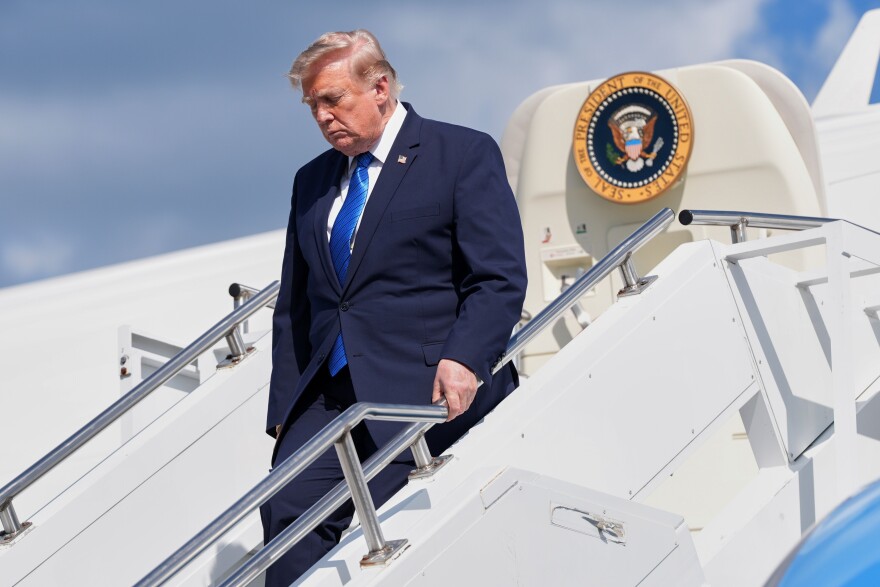
Late on Saturday, August 1, President Trump announced on his Truth Social platform that he was calling off the planned attack. “We have just been asked by Iran, and other Middle Eastern Countries, to hold off any attack in that the perimeters of a deal has been agreed to,” Trump wrote, adding that the emerging agreement would include the “Immediate, Complete, and Total OPENING OF THE HORMUZ STRAIT, and an end to Iran's nuclear threat.” He said Israel had joined the United States in pausing strikes, but stressed the reprieve was conditional: the halt would hold only “subject to being able to rapidly make a DEAL,” and he warned that American forces remained “locked and loaded and ready to go” should talks collapse again, as they have several times since June.
The announcement came just a day after reports that Washington and Israel had finalized plans to strike Iranian energy infrastructure as soon as the first weekend of August, with officials reportedly hoping to complete any campaign before financial markets reopened Monday. Trump had signaled his frustration with Iran's continued closure of the Strait of Hormuz in the preceding days, saying at one point that Iran would eventually have to concede that it “can't take it anymore.”
Iran's public response has been starkly at odds with the White House's framing. Mehr, a semi-official Iranian news agency, dismissed Trump's account as “simply a new lie,” citing unnamed Iranian military officials, and Tehran has given no public indication that it requested a pause or that it has altered its position on the Strait of Hormuz or its nuclear program. Foreign Ministry spokesman Esmaeil Baghaei instead accused the United States of destabilizing the strait through its own military actions. Iranian forces reportedly prevented at least one non-compliant oil tanker from transiting the waterway in the days surrounding Trump's announcement, underscoring that on-the-ground conditions had not visibly shifted even as the diplomatic rhetoric shifted in Washington.
This is not the first time the administration has floated, then pulled back from, strikes on Iran's energy sector. In March, Trump twice delayed a planned strike on Iranian power plants — first by five days, then by two weeks — after Tehran reportedly warned of catastrophic retaliation and cited “productive talks.” Each time, the postponement was followed by a further breakdown and a resumption of hostilities within weeks. The pattern has left many regional analysts and U.S. lawmakers skeptical that Saturday's announcement represents a durable turning point rather than another pause in a war that has now stretched more than five months.

Reactions
Financial markets, at least initially, treated the news as a relief. Oil prices, which had climbed on fears of a strike on energy infrastructure, eased back, echoing a pattern seen in earlier de-escalation moments of the war, when U.S. equity indexes rallied and crude prices fell sharply on news of pauses, only to reverse just as sharply when strikes resumed days or weeks later. Coverage of the episode noted that of all the audiences responding to Trump's announcement, financial markets were among the few reacting positively, while political reaction in Washington was far more mixed to critical.
In Congress, critics — including lawmakers who have complained about the administration's monthslong prosecution of the war without formal authorization — argued that any deal granting Iran continued access to oil export revenue would effectively fund the same government the U.S. has spent months trying to militarily degrade, since the State Department has previously told Congress that oil exports remain Iran's primary means of financing regional proxy groups. Supporters of the administration's approach countered that reopening Hormuz and securing any credible curb on Iran's nuclear program would be a strategic win regardless of the optics, given the toll the war has taken on regional shipping, Gulf state security, and global energy prices.
Within the region, Gulf states that have repeatedly found themselves caught in the crossfire — hosting U.S. bases while facing Iranian retaliation — have consistently pushed for de-escalation, a stance reflected in Saudi Arabia's direct outreach to Trump ahead of the announcement. Israeli officials, for their part, said only that they had been notified of and were coordinating around the pause, without publicly detailing their own independent assessment of the proposed deal's terms.
What's Next
The core disputes that have derailed every previous attempt at de-escalation remain unresolved: Iran's nuclear program, which Tehran insists is peaceful but which the U.S. and Israel have targeted militarily since February, and control over the Strait of Hormuz, which Iran has intermittently closed or restricted amid the fighting. Trump's own framing of the pause as conditional and time-limited — explicitly invoking the possibility of resumed strikes if a deal is not “rapidly” reached — suggests the administration itself does not view this as a lasting resolution but as a narrow window for negotiation.
Given the string of similar postponements in March and the immediate Iranian denial that any request for a pause was made, the most likely near-term scenarios are either a rapid collapse back into strikes within days to weeks, mirroring the March pattern, or a slower slide into an extended, informal lull if neither side wants to be blamed for reigniting the war during ongoing indirect diplomacy — much of which has previously been mediated by Qatar, Oman, and Pakistan. Markets, regional governments, and Congress are all likely to watch the coming days closely for signs of whether formal talks actually convene, or whether, as Iranian officials have suggested, the announced “deal” was a unilateral American characterization with no real counterpart on the Iranian side.
Published By | News Editor