Written By | Business Experts
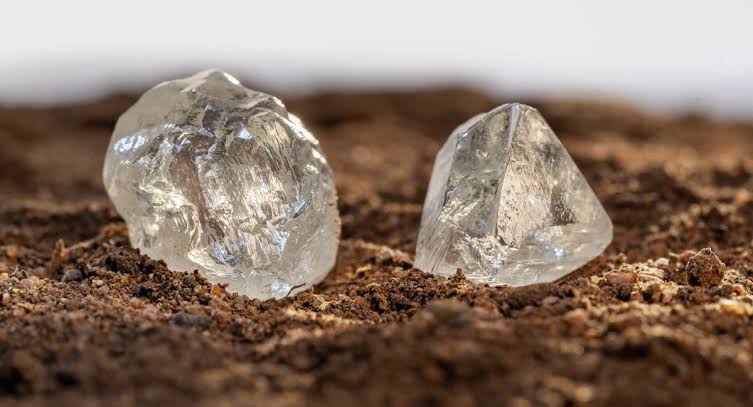
Namibia's diamond industry has for decades been the country's identity as much as its income.
Economic and Social Transformation
A country priced on what has not happened yet
Few African economies are currently valued so heavily on the future and so little on the present as Namibia. Since the 2022 Venus discovery in the Orange Basin, the country of roughly three million people has been described in investment literature as a coming petro-state, a green hydrogen powerhouse and a critical minerals supplier to Europe and Asia. Yet the numbers arriving in 2026 describe something much more prosaic: a small, open, upper-middle-income economy running on thin margins, absorbing a structural downturn in its oldest export industry, and carrying one of the world's most extreme inequality burdens while it waits for capital decisions taken in Paris, Doha and Johannesburg.
The gap between narrative and ledger is the defining feature of the Namibian moment. Growth slowed to 1.7 percent in 2025, the International Monetary Fund reported when its Executive Board concluded the 2026 Article IV consultation on 11 June 2026, reflecting what the Fund called deep and prolonged weakness in the diamond sector, only a gradual recovery in gold and livestock production, and a slowdown in oil exploration activity itself. The Fund projects real GDP growth of 2.1 percent in 2026. The World Bank's Macro Poverty Outlook is marginally more optimistic at 2.7 percent, while the African Development Bank's country outlook, published in May 2026, is the outlier at 3.7 percent, predicated on a rebound in mining, manufacturing and electricity generation. That spread — 2.1 to 3.7 percent, a gap of more than a percentage and a half — is not a rounding error in an economy this small. It is the difference between stagnation in per capita terms and modest catch-up.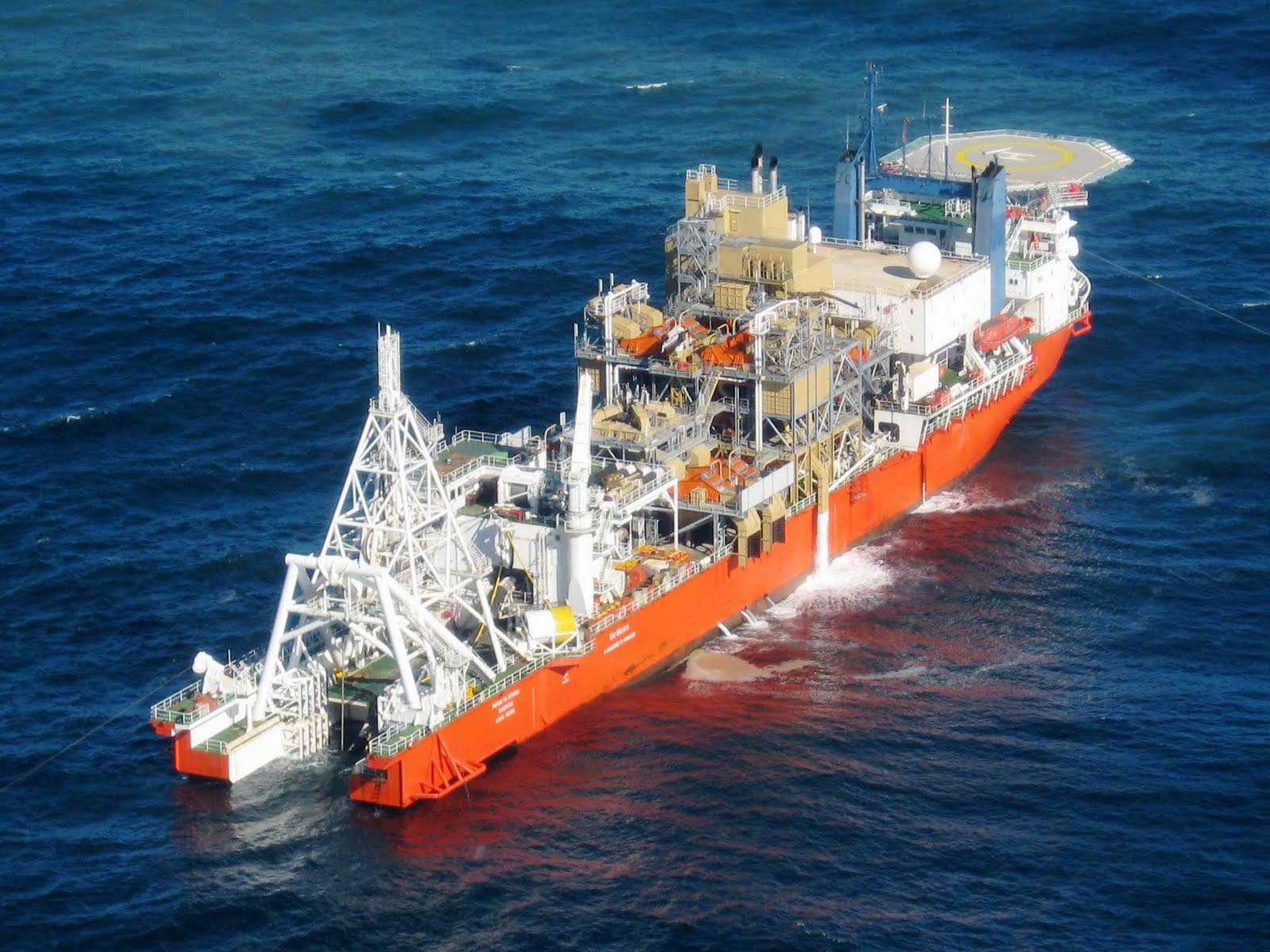
The diamond problem is not cyclical
Namibia's diamond industry has for decades been the country's identity as much as its income. Debmarine Namibia, the joint venture between the government and De Beers, operates the world's most sophisticated marine mining fleet off the Atlantic coast. In 2025 the sector shrank again, with output down 5.6 percent year on year, in part because of deliberate production cuts intended to defend global prices against the advance of laboratory-grown stones. The Chamber of Mines' 2025 Annual Review frames the challenge candidly: weak global natural-diamond demand now looks structural rather than cyclical, driven by a permanent shift in consumer substitution rather than a temporary inventory cycle.
This matters beyond mining employment. Diamonds have historically underwritten a substantial slice of export earnings and, indirectly, the fiscal base. Their decline is why the IMF's external assessment reads the way it does: the current account deficit narrowed only modestly, from 15.2 percent of GDP in 2024 to 13.2 percent in 2025 — a level that would be alarming in most economies and is tolerated in Namibia only because a large share of the deficit reflects imported capital goods for oil exploration and hydrogen feasibility work rather than consumption.
The compensating story is uranium and, increasingly, gold. Namibia is the world's fourth-largest uranium producer. Paladin Energy's Langer Heinrich mine completed its restart ramp-up in 2026 and expects to lift output to between 5.1 and 5.6 million pounds of uranium oxide in its 2027 financial year. Deep Yellow intends to start construction of the Tumas project during 2026, a mine designed for roughly 3.6 million pounds a year. Behind them sit Etango-8 and Norasa in the development pipeline. With global nuclear build-out accelerating in Asia and Europe, uranium is the one Namibian commodity where price and volume are moving in the same direction at the same time.
Oil: the decision that determines the decade
Everything else in the Namibian outlook is contingent on a single corporate decision expected before the end of the fourth quarter of 2026. Petroleum Commissioner Maggy Shino has said the government anticipates a final investment decision from TotalEnergies on the Venus development in Block 2913B by late 2026, with first oil targeted between 2029 and 2030. TotalEnergies holds 45.25 percent of the block, alongside QatarEnergy at 35.25 percent, Impact Oil and Gas at 9.5 percent and the state oil company NAMCOR at 10 percent. Revised engineering has trimmed expected plateau output to around 150,000 barrels per day, down from earlier estimates near 160,000. Galp's Mopane discovery and BW Energy's work on the Kudu gas field sit behind Venus in the queue.
The negotiation is not simply technical. Gas content in the Venus reservoir — which raises the cost of the development because associated gas must be handled rather than flared — and the fiscal terms Namibia will apply remain the two open questions. Windhoek's leverage is real but time-limited: TotalEnergies has signalled that the decision cannot be deferred indefinitely against competing global capital allocation.
The state's preparation for that windfall is uneven. Cabinet approved the National Upstream Petroleum Local Content Policy on 4 August 2026, setting out expectations on Namibian employment, procurement, business participation and technology transfer across the petroleum value chain. But the policy has not been gazetted, and as several energy analysts have noted, it therefore obliges no operator to do anything. The government has since signalled that it intends to convert the policy into binding legislation. Similarly, the Welwitschia Sovereign Wealth Fund — established in 2022 and funded from 2.5 percent of Southern African Customs Union receipts, 33 percent of positive ex-post SACU adjustments and 10 percent of fishing quota revenue — stood at roughly N$478.72 million at the end of February 2026, a modest sum by any sovereign fund standard. Legislation giving the fund a formal statutory framework is expected to reach Parliament before the end of 2026, with drafting complete.
Green hydrogen: from announcement to arithmetic
Namibia's other headline project is the Hyphen Hydrogen Energy scheme in the Tsau Khaeb National Park near Lüderitz — a proposed development covering roughly 4,000 square kilometres, budgeted at about US$9.4 billion and licensed for 40 years, with an eventual target of around 300,000 tonnes of green hydrogen per year converted into ammonia. Hyphen is targeting one million tonnes per annum of green ammonia by the end of 2028 and two million tonnes by the end of 2030. The African Development Bank has approved US$10 million in support, framing the project as a strategic investment capable of placing Namibia among the world's pioneering green hydrogen producers.
The project remains in its feasibility phase through the end of 2026, with the environmental and social impact assessment process underway. The honest reading is that Namibia's hydrogen ambition is currently a land allocation, a study programme and a set of offtake conversations rather than a construction site. What has changed is the diplomatic scaffolding: during President Netumbo Nandi-Ndaitwah's state visit to China in July 2026, Namibia secured agreements spanning energy, infrastructure, mining and green minerals, broadening the country's counterparty base beyond its traditional European partners.
The fiscal squeeze underneath the story
Finance Minister Ericah Shafudah tabled the 2026/27 budget on 26 February 2026 under the theme 'People, Productivity and Prudence'. Estimated revenue of N$89.8 billion represents growth of just 2.5 percent on the prior year — well below nominal GDP growth in most scenarios. The budget projects the deficit narrowing from 6.6 percent of GDP to 5.5 percent, yet the total government financing requirement, covering both the deficit and maturing debt, is projected to rise 32 percent to N$19.2 billion in 2026/27 from N$14.5 billion in 2025/26. Public debt is expected to stabilise at elevated levels over the medium term, with interest payments consuming a rising share of revenue.
The external buffer has thinned too. Gross foreign reserves declined after Namibia redeemed its US$750 million Eurobond in October 2025, leaving coverage at 3.5 months of imports at end-2025. Inflation stood at 2.4 percent year on year in February 2026 and is projected to pick up modestly during the year on higher fuel prices before converging toward 3 percent over the medium term — a target now anchored to South Africa's revised inflation objective, a reminder that the Namibia dollar's peg to the rand imports monetary policy from Pretoria.
The social ledger: inequality that growth has not touched
The most uncomfortable figures in the Namibian file are not fiscal. The 2023 Labour Force Survey put unemployment at 36.9 percent, up from 33.4 percent in 2018, leaving roughly 320,000 people out of work in a labour force where participation is only about 46.2 percent. Unemployment among those aged 15 to 34 stood at 44.4 percent. Namibia remains among the two most unequal countries in the world by consumption Gini — around 59 — with inequality in per capita consumption roughly 45 percent higher than the average for upper-middle-income peers, and with the coefficient having fallen barely two points between 2004 and 2015. Some 43 percent of the population experiences multidimensional poverty. The 2024 Global Hunger Index classifies hunger in Namibia as 'serious', ranking it 84th of 121 countries assessed, and at least one in three households cannot afford a basic nutritious diet.
The government's flagship social response is education. From the 2026 academic year, Namibia has moved to full state subsidy of registration and tuition fees at public universities and vocational training centres, with N$663 million allocated to cover the first quarter alone. The policy is being phased in — students and families still contribute toward accommodation and related costs. Critics have raised the obvious objection: in an economy generating so few jobs, subsidising graduate supply without addressing labour demand risks producing better-qualified unemployment. The counterargument, made by the presidency, is that the skills bottleneck is precisely what will prevent Namibians from capturing value in the oil, gas and hydrogen sectors when those industries arrive.
What to watch
The IMF's Board statement in June set out the analytical frame plainly: safeguarding stability requires fiscal prudence to place debt on a downward path, careful monetary calibration to protect the credibility of the rand peg, and stronger financial-sector oversight to manage rising sovereign–financial sector linkages. Achieving inclusive growth, it added, will require structural reform to support private-sector development, reduce regulatory bottlenecks, improve skills alignment and raise public investment efficiency — while establishing a robust and transparent framework to manage the potential opportunities from oil, gas and green hydrogen.
That last clause is the whole test. Namibia has strong institutions by regional standards, a functioning sovereign wealth vehicle awaiting statutory teeth, and a local content policy awaiting legal force. It also has three years, at best, between a Venus final investment decision and first oil — three years in which the legislative architecture either gets built or does not. The World Bank Group's Country Partnership Framework for FY25–FY29 is explicitly oriented toward inclusive growth and inequality reduction, an acknowledgement that Namibia's problem has never been aggregate income but its distribution. A country with the world's second-highest inequality and a 36.9 percent unemployment rate does not automatically become more equal because oil is discovered offshore. On the evidence of resource booms elsewhere on the continent, it may become less so unless the rules are written first.



