BUSINESS
For more than a decade, "first oil" has been the phrase hanging over every conversation about Uganda's economic future. In August 2026, that moment finally looks close enough to touch — even as it keeps sliding just out of reach. The government's own technical target of July 2026 for the start of commercial crude production has come and gone without oil flowing, pushing realistic estimates for first production into October 2026 or later. Yet officials, including the Bank of Uganda's governor, are already building the coming fiscal year's budget around the assumption that oil revenue will start landing, underscoring both how central the sector has become to Uganda's economic planning and how much is still riding on a handful of remaining construction milestones.
What is happening
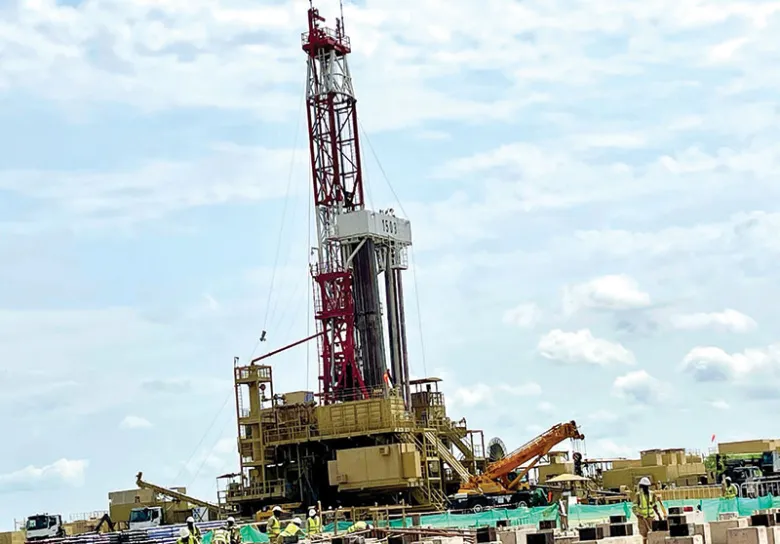
Uganda's two flagship upstream projects — Tilenga, operated by France's TotalEnergies, and Kingfisher, operated by China's CNOOC — have spent 2026 racing toward completion around the Lake Albert basin. As of the most recent progress updates, Tilenga stood at roughly 74 percent complete, with 234 wells drilled, comfortably past the 170-well minimum needed to begin production. Kingfisher was further along, at about 79 percent, with its Central Processing Facility and feeder pipeline nearing completion. Once both projects reach full capacity, Uganda expects combined peak output of around 230,000 barrels of oil per day: roughly 149,000 barrels a day from Tilenga and about 27,000 to 40,000 barrels a day from Kingfisher, depending on the estimate cited.
Getting that crude to market depends on the East African Crude Oil Pipeline (EACOP), the 1,443-kilometer heated pipeline running from Hoima in western Uganda to the port of Tanga on Tanzania's Indian Ocean coast. EACOP has become the more closely watched of the two milestones this year, since Uganda is landlocked and cannot export crude without it. By August 2026, the pipeline had surpassed 90 percent overall completion — around 91 percent by some counts — with land compensation payments to communities along the route nearing completion as well. The government's technical target had been to reach first oil by July 2026, with crude exports through EACOP originally pencilled in for around October 2026. Uganda's Petroleum Authority has acknowledged the July target was missed, while insisting the country remains "on schedule" in a broader sense, with most remaining activities now at the pre-commissioning stage.
The money question
The reason first oil commands so much attention in Kampala goes beyond engineering milestones — it is a fiscal story as much as an energy one. Industry estimates suggest Uganda's upstream oil projects could generate average annual government revenues of between $1 billion and $2.5 billion once production ramps up, a substantial sum for a national budget that has historically leaned heavily on customs duties, VAT, and donor support. Bank of Uganda officials have said publicly that they expect first-oil revenue to help underwrite the 2026/27 budget, a sign of how firmly this revenue stream has already been built into fiscal planning even before the first barrel has been exported.
But the economics have gotten more complicated as EACOP's price tag has grown. The pipeline's total cost has climbed to roughly $5.6 billion, about 55 percent above initial estimates — a familiar story in large-scale oil and gas infrastructure, but one with particular consequences for Uganda's take. Under the production-sharing agreements governing the projects, oil companies are entitled to recover their capital costs before the government receives its share of revenue. That means the cost overruns on EACOP, along with any additional overruns at Tilenga and Kingfisher, could delay or reduce the government's near-term revenue take even after oil starts flowing, since a larger slice of early production will effectively go toward repaying the developers' upfront costs.

Broader economic context
The looming arrival of oil revenue is unfolding alongside what officials describe as a broadly improving economic picture. The Economic Policy Research Centre's Uganda Business Climate Index jumped 20.1 points in the April-to-June quarter of 2026, to 124.9, up from 104.8 in the first quarter — a sign that companies in transport, trade, hospitality, and other services are growing more optimistic as economic activity picks up. Uganda's overall GDP growth is projected to reach 6.8 percent in 2026, with officials expecting further acceleration once oil production ramps up in 2027 and 2028. The country posted a balance-of-payments surplus of $2.47 billion in the twelve months to March 2026, the largest in fifteen years, which officials have attributed to a combination of political and economic stability and strong average investment returns cited at around 14 percent. Growth in the services sector has been driven by trade, real estate, and education, while industrial activity has been boosted by manufacturing and construction — much of the latter tied directly to oil-sector construction spending.
Not every recent data point has been favorable. Ugandan exporters are contending with newly elevated U.S. tariffs after President Donald Trump's administration raised duties affecting Ugandan goods, a headwind for the country's non-oil trade sector even as oil-sector optimism builds. Domestically, long-delayed infrastructure projects like the Kampala-Jinja Expressway remain unbuilt nearly a decade after being included in the country's Public Investment Plan, a reminder that project-execution risk is not confined to the oil sector alone.
Who is involved
TotalEnergies and CNOOC remain the two dominant international operators, running Tilenga and Kingfisher respectively, alongside Uganda's state-owned oil company UNOC, which holds stakes across the upstream and pipeline infrastructure. The Petroleum Authority of Uganda functions as the sector's day-to-day regulator and has been the primary government voice addressing schedule slippage. The Bank of Uganda, under its governor, has taken on a more prominent public role this year in tying oil-revenue expectations directly to fiscal planning for 2026/27. Communities along the EACOP route in both Uganda and Tanzania have been central to the compensation process that is now nearing completion, a process that has drawn scrutiny from environmental and human-rights organizations throughout the project's development, including questions about land displacement and resettlement adequacy that have accompanied EACOP since its inception.
Why it matters
Uganda has waited since oil was first discovered in the Lake Albert basin in 2006 for this production to begin, and the stakes of finally crossing that line are significant. A successful, well-managed transition to oil-exporter status could meaningfully diversify government revenue, fund infrastructure and social spending, and validate years of investment promotion built around the promise of the resource. A mismanaged one — marked by repeated missed deadlines, cost overruns that erode the government's revenue share, or governance failures in how proceeds are spent — could instead entrench the "resource curse" dynamics that international observers, including groups like the Institute for Energy Economics and Financial Analysis, have warned about throughout the project's development. With a national budget now explicitly counting on oil money arriving on a reasonably predictable timeline, the credibility of Uganda's fiscal planning is increasingly tied to the credibility of its production schedule.
What to watch
The most immediate marker to track is whether pre-commissioning activities at Tilenga and Kingfisher, along with the final stretch of EACOP construction, translate into an actual first-oil announcement before the end of 2026, or whether the timeline slips again into 2027. Beyond that, watch how much of the 2026/27 budget ends up genuinely funded by oil revenue versus how much fiscal officials need to backfill through other sources if production or exports are delayed further. Finally, keep an eye on how the government communicates and allocates whatever early oil revenue does materialize, given how closely both domestic and international observers will be watching for signs of transparent, well-governed resource management in the sector's first year of actual production.
Published By | Business News Editor