Written By | Fashion and Design Desk
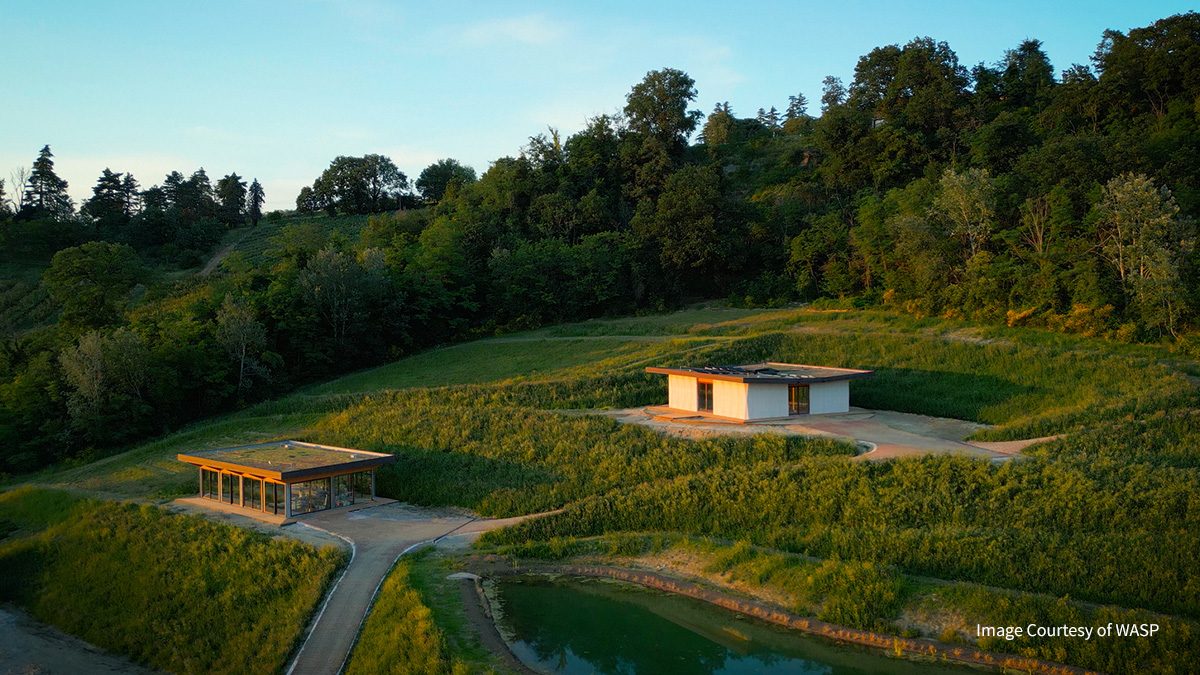
The project is the latest undertaking from WASP, founded by Massimo Moretti, in partnership with Olfattiva, an artisan perfumery.
EMILIA-ROMAGNA, ITALY
Most architecture stories about 3D printing focus on a single house: the novelty of watching a nozzle extrude walls layer by layer. Shamballa, inaugurated June 8 in the hills of northern Italy, is something more ambitious — not a house, but an entire model habitat across eight hectares where printing, growing and living function as one interlocking system.
From a Single Mud House to a Whole Ecosystem
The project is the latest undertaking from WASP, founded by Massimo Moretti, in partnership with Olfattiva, an artisan perfumery. The pairing might sound incongruous — a heavy-machinery printing firm and a botanical fragrance house — until you see what they built together: a complex anchored by Itaca, a self-sufficient 3D-printed farmhouse, alongside a vertical printed garden for hydroponic cultivation, surrounded by land being regenerated into a medicinal botanical garden.
It is a research site disguised as a home. WASP has spent more than a decade building toward this moment. Moretti launched the company's defining slogan back in 2018, when the first house made entirely with 3D printing — built from mud and straw — was unveiled: "We are dreamers, we are creators, we are makers: we start with 3D printing to save the world." Shamballa is the most literal expression yet: a habitat designed to demonstrate that an entire household's needs — food, shelter, energy, water — can be met from a locally sourced footprint.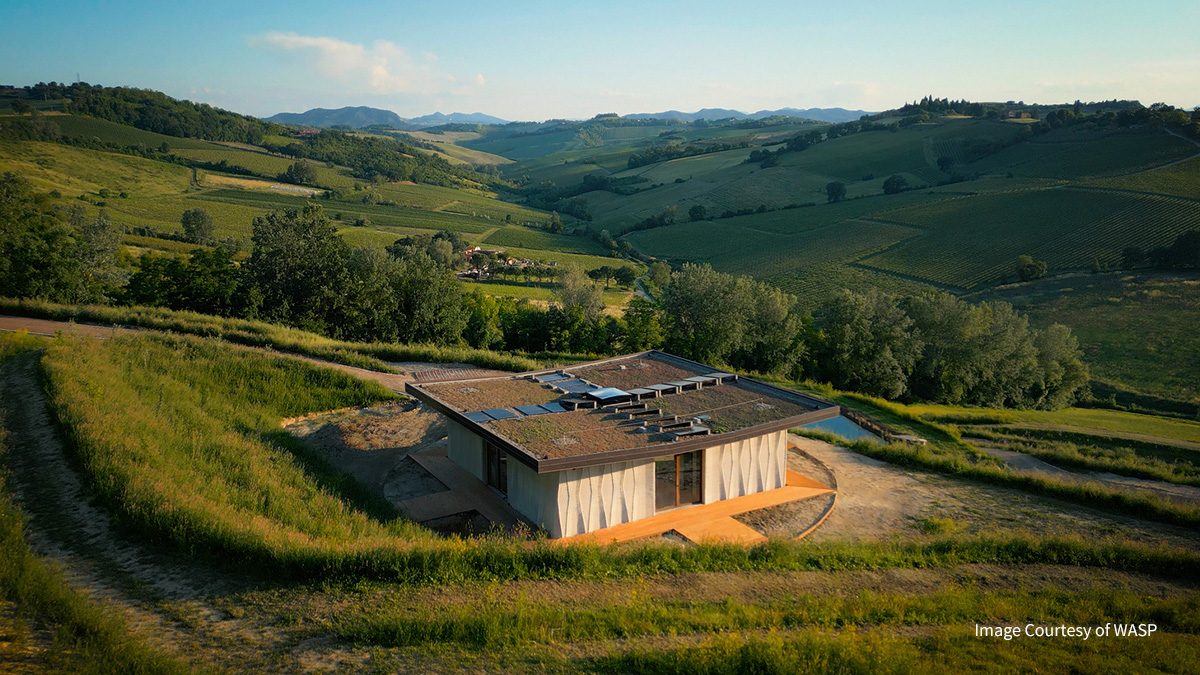
The Math Behind the Model
WASP's research frames the project around a specific thesis: that a circular living space roughly 33 meters in diameter is sufficient to make up to four people self-sufficient, when paired with printed architecture, vertical hydroponic systems, and renewable energy harvesting. It's an idea that sounds almost utopian — named after Shamballa, the mythical place of peace and abundance. But the team has put real capital behind testing it: more than €1 million invested to date, rare for a research laboratory rather than a commercial development.
The location matters, too. Rather than building on untouched land, WASP and Olfattiva selected farmland that had fallen out of cultivation, turning the project into a land-regeneration story as much as a construction-technology one.
Why the Construction Industry Is Watching
3D-printed construction has spent a decade oscillating between hype and utility. WASP's own history reflects that arc: from early experimental builds using mud and straw, through increasingly sophisticated prototypes, to Itaca — a fully certified, code-compliant printed house that regulators signed off on as genuinely livable housing, not an art installation.
Shamballa extends that credibility into something closer to a working settlement than a single exhibit. By integrating printed architecture with food production, water management and energy generation, the project positions itself as a template that could, in theory, be replicated anywhere with the right local materials — from earthquake-recovery zones to regions facing housing shortages.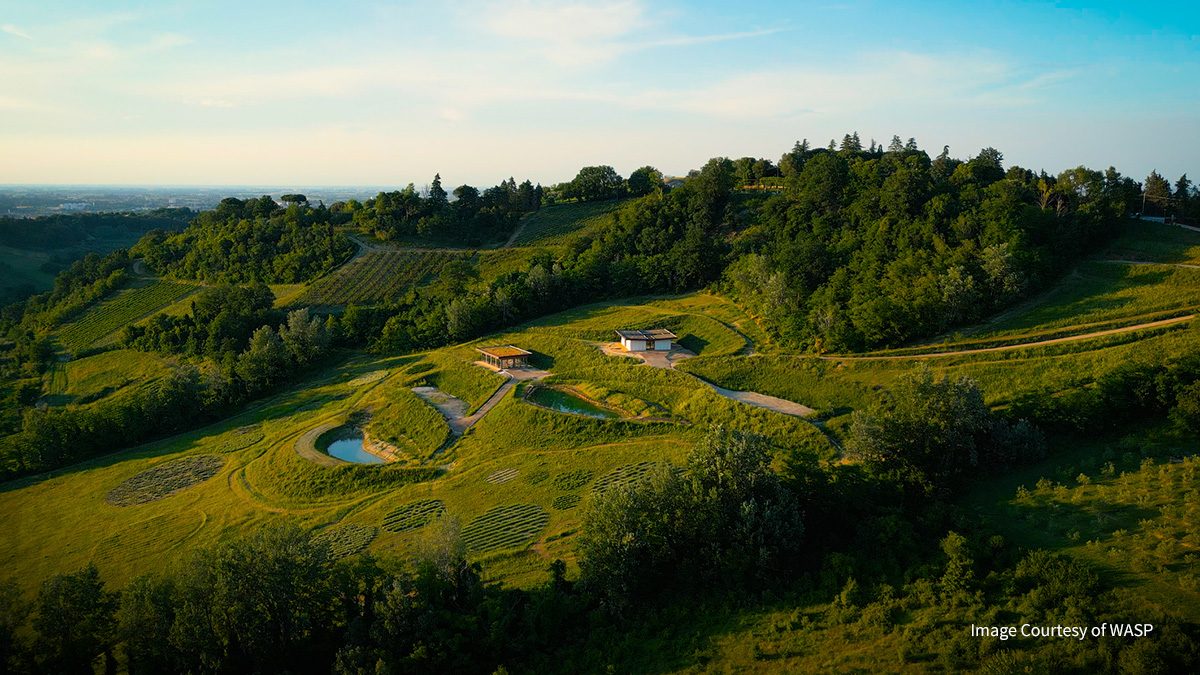
What This Means for the Future of Housing
For readers outside architecture, the headline takeaway isn't about printers or layers of extruded earth — it's about what those tools might make possible. If a research site in rural Italy can demonstrate that a small footprint, printed largely from local soil, can house a family while also feeding and powering it, the implications stretch well beyond Emilia-Romagna: toward disaster relief housing deployed faster and cheaper, toward rural communities seeking self-sufficient alternatives to industrial agriculture, and toward a broader rethinking of how much infrastructure a household needs to import.
Shamballa is not yet a finished answer — it is explicitly framed as a laboratory, a place to keep testing rather than a model ready for mass replication. But as climate pressures and housing costs both continue to rise, the idea at its center — print it locally, grow it locally, power it locally — is exactly the kind of experiment the next decade of architecture is likely to need a lot more of.