Written By | International News Agencies
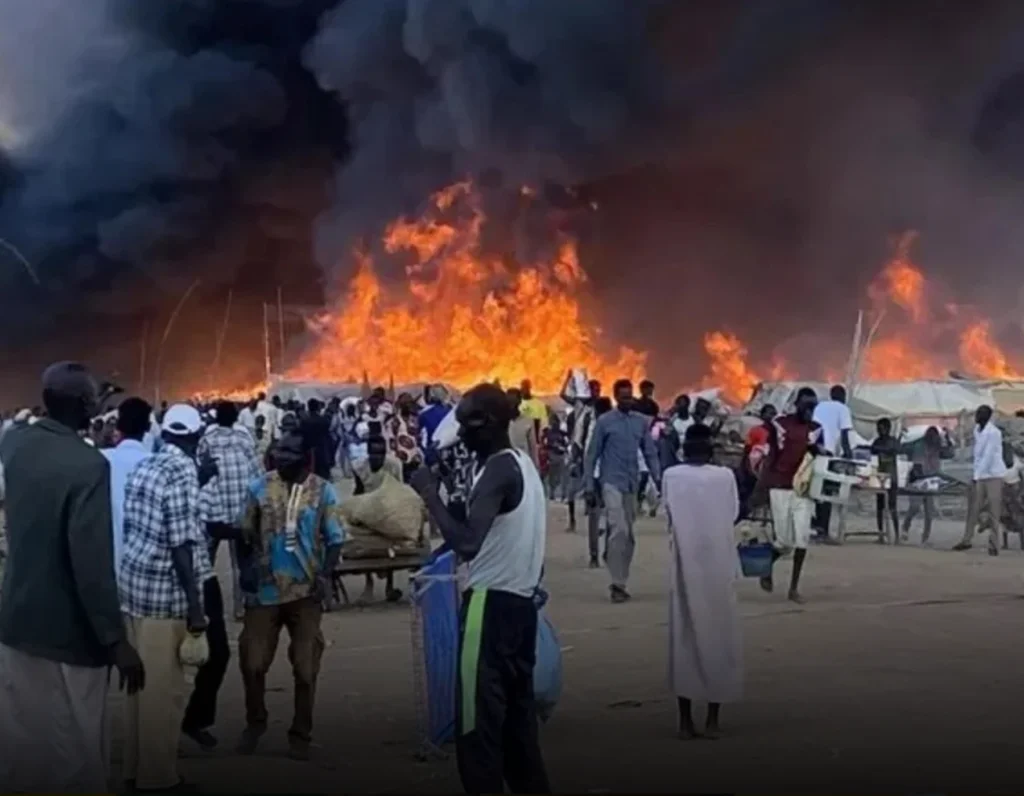
The strike hit Amiet Market, north of Abyei town, on Monday, according to The National, which dated its report Oct. 21
JUBA / ABYEI
A drone strike on a market in the disputed Abyei region on the border between Sudan and South Sudan has killed at least 153 people, according to a South Sudanese official, in an attack that has pulled a border dispute into the Sudan war. South Sudan has summoned Sudan's ambassador, Sudan's army has not officially commented, and the episode has turned a long-simmering border dispute into a test of South Sudan's claim to neutrality.
The strike hit Amiet Market, north of Abyei town, on Monday, according to The National, which dated its report Oct. 21. Because Oct. 19 was a Monday, that is the likely date, although Al Jazeera's report did not give an exact day and noted an inconsistency in its own materials. The death toll has risen sharply: The National reports that it climbed from 73 earlier to at least 153. Abyei's caretaker information minister, Yohana Ngor, said it was likely to rise further, and many people are reported missing.
What happened
Ngor told reporters that "the fire is still burning, so the recovery process of the dead is still continuing," according to The National. Some bodies were burned to ashes, he said. Another resident, Yohanna Akol Ngor, told Reuters the "situation is terrible," according to Al Jazeera. Doctors Without Borders (MSF) said it was treating more than 20 wounded people, some with severe burns.
South Sudan's Foreign Ministry said drones hit several locations in the market, causing civilian casualties, injuries and major property damage. It said it "learnt with grave concern of the drone attack carried out by the Sudanese Armed Forces," per The National, and it summoned Sudan's ambassador. Al Jazeera adds that the ministry urged Sudan to refrain from acts that endanger civilians.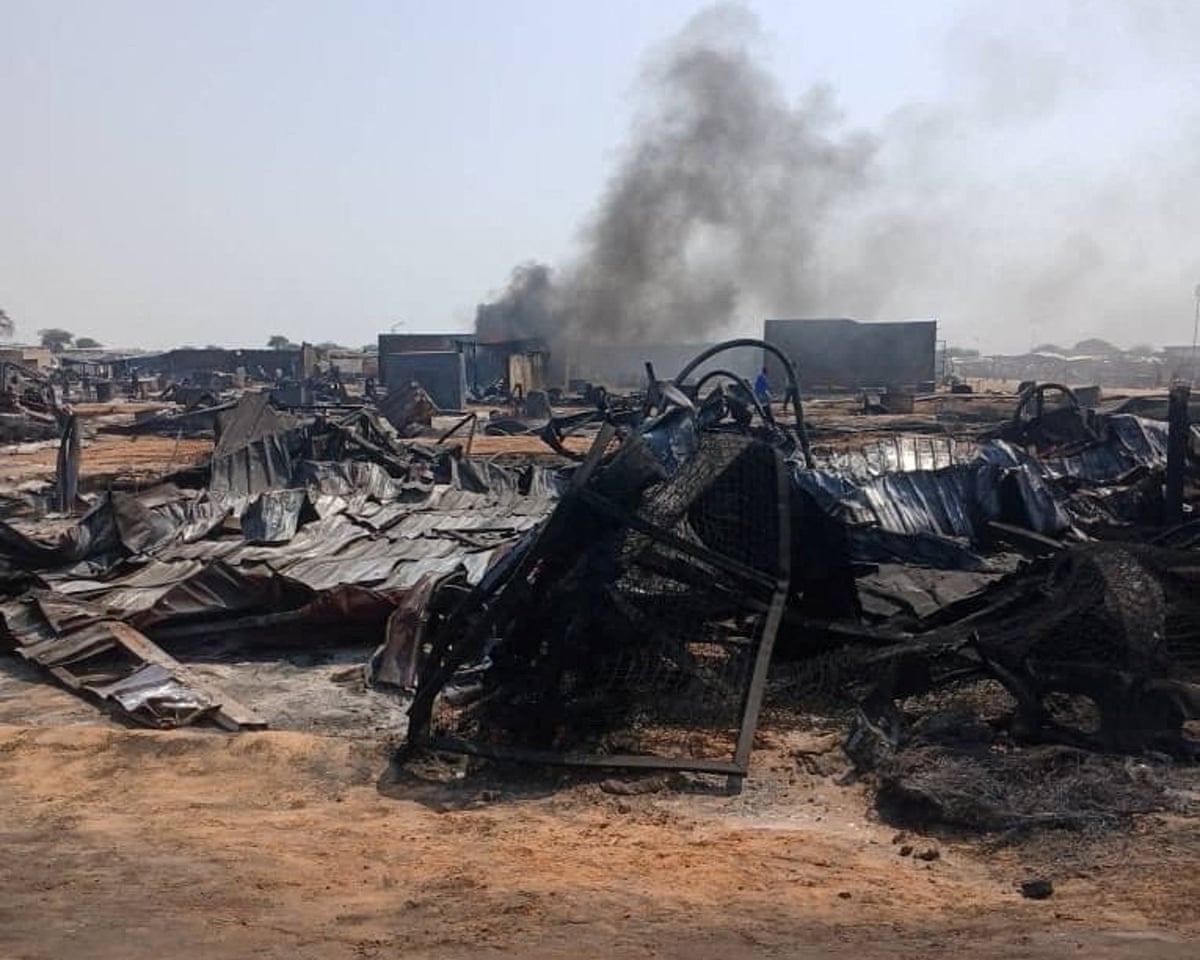
Competing accounts of the target
The central dispute is over who and what was hit.
Abyei's administration blamed the Sudanese army, known as the SAF, led by Gen. Abdel Fattah al-Burhan. Sudan's army has made no official comment. A senior Sudanese officer, speaking anonymously to the Associated Press, said the army struck fuel tankers from South Sudan that were headed to the paramilitary Rapid Support Forces, or RSF. He said those killed were RSF members and fuel smugglers, and that the military does not target civilians, according to Al Jazeera.
Reuters, citing three diplomatic sources, an aid worker and a conflict expert, reported that the strike hit a fuel depot in the market that the RSF had previously used, as relayed by The National. Officials in the SAF-backed government in Sudan said the RSF was active in parts of Abyei; Ngor denied this. The RSF did not immediately comment, per Al Jazeera.
These accounts are not mutually exclusive on the narrow question of whether a fuel facility was present. They are, however, sharply at odds on whether the dead were combatants or civilians. The figures offered by the South Sudanese side, and the UN's description of "dozens of civilians, including women and children" among the dead, point toward heavy civilian losses. The UN has not identified who carried out the attack. The UN Interim Security Force for Abyei (UNISFA) is verifying casualties, Al Jazeera reports. Until that verification is complete, the exact makeup of the toll should be treated as unconfirmed.
The UN reaction
The UN secretary-general's spokesman, Stéphane Dujarric, condemned the drone attacks near Amiet Market and Todach, saying dozens of civilians, including women and children, were killed and many more injured. "We remain alarmed by the relentless drone attacks across Sudan," he said, according to The National. The sources reviewed contain no African Union reaction.
Why Abyei is different
Abyei is an oil-rich region claimed by both Sudan and South Sudan, which became independent in 2011. It is jointly administered, and its final status has never been settled. It borders Sudan's Kordofan region, one of the main centers of fighting in the war between the SAF and the RSF that began in April 2023.
UNISFA warned in May that the RSF's presence had increased insecurity in the region and that delays in deciding Abyei's status put civilians and UN personnel at risk, The National reports. Diplomats cited by Al Jazeera say Abyei has become a key route for RSF fuel supplies. South Sudan says it has not taken sides in the war.
That claim of neutrality is now under pressure from two directions. If the strike did hit an RSF supply point, Sudan's government can argue that South Sudanese territory, or territory administered jointly with it, is being used to sustain one side. If the dead were largely civilians, as South Sudanese officials and the UN indicate, South Sudan faces domestic pressure to respond to a deadly attack on people living in a region it claims.
The wider drone war
The Abyei attack pushed the death toll from a series of strikes in recent days past 250, according to The National. UN data shows more than 1,100 people were killed by drone strikes across Sudan in the first half of 2026. An airstrike in an RSF-controlled town in North Kordofan killed five children, according to the rights group Emergency Lawyers, which blamed the SAF. A UN fact-finding mission has cited at least four waves of SAF drone strikes on hospitals, markets and other civilian sites.
These figures place the Abyei strike inside an escalating pattern. They do not, however, establish that the SAF was responsible for each incident, and the army has denied targeting civilians. Al Jazeera also noted an earlier report that drone attacks across Sudan were escalating, with 160 people reported killed, and a separate Sudanese army claim that dozens of RSF fighters were killed in an attack in Nyala. These claims have not been independently verified in the sources reviewed.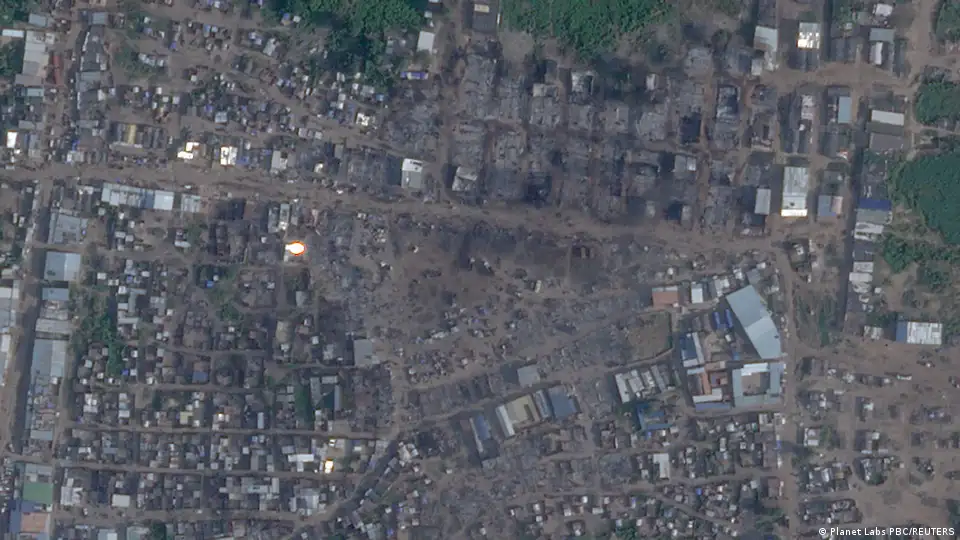
Analysis: South Sudan's narrowing options
South Sudan's government has responded in the way a state does when it wants to register a protest without escalating: it summoned an ambassador and issued a statement. The next steps will show whether that restraint can hold. Three issues stand out, offered here as analysis.
The first is accountability. The UN has not attributed the strike, and the army has not formally addressed it. Verification by UNISFA could produce a more authoritative account of what was hit and who died, but a peacekeeping mission with a narrow mandate is not an investigative body, and attribution may remain disputed.
The second is the fuel economy. If Abyei is indeed a conduit for RSF supplies, as diplomats say, the SAF has a military incentive to strike there again, and South Sudanese traders and communities will remain exposed. The fuel moving through the area is also, by the army officer's account, coming from South Sudan. That raises uncomfortable questions for Juba about what is crossing its border and who is profiting, though the sources reviewed do not allege any South Sudanese government role.
The third is the prospect of broader entanglement. South Sudan is itself a fragile state. The strike's location in a jointly administered, oil-rich border zone gives both Khartoum-aligned and RSF-aligned actors reasons to treat Abyei as strategic ground. The more the war's logistics run through Abyei, the more difficult neutrality becomes.
What to watch
Observers will be looking for the verified casualty count from UNISFA and the UN, and for any statement from the Sudanese army or the RSF. They will also watch whether South Sudan escalates beyond the ambassador's summons, whether the African Union and regional bodies speak, and whether further strikes follow in or around Abyei. The sources reviewed contain no indication that any of these steps has yet occurred.
The strike also puts a spotlight on the question of whether Abyei's unresolved status, which UNISFA flagged as a risk months ago, can continue to be deferred. For the people of Amiet Market, that question is no longer abstract.