Written By |
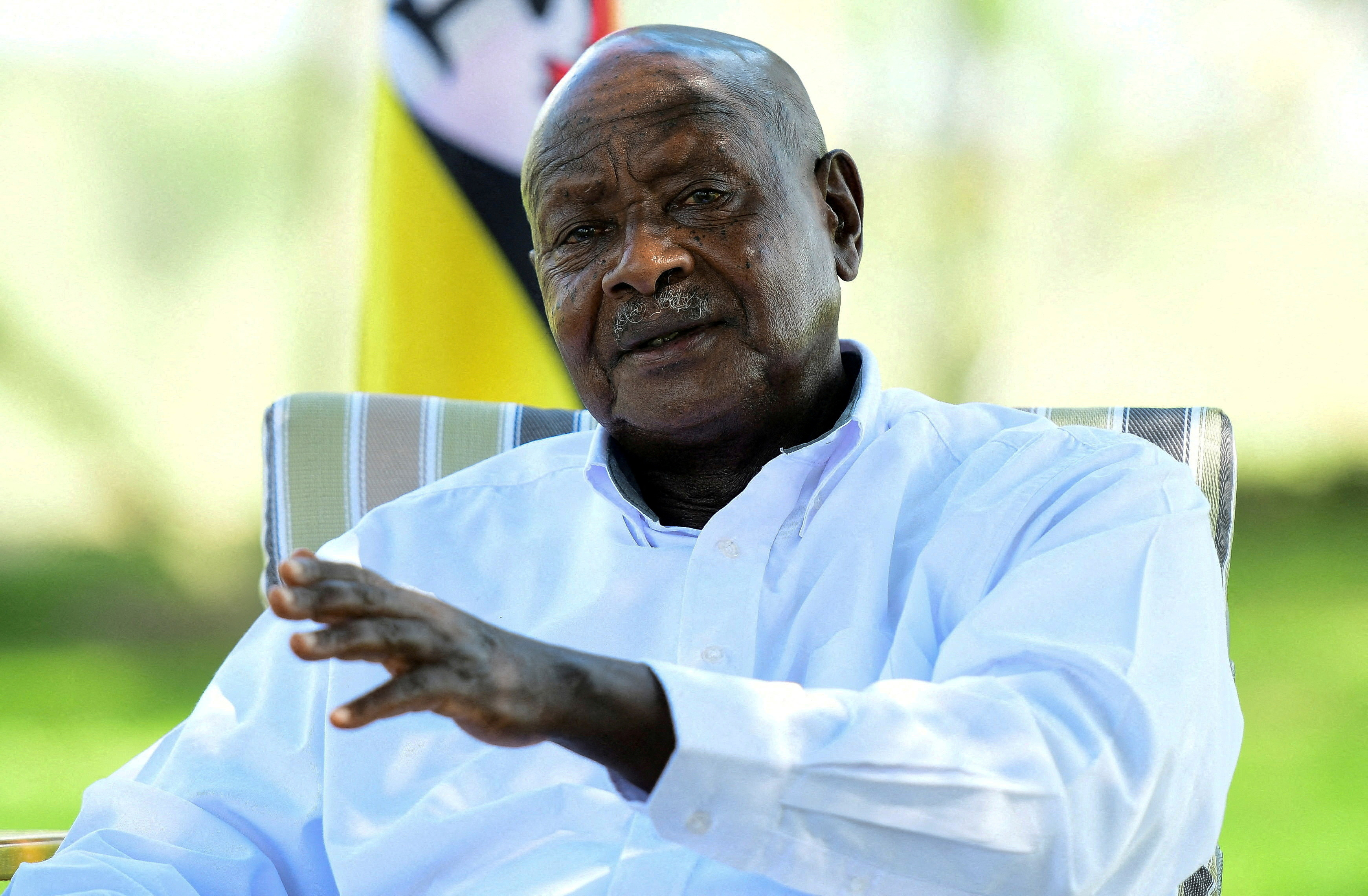
President Museveni addressed the issue of e-voting, stating that if the machines fail, elections at the affected polling station should be suspended
By Our Reporter
The political landscape in Uganda is heating up as the debate over electoral reforms intensifies in Parliament. Proposals introduced by Justice Minister Norbert Mao and Nyendo Mukungwe MP Mathias Mpuuga have sparked lively discussions. However, before Cabinet formally endorses the reforms, the ruling National Resistance Movement (NRM) party has expressed strong reservations, particularly regarding a controversial proposal for Members of Parliament to elect the President.
The NRM has firmly rejected this proposal, stating that it undermines the right to adult suffrage. "We have a problem with the proposal to have Parliament elect the President. It is a contradiction to NRM values," said NRM Secretary General Richard Todwong. He emphasized that democracy is a core pillar of the NRM, with efforts over the past three decades focusing on empowering citizens to choose their leaders.
"The doctrine of the NRM is that power belongs to the people," Todwong added. "We cannot support any proposal that takes away the power of the people. Democracy entails that all leaders, from local councils to the President, must be elected by the people, not MPs."
Mao's reform proposals
Justice Minister Norbert Mao has tabled a series of constitutional and electoral reforms ahead of the 2026 general elections. These include the restoration of two five-year presidential term limits, open vetting of ministers and judges, and proportional representation where MPs elect the President. Mao described these reforms as stemming from Ugandans' input and said he is awaiting Cabinet approval before forwarding them to Parliament.
"I am ready with the proposals from the people of Uganda," Mao said. "If Cabinet agrees, Parliament will do its job, and the people will also have their say."
The reforms also suggest introducing two five-year term limits for MPs representing affirmative action groups, including women, youth, the elderly, persons with disabilities, workers, and Uganda People's Defence Forces (UPDF) representatives. Mao noted that no one opposes the restoration of presidential term limits, which were removed in 2005, adding that it was the Constitutional Court that dismissed the proposal in 2018.
Controversy over MPs electing the President
The proposal for MPs to elect the President has stirred controversy within the NRM. Insiders report that some senior party officials are vehemently opposed to the idea, with many advocating for its dismissal before it gains traction. One of the most vocal critics is Internal Affairs Minister Maj. Gen. Kahinda Otafiire, who warned that the proposal undermines the principles enshrined in the Constitution.
"Those pushing for this idea should consult the elders who framed the Constitution during the Constituent Assembly," Otafiire said, emphasizing that the President must be elected by the people, securing at least 51% of the vote. Other NRM officials argue that the proposal would diminish the legitimacy of the President, narrowing the electoral base to MPs rather than the broader population.
NRM Parliamentary caucus meeting
The proposed reforms, including the NRM's stance on presidential elections, are expected to be a key focus during the upcoming NRM Parliamentary Caucus meeting, which President Yoweri Museveni has summoned. Discussions will also cover the NRM roadmap and the recent endorsement of Museveni's candidacy for the 2026 elections by Gen. Muhoozi Kainerugaba, the Chief of Defence Forces. Todwong praised Muhoozi's directive, urging his supporters to rally behind the NRM and Museveni.
Electronic voting proposal
Another significant reform proposed by Mao is the introduction of compulsory electronic voting to enhance transparency in the electoral process. Mao believes e-voting will reduce the risk of ballot tampering and improve the tallying of results. Todwong supported this move, describing electronic voting as an ideal solution ahead of the 2026 general elections, provided that reliable internet infrastructure is in place.
However, he cautioned that the government must address concerns raised by farmers, whose fingerprints may be altered by traditional farming methods, potentially complicating e-voting.
Museveni’s position on e-voting
During a memorial ceremony for the late Gen. Aronda Nyakairima, President Museveni addressed the issue of e-voting, stating that if the machines fail, elections at the affected polling station should be suspended. "The law must provide that if the machine does not work, we suspend elections at that polling station," Museveni said, emphasizing the importance of fingerprint identification for credible elections.
As the debate over electoral reforms continues, the NRM’s strong opposition to Parliament electing the President underscores the importance of maintaining direct electoral participation for all Ugandans. The next steps will depend on Cabinet’s review and further discussions within Parliament and the NRM caucus.
Torch Media Africa



