Written By | Business Experts
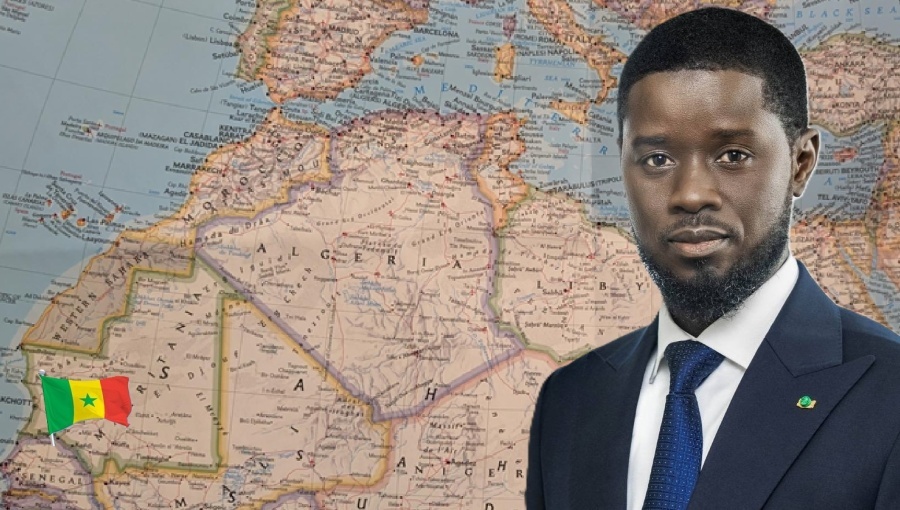
President Bassirou Diomaye Faye
Dakar
An International Monetary Fund mission that has spent two weeks in the Senegalese capital is scheduled to conclude Tuesday, and a person close to the negotiations told Reuters on Monday that "positive developments" are expected at its close. It would be the clearest sign in nearly two years that Senegal is edging back toward the international financing it lost after admitting that its predecessors had concealed the true size of the national debt.
The timing is unforgiving. The mission wraps up four days after Moody's Ratings cut Senegal's long-term foreign-currency and local-currency issuer ratings to Caa2 from Caa1, with a negative outlook, on Friday, Aug. 28 — a downgrade the agency explicitly tied to the collapse of the alliance between President Bassirou Diomaye Faye and his former prime minister, Ousmane Sonko. A country that two years ago was held up as West Africa's most orderly democratic transition is now negotiating simultaneously with the Fund, with its creditors and with itself.
How Senegal got here
Faye and Sonko rose together through PASTEF, the African Patriots of Senegal for Work, Ethics and Fraternity. Sonko, a former tax inspector, built a mass following among young Senegalese by campaigning against corruption and for what he called economic sovereignty. When he was unable to stand in the 2024 presidential election, PASTEF put forward Faye, then a relatively unknown party official, under the slogan "Diomaye is Sonko." Faye won, and appointed Sonko prime minister.
The alliance began to fracture over the wreckage the two men inherited. An audit revealed liabilities that the government of former President Macky Sall had never disclosed. The IMF has estimated the previously unreported debt at more than $11 billion on end-2023 numbers; some analysts put the figure closer to $13 billion, more than a quarter of Senegal's total debt. By the end of 2024, according to the Fund, Senegal's debt had reached 132 percent of gross domestic product. The IMF suspended the country's $1.8 billion lending arrangement, and Senegal has not received Fund financing since late 2023.
Sonko took the hardest line. At a rally last November he said the IMF was pushing Senegal toward debt restructuring and that submitting to it would be a "disgrace." Faye's camp favored a more pragmatic course: restructure, stabilize, and get back inside a program.
The rupture came in May. Faye dismissed Sonko as prime minister and dissolved the government. Days later, on May 26, lawmakers elected Sonko president of the National Assembly with 132 of 133 votes cast, in a ballot the opposition boycotted; he was the sole candidate, replacing El Malick Ndiaye, who had resigned. PASTEF holds 130 of the Assembly's 165 seats, and Sonko remains its undisputed leader. Faye named Ahmadou Al Aminou Lô, a career central banker, as head of government.
The result is an unusual and unstable arrangement: a president negotiating an austerity-flavored program with the Fund, and a legislature presided over by the man who once called that program's likely centerpiece a national humiliation — and whose party controls the chamber that must pass the enabling legislation.
On July 25, Faye completed the divorce by launching his own party, Kiiraay–The Republican Patriots, grown out of the Diomaye President coalition that had backed his 2024 campaign. Addressing supporters in Dakar, Faye described the new movement as "an open house" guided by "ethics" and "transparency," and said it would be open to "young people, women, farmers, fishermen, teachers, health workers, the diaspora." He added a pointed line aimed at his own base: "Responsibilities will be duties and not rewards."
What the Fund said, and what Moody's said
The current IMF mission began Aug. 19. In a statement, an IMF spokesperson said: "The mission has made substantial progress, and discussions with the authorities continue in a constructive spirit. As with any IMF-supported programme, any Staff-Level Agreement would be announced through the Fund's established processes." The spokesperson added that "Fund staff and the authorities are working closely to conclude the remaining elements and ensure that any eventual agreement rests on a strong and durable foundation."
That is carefully hedged language. A staff-level agreement is not a program; it is a recommendation that must still clear the IMF's Executive Board, and boards have been known to wait for prior actions that require parliamentary votes.
Moody's was blunter. Its Aug. 28 downgrade cited rising refinancing pressures, weakening debt affordability and limited prospects for debt reduction, all of which the agency said had increased the likelihood of a default event. The prolonged absence of an IMF program, Moody's said, has pushed Senegal to lean on regional market funding to cover financing needs of roughly 25 percent of GDP, raising rollover risk and interest costs. The agency named the political rupture directly: the dismissal of Sonko and his subsequent election as president of the National Assembly have intensified institutional tensions between the executive and the legislature, increasing the risk of delays to fiscal measures. Even with sustained fiscal adjustment, Moody's expects government debt to stabilize at around 100 percent of GDP through 2028. A Caa2 rating, the agency noted, is consistent with a debt treatment focused mainly on relieving liquidity pressure, involving limited losses for private creditors — broadly a 10 percent to 20 percent loss-given-default range.
In other words, Moody's is not forecasting a catastrophic haircut. It is forecasting a messy, drawn-out reprofiling in a country whose two most powerful politicians cannot agree on whether to have one.
Sonko's shifting position
There is a case that the deadlock is softer than it looks. In an interview with the French broadcasters RFI and France 24 aired on June 15, Sonko markedly moderated his tone. "We don't hold rigid positions in the absolute sense. We are examining the situation with clarity," he said, adding that any solution should "meet the requirements of the moment." He said he had opposed "reckless restructuring" rather than restructuring as such, arguing it had not been necessary because Senegal was meeting its obligations and had strong growth prospects, but acknowledged that external conditions had since deteriorated. "Today, I believe we can assess developments step by step," he said. "We are not here to obstruct."
He also drew a line: measures focused solely on short-term metrics, he warned, would not be acceptable if they undermined Senegal's long-term economic goals.
Whether that constitutes acquiescence or a negotiating posture is the central question hanging over Tuesday's announcement. Sonko does not need to vote a program down to damage it. Slow-walking budget legislation, forcing public hearings on IMF conditionality, or simply narrating each austerity measure to a young electorate that voted for sovereignty rather than adjustment would be enough to make implementation politically expensive for Faye.
The stakes beyond the balance sheet
Analysts have warned that the consequences reach past fiscal policy. Kabir Adamu, founder of Beacon Consulting Ltd and a Nigeria-based security analyst specializing in the Sahel, told Al Jazeera that "the dismissal of Ousmane Sonko has torn the ruling coalition asunder, creating a seismic political crisis," leaving Senegal facing "a dangerous period of legislative paralysis and economic instability." He added that the domestic fight was "likely" to prevent Faye from exercising the responsibilities the Economic Community of West African States expects of him — a pointed observation at a moment when ECOWAS has lost Burkina Faso, Mali and Niger and badly needs its remaining democracies to function.
Mubarak Aliyu, a Nigeria-based political and security risk analyst focused on West Africa and the Sahel, framed the timing as the core danger. "The policy paralysis created by the fight for what Sonko believes to be economic sovereignty and Faye's insistence on pragmatic austerity and debt restructuring could easily spill into fiscal decision-making at the exact moment Senegal can least afford a legislative deadlock," he told Al Jazeera. "A debt crisis punishes hesitation and mixed signals, and this rupture supplies both."
There is also the matter of what Senegalese voters were promised. Faye and Sonko campaigned on cleaning up public finances, creating jobs and extracting a larger national share from the country's oil, gas and mineral wealth. An IMF program that arrives bundled with subsidy reform and spending restraint is not obviously the delivery of that mandate, and both men know it. Each now claims to be the authentic custodian of the 2024 reform project, which gives each an incentive to define himself against the other.
What to watch
Three things will determine whether Tuesday's "positive developments" become a program.
First, the language of whatever the Fund publishes. A staff-level agreement with a named financing envelope and an indicative board date would be a genuine breakthrough. A communiqué praising progress and promising further technical discussions would signal that the hidden-debt accounting, the fiscal path or the treatment of the debt stock remains unresolved.
Second, the Assembly. Any program will require budget measures that pass through a chamber Sonko presides over and PASTEF controls. The first substantive test will be the 2027 budget process. Watch whether Sonko's June formulation — "we are not here to obstruct" — survives contact with an actual austerity bill.
Third, the electoral calendar. Faye's lack of a parliamentary machine of his own is the structural weakness in his position, and analysts have raised the possibility that he could seek fresh legislative elections in December 2026 to build one. Dissolving a chamber his former ally dominates would be the highest-risk move available to him — and, if Kiiraay underperforms, potentially the last one.
For creditors holding Senegalese paper, and for the regional market that has been absorbing Dakar's issuance in the Fund's absence, the calculus is simpler. Senegal's problem was never solely arithmetic. It is that the arithmetic now has to be solved by two men who no longer speak for the same movement.



