World Politics
Background
Israelis went to the polls on Tuesday in what commentators across the spectrum have described as one of the most consequential elections in the country’s history. It is the first national vote since Hamas’s attack of October 7, 2023, and it arrives after a war in Gaza, a confrontation with Iran that has flared repeatedly this year, and a ceasefire arrangement for Gaza that remains frozen. For more than eighteen years Benjamin Netanyahu has been the dominant figure of Israeli politics. Now 77, he is asking voters for another term while on trial for corruption, a charge he denies, and while facing an International Criminal Court arrest warrant over the conduct of the Gaza war. He has also resisted calls for an independent state commission of inquiry into the failures that allowed October 7 to happen, an issue that has shadowed his campaign.
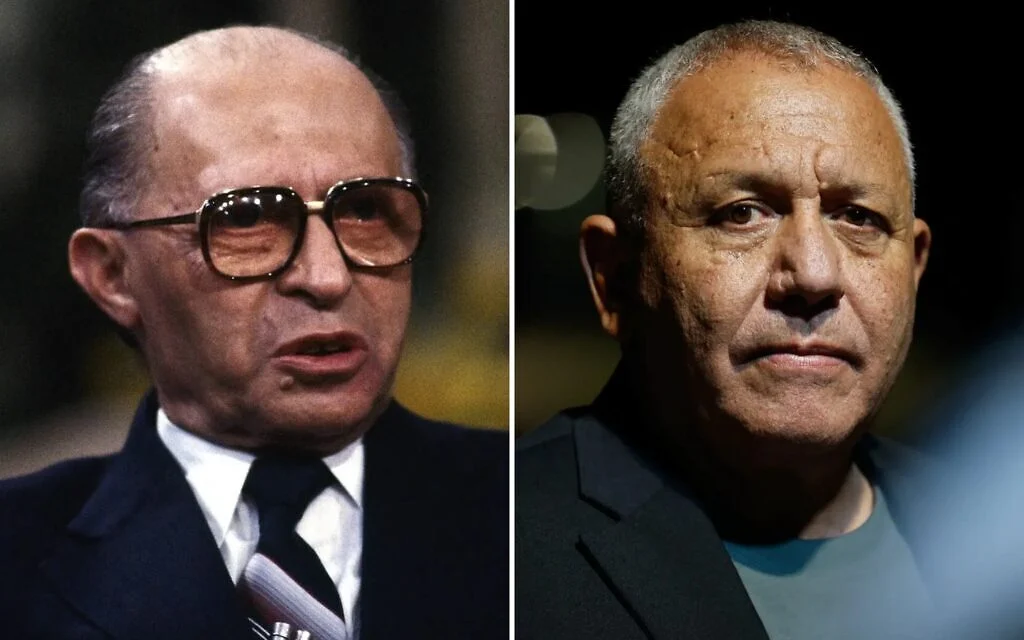
His principal challenger is Gadi Eisenkot, 66, a former chief of the general staff who joined Netanyahu’s wartime emergency government and then left it over its handling of Gaza. Eisenkot leads the centrist Yashar list. He supports an official inquiry into October 7 and an end to the broad military exemptions long granted to ultra-Orthodox men, two positions that set him apart from the governing coalition. On the Palestinian question, however, he is not far from Netanyahu: according to the Anadolu Agency’s summary of the race, he shares the prime minister’s opposition to a sovereign Palestinian state under present conditions and his goal of dismantling Hamas. The contest is therefore less a referendum on the war’s aims than on who should be trusted to run the country afterwards, and on Netanyahu’s record.
The field is crowded. Thirty-seven parties and lists are running for the 120-seat Knesset, and about 7.3 million people are eligible to vote at some 12,000 polling stations, including roughly 1.2 million Palestinian citizens of Israel. A party must clear a 3.25 percent threshold to enter parliament, and a government needs 61 seats. Among the other lists are Naftali Bennett and Yair Lapid’s joint B’Yachad, Avigdor Liberman’s Yisrael Beytenu, the Haredi parties Shas and United Torah Judaism, the far-right Religious Zionism of Bezalel Smotrich and Itamar Ben-Gvir’s Otzma Yehudit, and Arab-led lists including the Joint List and Mansour Abbas’s Ra’am.

Where the Race Stood on Election Day
The final polls published by Israel’s three main television broadcasters, as summarized by Anadolu, showed a near-perfect stalemate. Eisenkot’s Yashar was narrowly ahead with roughly 22 to 23 seats, followed by Likud with 19 to 21 and B’Yachad with 14 to 15. Netanyahu’s right-wing and religious bloc was projected at about 50 seats, while the broader opposition bloc stood between 52 and 56. Palestinian-led parties together were polling between 14 and 16 seats, with the Joint List around nine and Ra’am between five and seven. Neither side had a clear path to 61. Times of Israel’s coverage noted that betting markets were leaning toward Eisenkot replacing Netanyahu, but also that the prime minister could stay in power even if his party finished second.
That last point is central to understanding why the first-place finish may matter less than it seems. Under Israeli law the president, Isaac Herzog, consults the parties and then charges the lawmaker most likely to command a majority with forming a government; that person need not lead the largest party. An Eisenkot-led government would probably require the votes of Palestinian-led parties, defections from the other camp, or difficult compromises among opposition factions. Liberman has rejected relying on Palestinian-led parties, while Eisenkot has ruled out serving under Netanyahu. Netanyahu, for his part, would count on Ben-Gvir, Smotrich, Shas and United Torah Judaism, but would need to gain seats or recruit lawmakers from outside his bloc. If nobody can assemble 61, Netanyahu could remain as caretaker, and the country could face yet another election. Small parties hovering near the threshold could swing the outcome.

Key Developments on Election Day
The most striking early fact was turnout. Times of Israel, citing the Central Elections Committee, reported that participation reached 31.5 percent by noon, compared with 28.4 percent at the same hour in 2022 and the highest at that point of the day since the 1973 election, the first held after the Yom Kippur War. A separate report from The National cited the Elections Committee as saying turnout was the highest since 1981; the two outlets appear to be measuring different benchmarks, and the discrepancy could not be resolved from the material available. Either way, participation was unusually high, and it was notable in Arab communities: a Times of Israel source in the Bedouin town of Rahat said about half of residents had voted by midday, in contrast to past elections when voting there picked up only in the evening.
That Arab turnout became the focus of the day’s sharpest political fight. Netanyahu released a video warning that Arab voters in the south were “racing to the ballots,” alleged that operatives of Ra’am were trying to steal the election, and said an opposition victory would end the Jewish state “as we know it.” He cited turnout figures for the Negev without naming a source. He also referred to the arrest of three Ra’am operatives on suspicion of bribing voters. Accusations spread quickly: Likud minister Miri Regev echoed the theft allegation on social media, and Times of Israel described her claims as unsubstantiated. Party sources told the paper that Likud was preparing to allege a “stolen” election if Netanyahu lost, citing fraud concerns in the Arab sector, and that Likud ministers were alarmed by high turnout in communities such as Rahat and low turnout in Likud strongholds.
The Central Elections Committee, chaired by Justice Noam Sohlberg, said it had seen no evidence of systematic tampering with ballot slips and was handling individual reports. Complaints of missing or defaced slips came from several lists, including Yashar, B’Yachad, People of Israel, Yisrael Beytenu, Ra’am and the Reservists-Economic list. B’Yachad accused Likud of illegally tracking voters at polling stations, an allegation the committee disputed. Three people were arrested for alleged electoral interference, and in Tiberias a man who tore down party signs shoved a B’Yachad activist, who filed a police complaint. Outside a polling station in Netanya, Ruby Chen, whose son Staff Sgt. Itay Chen was killed on October 7, was called a “traitor” in an incident captured on video. The Shin Bet chief, David Zini, visited the committee’s command center and said the day was going well so far, while cautioning that this “should not be taken for granted.”
The Iran Shadow
Foreign policy hung over the vote. CNN reported, as relayed by Times of Israel, that Netanyahu pushed for military action against Iran before the election but that President Donald Trump refused. A separate report said Chief of Staff Lt. Gen. Eyal Zamir was the only senior security official who opposed pre-election strikes, seeing no urgent justification and fearing Iranian retaliation. Netanyahu has denied any disagreement with the military leadership. The episode matters because it feeds a central opposition argument, that the prime minister’s decisions are shaped by his political survival, and a central Likud counter-argument, that only Netanyahu can manage the relationship with Washington. Trump had earlier endorsed Netanyahu, nine days before the vote, and tied America’s posture toward Iran to the result.
Regional developments added to the tension. A UN commission this week accused Israel of continuing genocidal acts in Gaza after the October 2025 ceasefire and of expanding its territorial control, findings Israel rejected as politically motivated. Saudi, Pakistani and Turkish security officials met Iranian leaders in Tehran in an effort to head off renewed American military action, and Houthi attacks on Saudi Arabia have intensified. Meanwhile Syria condemned Jordanian airstrikes in the south of the country, which Amman said targeted ISIS after a deadly church attack. None of this was on the ballot, but all of it frames the sense of an election held under pressure.

Reactions and Mood
Voters interviewed in video reports described a country exhausted and split. Some said they feared the status quo whatever the result, with one quoted as saying “Israel is finished.” Right-wing voters in Jerusalem were divided over whether to stay with Netanyahu, while residents of the north and the Gaza border communities, who have lived through the war most directly, were among those calling for change. In Rahat, Bedouin voters, including many women, cited the presence of Ben-Gvir in government, housing demolitions, gun violence and funding cancelled after the previous Bennett-Lapid government, which included Ra’am, as reasons for voting; some recalled Netanyahu’s 2015 warning about Arab voters. Bereaved October 7 families held a minute of silence at Hostages Square in Tel Aviv, and Eisenkot visited Kibbutz Nir Oz, where he met a former hostage. Some observers have labelled the contest the world’s first “AI election,” reflecting the heavy use of automated tools in campaigning.
What Happens Next
Polls closed at 10 p.m. local time, and exit polls were due immediately afterwards. This article was prepared before those figures were available, so they are not reported here. Preliminary counts should emerge overnight, but ballots cast by soldiers, hospital patients and prisoners can take days to tally; the final count is expected by Friday and official results are due by November 4. After that, coalition bargaining could last weeks, and with neither bloc near a majority in the final polls, the real decision may be made in Herzog’s consultations rather than at the ballot box.
The larger risk is what follows a close result. If Netanyahu loses narrowly after warning of theft, the allegations already circulating could be used to contest the outcome, and officials have been bracing for unrest. If he wins or clings to a caretaker role, the opposition will have to explain a failure to convert a polling lead into power. Either way, the questions that animated the campaign, an inquiry into October 7, the draft of ultra-Orthodox men, the future of Gaza and a possible strike on Iran, will land on whoever eventually forms a government.
Published By | News Editor