World Politics
Background
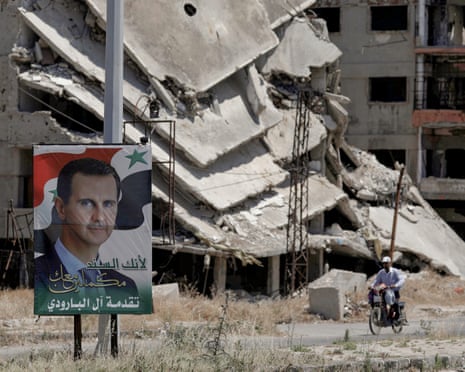
For more than five decades, Syria was ruled by the Assad family, first Hafez al-Assad, who seized power in 1970, and then his son Bashar, who inherited the presidency in 2000 and held it until his government's sudden collapse in December 2024. What began in March 2011 as peaceful protests, part of the wave of uprisings across the Arab world, turned into one of the 21st century's deadliest civil wars after Syrian security forces responded to demonstrators with lethal force. The uprising is widely traced to the southern city of Daraa, where local teenagers were detained and tortured by security services after scrawling anti-government graffiti on a school wall, an incident that galvanized nationwide protests and, ultimately, armed rebellion. Over the following fourteen years, the conflict killed roughly half a million people, displaced more than half of Syria's pre-war population, and drew in foreign powers including Russia, Iran and a U.S.-led coalition, while the Assad government stood accused by human rights investigators and Western governments of chemical weapons attacks, mass torture in facilities like the notorious Sednaya prison, and indiscriminate bombing of civilian areas.
The war ended abruptly in December 2024, when a rapid offensive led by the Islamist-rooted rebel coalition Hayat Tahrir al-Sham, under commander Ahmad al-Sharaa, swept out of Idlib province and through Aleppo, Hama, Homs and finally Damascus in a matter of days, catching Assad's exhausted military and its Russian and Iranian backers almost entirely off guard. Assad and his family fled to Moscow, where Russia, his most important wartime patron alongside Iran, granted him asylum. Al-Sharaa has since become Syria's transitional president, presiding over a fragile process of rebuilding state institutions, drafting a new constitution and attempting to establish some form of accountability for the abuses of the old order, all without a functioning parliament and amid deep divisions among the country's many armed factions, sects and regions.
Syria is not a member of the International Criminal Court, and Russia's veto power at the United Nations Security Council has long blocked efforts to refer the situation there to that court, leaving accountability efforts to fall mainly to domestic Syrian courts and to foreign prosecutors exercising universal jurisdiction. The most notable precedent came in February 2021, when a court in Koblenz, Germany, convicted a former Syrian intelligence officer, Anwar Raslan, of crimes against humanity for his role overseeing torture at a Damascus detention facility, the first conviction anywhere in the world for state-sponsored torture carried out by the Assad government. That case, along with similar prosecutions in France and elsewhere in Europe, relied heavily on documentation smuggled out of Syria by defectors and human rights investigators, evidence that is now also feeding the new domestic proceedings in Damascus.

Key Developments
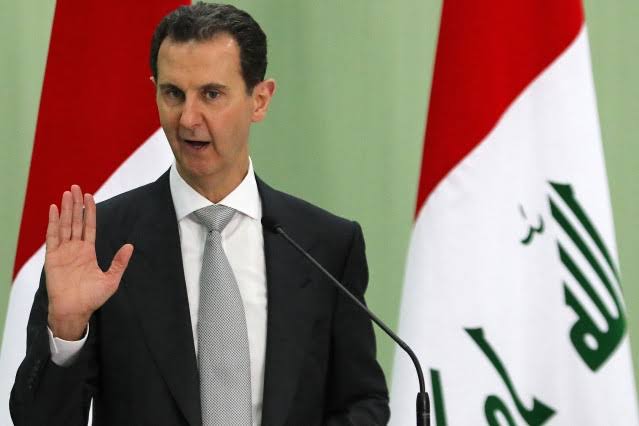
On August 11, 2026, the Fourth Criminal Court in Damascus, presided over by Judge Fakhareddine al-Aryan, sentenced Bashar al-Assad and eight former officials to death for crimes against humanity, intentional killing, torture and arbitrary detention connected specifically to the crackdown on protesters in Daraa in 2011. The court found that Assad 'used state agencies to commit war crimes and crimes against humanity,' marking the first criminal verdict against the former president since his government's fall twenty months earlier. Assad, along with his brother Maher al-Assad and six other defendants, was tried and sentenced in absentia, underscoring the practical limits of Syria's fledgling justice system now that most of the accused are beyond its reach.
The only defendant present in the Damascus courtroom was Atef Najib, Assad's maternal cousin and the former head of the Political Security Branch in Daraa, who is considered by many Syrians to be the figure most directly responsible for triggering the uprising. Judge al-Aryan said investigations and witness testimony showed Najib had personally overseen the interrogation of detained protesters and directed security operations against civilians in Daraa; he was convicted specifically of murder, including 'the intentional killing of children under 15,' and of torture leading to death. Held under tight security and appearing in a prisoner's uniform inside a cage during sentencing, Najib's case represented the first time a senior Assad-era official has stood trial in person before a Syrian court, with proceedings that began in earnest around May 2026 following the establishment of the case.
The verdict fits into a broader, still-forming transitional justice architecture that al-Sharaa's government has been trying to construct. In May 2026, al-Sharaa issued Decree No. 20 establishing a National Commission for Transitional Justice, described as having financial and administrative independence, with commissioners appointed roughly three months later. But Syria still lacks a comprehensive transitional justice law, and the new commission's mandate, according to legal observers, is currently limited to abuses committed under the Assad government, explicitly excluding violations committed by other armed actors or those that have occurred since the new authorities took power on December 8, 2024. Separately, a coalition of 27 Syrian and international civil society organizations released a document in May titled 'Pathways to Criminal Accountability in Syria,' the product of eight months of consultations with victims, survivors' groups and the commissions tasked with addressing Syria's mass disappearances.
Reactions
Inside Syria, the ruling was widely described as an emotional milestone. Coverage from regional outlets characterized the verdict as bringing a measure of relief and contributing to what many Syrians see as a long-overdue 'healing process' after a war whose death toll and atrocities touched nearly every family in the country. For relatives of the tens of thousands of Syrians who disappeared into Assad-era detention facilities, many of whom are believed to have died in custody, a formal court finding that the former president bore criminal responsibility for state violence carries significant symbolic weight, even if it cannot undo the losses or, in most cases, deliver a body to bury.
At the same time, commentary from Syrian and international observers has been notably clear-eyed about the limits of the verdict. Russia, which granted Assad asylum and has cultivated ties with the new government in Damascus even while sheltering the man it toppled, has so far refused Syria's demands to extradite him, meaning the death sentence is unlikely to ever be carried out barring a major shift in Moscow's position or Assad's own movements. Analysts have also raised concerns about the broader fairness and durability of Syria's transitional justice process. A number of commentators, including a recent analysis from the Foundation for Defense of Democracies, have warned that the current approach amounts to 'selective prosecution,' pursuing accountability only for crimes committed under the old Assad government while leaving unaddressed any abuses committed by the new authorities' own forces or by allied factions since the takeover, a pattern critics say risks deepening Syria's sectarian and political divisions rather than healing them, particularly among Alawite communities who fear collective blame for the former government's crimes.
What's Next
The Daraa verdict is expected to be only the first in a series of prosecutions targeting figures from the former government, as Syrian and international investigators continue compiling evidence on other chapters of the war, including chemical weapons attacks such as the 2018 assault on Douma, mass killings documented at facilities like Sednaya prison, and the fate of the disappeared. Whether the National Commission for Transitional Justice can secure the legal authority, funding and independence needed to pursue those cases, and whether Syria's parliament, once formed, will pass the transitional justice legislation the country still lacks, will shape how comprehensive that reckoning ultimately becomes.
The more immediate diplomatic question is what, if anything, changes in Assad's status in Russia. Damascus has repeatedly pressed Moscow for his extradition without success, and Russia's calculus, balancing its historic alliance with the Assad family against its emerging relationship with al-Sharaa's government, is unlikely to shift quickly; Moscow has strong incentives to keep good relations with Syria's new authorities, including preserving its naval and air bases on the Syrian coast, but extraditing Assad to face execution would be an extraordinary reversal of decades of patronage. In the meantime, Syria's new leadership faces the harder, longer-term task of building institutions capable of delivering justice evenly, including for abuses that may occur on its own watch, if it hopes to convince a war-weary population, and a wary international community still weighing sanctions relief and formal recognition, that the country's transition amounts to more than a change of rulers. Western governments, including the United States and European Union members, have tied further sanctions relief and normalization to precisely these kinds of governance and accountability benchmarks, meaning the credibility of trials like the one that just concluded in Damascus carries consequences well beyond Syria's borders.
Published By | News Editor